

![Domenico Scarlatti Popular Songs Ranking [2026]](https://i.ytimg.com/vi_webp/WoEVn1ailGo/maxresdefault.webp)

Domenico Scarlatti, a composer from Naples, Italy, and one of the figures of the Baroque era.
He was also renowned as a keyboard player, and the harpsichord exercises he composed are now beloved as sonatas.
This time, we present a ranking of Domenico Scarlatti’s popular pieces.
- [Scarlatti] Introducing masterpieces and signature works from his many keyboard compositions!
- Scarlatti’s Piano Pieces: Baroque Masterpieces Left by the Maestro of Keyboard Sonatas
- Arcangelo Corelli Popular Song Rankings [2026]
- Handel Popular Songs Ranking [2026]
- J.S. Bach Popular Songs Ranking [2026]
- Niccolò Paganini Popular Song Rankings [2026]
- Franz Liszt Popular Song Ranking [2026]
- François Couperin Popular Songs Ranking [2026]
- Johann Nepomuk Hummel Popular Song Rankings [2026]
- Georg Friedrich Handel Popular Songs Ranking [2026]
- George Frideric Handel Popular Songs Ranking [2026]
- Jean-Philippe Rameau Popular Songs Ranking [2026]
- Antonio Vivaldi Popular Song Ranking [2026]
Domenico Scarlatti Popular Songs Ranking [2026] (1–10)
Sonata in C minor, K. 73 (L. 217)Domenico Scarlatti1rank/position

Sonata in C minor, K.73 (L.217): Allegro – Minuet – Minuet.
Performed by Gabriel Steinfeld (violin) and Luca Purchiaroni (harpsichord).
The video was filmed at the Vallicelliana Library in Rome, Italy.
Sonata in F major, K.107 (L.474)Domenico Scarlatti2rank/position

Sonata in F major, K.
107 (L.
474): Allegro.
The piano is performed by Evgeni Bozhanov, who was born in Bulgaria.
He has won numerous prizes at international competitions.
In Japan, he has appeared as a soloist with the Hyogo Performing Arts Center Orchestra under the baton of Yutaka Sado.
Sonata in A major, K. 208Domenico Scarlatti3rank/position

The Baroque-era composer Domenico Scarlatti was born in Naples, Italy, and was active at the Spanish court.
Among his works, his 555 keyboard sonatas are particularly popular.
Notably, the Sonata in A major, K.
208 stands out for its gentle, songlike melody.
The distinctive rhythms and harmonies influenced by Spanish folk music are a major attraction of his style.
Written in a free form, it offers a dynamic, almost improvisatory sense of flow.
With its beautiful melodies and high technical demands, this piece has captivated many pianists and is highly recommended for advanced players.
Sonata in D minor, K. 1 (L. 366)Domenico Scarlatti4rank/position

Despite its brief duration, this work by Scarlatti is brimming with dense musical ideas.
Composed between 1738 and 1739, it reflects the influence of Spanish folk music and incorporates technically challenging elements.
Its distinctive melodic lines and rhythms, along with innovative harmonic progressions, are captivating.
The interplay of incisive rhythms and passionate melodies makes it recommended not only for fans of Baroque music but also for those studying keyboard instruments.
Performed on harpsichord or piano, this piece can be considered a valuable work that conveys Scarlatti’s creativity and innovation to the present day.
Sonata in B minor, K. 27 (L. 449), Sonata in E minor, K. 198 (L. 22)Domenico Scarlatti5rank/position

This keyboard sonata composed by Scarlatti is a work brimming with the allure of Baroque music.
Its lively rhythms, vivid melodies, and refined harmonies are captivating to listeners.
Though brief, it is packed with dense musical ideas, striking a superb balance between technical difficulty and musical expression.
One can also feel the influence of Italy’s traditional music and Spain’s folk music, showcasing Scarlatti’s originality.
Expanding the possibilities of the keyboard, this piece is recommended not only for classical music fans but also for anyone interested in Baroque music.
Sonata in D minor, K. 1 (L. 413)Domenico Scarlatti6rank/position

Among Scarlatti’s keyboard sonatas, this is one of the most famous.
It was published in 1738 as part of a collection of harpsichord studies.
Written in D minor, the piece is characterized by descending right-hand scales, broken thirds, wide leaps in the left hand, and repeated chords.
Its structure also suits technical practice, with features such as varying widths of left-hand leaps between the first and second halves.
Although the performance time is relatively short—about 2 minutes and 40 seconds—the work conveys rich musicality.
While composed for harpsichord, it is often performed on the modern piano as well, demanding solid technique and expressive nuance from the performer.
If you’re studying keyboard instruments, give it a try.
Sonata in F major, K.438 (L.381)Domenico Scarlatti7rank/position
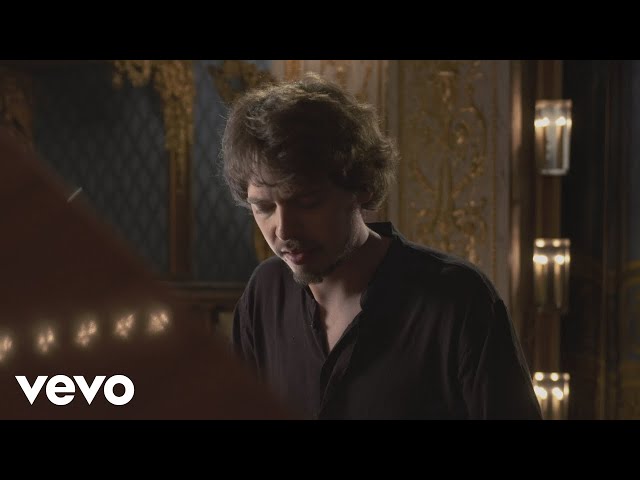
Scarlatti, who wrote as many as 555 keyboard sonatas during the Baroque era.
Among them, this work in F major is characterized by its bright, lively mood.
It exquisitely blends an angelic charm, as if angels were dancing, with technically demanding passages that could easily tangle the fingers.
Perhaps influenced by life at the Spanish court, its dance-like rhythms are also captivating.
Though the performance time is short—about four minutes—it is a compelling piece that demands a light touch and a clear sense of rhythm.
This work lets you fully savor Scarlatti’s unique sound world—be sure to give it a listen.