

![[Scarlatti] Introducing masterpieces and signature works from his many keyboard compositions!](https://i.ytimg.com/vi_webp/TidavfcFWFM/maxresdefault.webp)
[Scarlatti] Introducing masterpieces and signature works from his many keyboard compositions!
Domenico Scarlatti, an Italian composer and organist who wrote as many as 555 sonatas for keyboard.
He was a major Baroque composer who revolutionized keyboard technique of his time.
If you study piano, you’ve likely encountered some of his works at least once.
In this article, we’ll introduce some of Scarlatti’s masterpieces and signature pieces.
In the videos, you’ll find not only performances on grand piano but also many on the harpsichord, the keyboard instrument of that era—be sure to enjoy the harpsichord’s distinctive timbre!
[Scarlatti] Introducing Famous and Representative Pieces from His Many Keyboard Works (1–10)
Sonata in F major, K.438 (L.381)Domenico Scarlatti
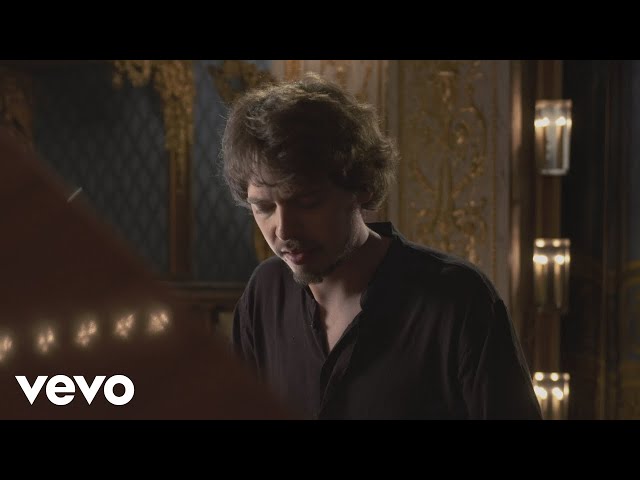
Scarlatti, who wrote as many as 555 keyboard sonatas during the Baroque era.
Among them, this work in F major is characterized by its bright, lively mood.
It exquisitely blends an angelic charm, as if angels were dancing, with technically demanding passages that could easily tangle the fingers.
Perhaps influenced by life at the Spanish court, its dance-like rhythms are also captivating.
Though the performance time is short—about four minutes—it is a compelling piece that demands a light touch and a clear sense of rhythm.
This work lets you fully savor Scarlatti’s unique sound world—be sure to give it a listen.
Sonata in D minor, K. 9Domenico Scarlatti

This piece in D minor is known for expanding the possibilities of keyboard instruments.
Though light and bright in character, its highly rhythmic development is striking.
Hallmarks of Baroque music—ornaments and improvisatory elements—appear throughout, making it a work that challenges the performer’s interpretive choices.
Notably, it shows the influence of the Iberian Peninsula’s folk music: Spanish-style rhythms and melodic turns lend the entire piece a distinctive charm.
Over the roughly three and a half minutes of performance time, elegance and rhythmic energy intertwine in a way that captivates listeners.
It’s recommended not only for those interested in classical music, but also for anyone drawn to works that incorporate elements of folk traditions.
Sonata in D minor, K. 1 (L. 413)Domenico Scarlatti

Among Scarlatti’s keyboard sonatas, this is one of the most famous.
It was published in 1738 as part of a collection of harpsichord studies.
Written in D minor, the piece is characterized by descending right-hand scales, broken thirds, wide leaps in the left hand, and repeated chords.
Its structure also suits technical practice, with features such as varying widths of left-hand leaps between the first and second halves.
Although the performance time is relatively short—about 2 minutes and 40 seconds—the work conveys rich musicality.
While composed for harpsichord, it is often performed on the modern piano as well, demanding solid technique and expressive nuance from the performer.
If you’re studying keyboard instruments, give it a try.
Sonata in D minor, K. 1 (L. 366)Domenico Scarlatti

Despite its brief duration, this work by Scarlatti is brimming with dense musical ideas.
Composed between 1738 and 1739, it reflects the influence of Spanish folk music and incorporates technically challenging elements.
Its distinctive melodic lines and rhythms, along with innovative harmonic progressions, are captivating.
The interplay of incisive rhythms and passionate melodies makes it recommended not only for fans of Baroque music but also for those studying keyboard instruments.
Performed on harpsichord or piano, this piece can be considered a valuable work that conveys Scarlatti’s creativity and innovation to the present day.
Sonata in B minor, K. 27 (L. 449), Sonata in E minor, K. 198 (L. 22)Domenico Scarlatti

This keyboard sonata composed by Scarlatti is a work brimming with the allure of Baroque music.
Its lively rhythms, vivid melodies, and refined harmonies are captivating to listeners.
Though brief, it is packed with dense musical ideas, striking a superb balance between technical difficulty and musical expression.
One can also feel the influence of Italy’s traditional music and Spain’s folk music, showcasing Scarlatti’s originality.
Expanding the possibilities of the keyboard, this piece is recommended not only for classical music fans but also for anyone interested in Baroque music.
Sonata in D minor, K.120 (L.215)Domenico Scarlatti

A piece notable for the striking contrast between the light, flowing right-hand passages and the left hand’s simple yet beautiful chords.
The middle section shifts dramatically to a powerful, dance-like character; after the initial lively melody returns, the coda presents a brilliant rendition of the middle section’s dance and brings the work to a spirited close.
Its crisp pacing keeps both performer and listener engaged.
Heard on the harpsichord, it may evoke the Baroque atmosphere even more strongly.
This work perfectly fuses Scarlatti’s inventive compositional techniques with the influence of Spanish folk music, letting you feel the innovation that expanded the possibilities of keyboard instruments.
Sonata in A major, K.101 (L.494); Sonata in B minor, K.87 (L.33); Sonata in E major, K.135 (L.224)Domenico Scarlatti

Sonata in A major, K.
101 (L.
494): Allegro; Sonata in B minor, K.
87 (L.
33); Sonata in E major, K.
135 (L.
224): Allegro.
Performed by the Ukrainian-born pianist Vladimir Horowitz.