

[Women] Popular Japanese Karaoke Songs Ranking [2026]

We’re showcasing the latest top 100 karaoke rankings for J-pop songs popular with women, all at once, ordered by most views!
You’ll instantly see which songs are in highest demand for karaoke.
If you’re unsure what to sing, be sure to use this as a reference.
The playlist is updated weekly!
- [Women] Easy-to-Sing Karaoke Songs Ranking [2026]
- Women's Popular Karaoke Rankings [2026]
- Recommended Japanese Female Artists and Popular Song Rankings for Women [2026]
- [Women] Karaoke Crowd-Pleasers Ranking [2026]
- Ranking of Beloved Hit Songs Among Women [2026]
- Songs Men Want Women to Sing at Karaoke: Irresistible Tracks [2026]
- Songs women like. Famous and popular Japanese songs.
- Karaoke Hype Songs Ranking [2026]
- Best/Loved Songs with Great Lyrics by Female Singer-Songwriters: Ranking [2026]
- Songs to Help Women Sing Better: Practice Tracks for Improving at Karaoke
- Cool If You Can Sing! Popular Karaoke Songs Recommended for Women
- Karaoke That Gets Everyone Excited: Women’s Rankings [2026]
- Recommended for women: Start your karaoke session with these! A roundup of popular Japanese songs
[Female] Popular Japanese Karaoke Ranking [2026] (91–100)
Thank youikimonogakari92rank/position

In 2010, it gained popularity across a wide range of generations as the theme song for the NHK morning drama Gegege no Nyobo.
Some women in their 30s may have used “Arigatou” for their weddings, graduation ceremonies, or family videos.
By the way, the melody at the beginning of the lyrics ascends like a Do-Re-Mi-Fa-So staircase, making it very easy to understand and pitch.
The subsequent high notes rise on na- syllables, so project firmly toward the distance without straining.
In any case, focus on expressiveness: open your throat, create a clear path for your breath, and you’ll find it feels great to sing!

Mutual loveaiko93rank/position

Aiko often has songs that span a wide range from low to high notes.
In the new song “Sōshi Sōai,” the key range looks wide at G#3–C#5, but the actual sung range is lower than you might expect.
The B4 range is used in the chorus and elsewhere, but for most women, that pitch should come out naturally without much effort.
Rather than a “cheerful!” vibe, it’s a song that strongly conveys “bittersweet emotion,” so it’s one you can sing with a calm tone.
When you actually try singing it, you may find many phrases where the pitch drops at the end of the melody lines, which can make intonation tricky for some.
It’s true that moving from low to high can be easier if you have momentum, but going from high to low is very difficult to land accurately.
Try singing lightly while sustaining your breath all the way to the end.
wailing in griefKudō Shizuka94rank/position

Among Shizuka Kudo’s discography, which has produced numerous hit songs since her solo debut in the late 1980s, the best-selling is Dokoku, released in 1993.
It’s a masterpiece with lyrics by Miyuki Nakajima and music by Tsugutoshi Goto, and many women in their 40s today likely have this song in their karaoke repertoire.
The song is set in a relatively low key for a female vocal, making it a great choice for women with lower voices who struggle with high notes.
Kudo’s characteristic, sultry vibrato is applied naturally, yet the difficulty level is modest, with a very memorable and easy-to-sing melody line.
It’s also recommended for those aiming for high scores at karaoke.

to go see (someone) / to go meetaimyon95rank/position

Aimyon is a nationally popular singer-songwriter.
Her musical style, which mixes folk and pop, is striking, and she has released many hit songs to date.
Among her works, the one I especially recommend for women who are tone-deaf is AinI Iku Noni (“Even Though I’m Going to See You”).
This piece has a gentle, folk-like feel with no sudden jumps in pitch.
It also has few high notes, so even those who struggle with falsetto can sing it with confidence.

EverythingMISIA96rank/position

This is MISIA’s seventh single overall, released in October 2000.
MISIA is known for her exceptional vocal ability, and her performance on this track is outstanding.
In that sense, it may be considered relatively difficult for karaoke.
However, because the melody features many long sustained notes and the tempo is slow, it’s very easy to add dynamics.
That makes it a song where you can aim for a high score in categories like “expression” in karaoke scoring.
It’s a slightly advanced pick, but listen closely to the original and give it a try.
It’s also an ideal track for practicing handling long tones, such as vibrato.

hanatabamilet97rank/position
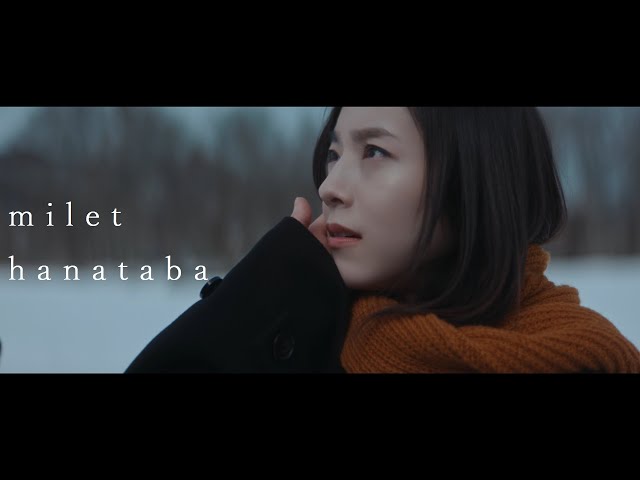
This is a poignant, ballad-style song that captures the feeling of carefully nurturing a small glimmer of hope.
It delicately portrays deep emotions and inner conflict toward a loved one, as well as the warm light felt within that relationship.
milet’s expressive artistry and translucent vocals gently resonate with listeners.
Chosen as the theme song for TBS’s Sunday drama “Anti-Hero,” this track showcases the unique expressive power that only milet—who has produced numerous acclaimed works including the album “eyes”—can deliver.
Its melody beautifully conveys subtle emotional shifts, making it a perfect fit for singers with a powerful voice.
Perform it at karaoke, and you’re sure to turn heads!
chantAdo98rank/position

It’s the official theme song for Universal Studios Japan’s Halloween event—the one that made the zombie dance famous! It’s an extremely challenging song packed with high-pitched shouts, low-voiced narration, and rap-style sections.
I learned it together with my students during lessons! The lyrics include some difficult words, so I recommend listening to the original track and making sure to learn it piece by piece.
The tempo is fast and you have to keep singing one line after another; if you strain too much, you’ll wreck your throat, but if you hold back too much, it loses impact.
If you use your breath properly and project a strong falsetto, you can sing it with a cool tone! Since it’s also a dance track, once you get comfortable, try swaying your body while you sing—locking into the rhythm can make it easier to produce sound and add accents.
This one definitely gets the crowd going, so even just having a rough idea of the song might be worth it!