

[Women] Popular Japanese Karaoke Songs Ranking [2026]

We’re showcasing the latest top 100 karaoke rankings for J-pop songs popular with women, all at once, ordered by most views!
You’ll instantly see which songs are in highest demand for karaoke.
If you’re unsure what to sing, be sure to use this as a reference.
The playlist is updated weekly!
- [Women] Easy-to-Sing Karaoke Songs Ranking [2026]
- Women's Popular Karaoke Rankings [2026]
- Recommended Japanese Female Artists and Popular Song Rankings for Women [2026]
- [Women] Karaoke Crowd-Pleasers Ranking [2026]
- Ranking of Beloved Hit Songs Among Women [2026]
- Songs Men Want Women to Sing at Karaoke: Irresistible Tracks [2026]
- Songs women like. Famous and popular Japanese songs.
- Karaoke Hype Songs Ranking [2026]
- Best/Loved Songs with Great Lyrics by Female Singer-Songwriters: Ranking [2026]
- Songs to Help Women Sing Better: Practice Tracks for Improving at Karaoke
- Cool If You Can Sing! Popular Karaoke Songs Recommended for Women
- Karaoke That Gets Everyone Excited: Women’s Rankings [2026]
- Recommended for women: Start your karaoke session with these! A roundup of popular Japanese songs
Women: Popular Japanese Karaoke Ranking [2026] (41–50)
secret base ~What You Gave Me~ZONE50rank/position

ZONE, who were hugely popular as a girls’ rock band.
“secret base ~Kimi ga Kureta Mono~” was the theme song for the drama Kids War 3: ‘Don’t Mess With Me.’ Speaking of Kids War, it was all the rage when I was in elementary school! I bet tons of people sang it at karaoke, right? The melody line is simple with few leaps, so you can sing it calmly.
The parts outside the chorus are a bit low, so you might find it hard to catch the pitch.
Try singing as if you’re using a lot of breath and pushing your voice forward in front of you.
That way your body will resonate and you’ll hear your own voice more clearly!

[Women] Popular Japanese Karaoke Ranking [2026] (51–60)
fragileEvery Little Thing51rank/position

It’s a song by Every Little Thing that expresses the feeling, “I can’t quite be honest, but deep down I truly love you.” The lyrics are practically a confession of love—so much so that it’s hard to imagine any man feeling nothing if it’s sung right in front of him.
If you sing it with gratitude for having met him and with the wish to keep spending time together from now on, even a man who has only ever seen you as a friend won’t be able to help but take notice.
Why not try singing it with a touch of longing, imagining Kaori Mochida’s clear, expansive voice?

Girl RayMikito P52rank/position
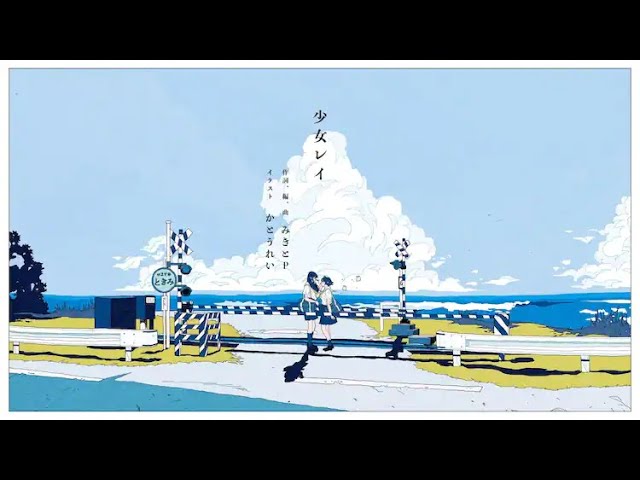
Mikito-P, a Vocaloid producer known for works like “Ii Aru Fan Club” and “Roki,” places emphasis on a classic Vocaloid style, capturing the unique excitement that only Vocaloid can deliver.
While many of his songs are challenging, there are also some that are easy to sing—such as “Shoujo Rei.” Its composition is closer to J-pop, without the typically dense word count found in many Vocaloid tracks.
The vocal range is a moderately high mid2A to hiF, but since the highest note occurs due to a key change, you should be able to sing it comfortably by adjusting the key appropriately.

Unchanging ThingsOku Hanako53rank/position

Okuda Hanako’s classic song “Kawaranai Mono” (“The Unchanging”).
Released in 2006, it’s well known as an insert song for the film The Girl Who Leapt Through Time, and its orthodox J-pop ballad style has garnered support from many listeners.
The song’s vocal range spans mid2 A# to hi C#, which is a very comfortable and relatively narrow range for female singers.
While the final chorus features a solid development, there’s no key change, so you’re unlikely to struggle with vocal height.
In terms of range, pitch movement, and rhythm, it’s an easy song overall—definitely give it a try.
crescent moonayaka54rank/position

Ayaka’s signature song “Mikazuki.” Since it’s a ballad, as long as you don’t rush the tempo and sing carefully, I think anyone can aim for a score of 90.
The unique pauses in the A verse of “Mikazuki” are very important, so I recommend singing while firmly keeping the rhythm with your body.
Also, you might feel like adding vibrato on the long tones, but try holding back at first and extend your voice straight.
In JOYSOUND’s karaoke scoring rankings, the top spots seem to be in the high 90s, so it’s a masterpiece where you can expect a high score if you practice thoroughly.
instinctShiina Ringo55rank/position

Ringo Sheena’s songs, which depict instinctive human desires, impulses, and inner conflicts, are captivating for their distinctive sound grounded in alternative rock and interwoven with elements of jazz and classical music.
Candidly portraying emotions such as jealousy and narcissism, they also express an adult reality that has shed the moratorium of youth.
Released in October 1999, this work was selected as the ending theme for the Nippon TV music program “FUN” and reached No.
2 on the Oricon Weekly Chart.
Its music video—set in a hospital with innovative direction—also drew attention, winning the BEST FEMALE VIDEO award at the SPACE SHOWER MUSIC VIDEO AWARDS.
With powerful vocals and highly message-driven lyrics, it’s a recommended track for those who want to enjoy self-expression at karaoke.
To the futureKiroro56rank/position
There’s a well-known story that Chiharu Tamashiro wrote this song when she was in her third year of junior high school, as a letter to her mother, and on YouTube there are many comments saying, “I can’t sing this song because I start crying.” Also, because it carries a sense of graduation, it’s become a standard graduation song often sung in junior high and high school music classes and choir competitions.
The overall vocal range of the song is G3 to D5, building toward the latter half and including some quite high passages.
The D5 is where the chorus lifts sharply—time your entry and attack it like a precise needle prick!