

Women's Popular Karaoke Rankings [2026]

Introducing the top 100 songs from the women’s karaoke popularity rankings, all at once, ordered by the number of views!
If you’re wondering, “What should I sing at karaoke?”, be sure to check out this ranking and prepare in advance!
We’ve included everything from guaranteed crowd-pleasers to stunning, stop-you-in-your-tracks tracks.
Playlists are updated weekly!
- Top Karaoke Songs That Get 20-Somethings Hyped [2026]
- [For People in Their 40s] Karaoke Songs That Are Easy to Sing: 2026 Ranking
- [Women] Easy-to-Sing Karaoke Songs Ranking [2026]
- Songs Men Want Women to Sing at Karaoke: Irresistible Tracks [2026]
- Ranking of Beloved Hit Songs Among Women [2026]
- Karaoke That Gets Everyone Excited: Women’s Rankings [2026]
- Karaoke Popularity Ranking by Generation [50s] [2026]
- [Women] Karaoke Crowd-Pleasers Ranking [2026]
- [For Teenage Girls] Songs That Score High Easily at Karaoke [2026]
- [For Women in Their 40s] A Collection of Songs That Score High at Karaoke [2026]
- [Women] Popular Japanese Karaoke Songs Ranking [2026]
- [For People in Their 50s] Ranking of Easy-to-Sing Karaoke Songs [2026]
- [High School Students] Karaoke Songs That Are Easy to Sing: Ranking [2026]
[Women] Popular Karaoke Rankings [2026] (71–80)
Dinner Songtuki.78rank/position
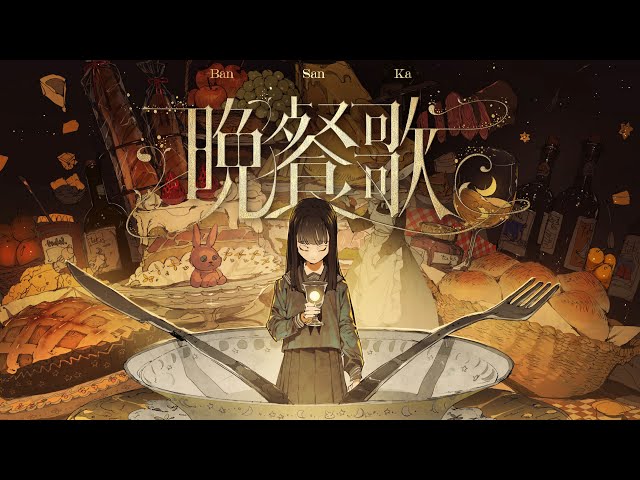
The songs by 15-year-old singer-songwriter tuki.
portray the complex emotions of love and separation.
With emotional depth and delicacy, this work leaves a strong impression on listeners.
Released in September 2023, the song has also achieved commercial success, reaching No.
1 on the Billboard Japan singles chart and the Oricon weekly streaming chart.
tuki.’s expressive vocals and a simple yet emotionally resonant melody have captivated many listeners.
Even those who aren’t confident at karaoke can sing it with feeling, so why not give it a try?
Tomorrow as wellSHISHAMO79rank/position

An energetic rock number that blows away the fatigue from weekday work and study.
Included on SHISHAMO’s album “SHISHAMO 4,” released in February 2017, this track is widely known as an NTT Docomo commercial song.
As an anthem cheering on people who work hard every day, it resonates with many listeners.
The lyrics, filled with a forward-looking determination to go see the person who supports you on the weekend, are perfect for women giving their all each day.
The key change in the chorus is exhilarating, and it’s sure to be a hit if you sing it together at karaoke.
Pick it when you want to liven up a girls’ night out.
Unrequited loveAimer80rank/position

This is a 2016 song by Aimer.
“Kataomoi” is characterized by a tearful, emotive vocal tone.
Rather than being a song sung entirely in falsetto, there are moments where the high phrases are sung in falsetto or a mixed voice.
It might be good for those trying falsetto for the first time or practicing it.
A suggested progression is: first, learn to sing it in chest voice → then sing the parts that feel high with a stronger, mix-leaning approach → then challenge yourself with falsetto.
In the end, if you’re not used to either chest or falsetto, you’ll use more breath than you think.
It’s important to focus on diaphragmatic breathing and take in plenty of air.
When producing sound, aim to resonate in the head and try to let the voice out as gently as possible.

[Women] Popular Karaoke Ranking [2026] (81–90)
Please forget it.Yorushika81rank/position

Yorushika’s famous song “Please Forget.” While Yorushika spans a wide range of musical styles, isn’t their most compelling side ultimately their ennui-tinged aesthetic? This piece is an achingly melancholic track that showcases that very charm.
Its distinct, surreal performance makes effective use of silence, and the gentle vocal line sung in a whispery voice is uniquely characteristic yet very simple.
It might sound like a demanding song, but the vocal range is actually quite narrow, so as long as you set it to a suitable key, anyone can sing it without trouble.

Single AgainTakeuchi Mariya82rank/position

Released in 1989 as the 18th single, it was used as the theme song for the TV drama “Tuesday Suspense Theater.” The song portrays the wavering emotions of a woman who hears rumors that her ex-boyfriend, after marrying another woman, has divorced and become “single” again.
It has been covered by many artists, including Hideaki Tokunaga, Yasushi Nakanishi, and JUJU.
With a moderate tempo and manageable melodic range, its singability is one of its appeals, making it approachable even for karaoke beginners.
secret base ~What You Gave Me~ZONE83rank/position

Selected as the theme song for the third installment of the popular drama series “Kids War,” which starred Mao Inoue, this is one of ZONE’s signature tracks and remains highly popular to this day.
Even long after its release, it has continued to be covered by various well-known artists, and it drew attention when a cover by a popular voice actor was used in “Anohana: The Flower We Saw That Day.” For women in their 30s, it’s likely a song that evokes a strong sense of nostalgia.
Hello, Again ~A Place That’s Been Around Since Long Ago~My Little Lover84rank/position

My Little Lover’s famed song “Hello, Again ~A Place That’s Always Been~” garnered nationwide popularity.
Adhering to orthodox pop conventions, this piece keeps the vocal range compact throughout.
Because the melodic rises and falls are very gentle, it isn’t particularly low, but as long as you choose the right key, even women in their 40s with lower voices should find it easy to sing.
It’s also a big hit at karaoke, so consider adding it to your repertoire.