

Gabriel Fauré Popular Songs Ranking [2026]

Gabriel Fauré, known as one of France’s foremost composers and also active as an organist and pianist, bridged Romanticism and modern music, influencing many composers who followed.
He was also renowned as an educator, serving as director of the Paris Conservatoire.
Here, we present a ranking of Gabriel Fauré’s most popular works—so even if you don’t usually listen to classical music, why not take this opportunity to give them a try?
- Gabriel Fauré | Introduction to His Famous and Representative Works
- Cécile Chaminade Popular Song Rankings [2026]
- Déodat de Séverac Popular Song Rankings [2026]
- César Franck Popular Songs Ranking [2026]
- Francis Poulenc Popular Songs Ranking [2026]
- Jules Massenet Popular Song Rankings [2026]
- Compilation of Sad BGM You've Heard Somewhere [Famous]
- François Couperin Popular Songs Ranking [2026]
- Olivier Messiaen Popular Songs Ranking [2026]
- Jean-Philippe Rameau Popular Songs Ranking [2026]
- Manuel de Falla Popular Song Rankings [2026]
- Jean Sibelius Popular Songs Ranking [2026]
- Jacques Ibert Popular Song Ranking [2026]
Gabriel Fauré Popular Songs Ranking [2026] (41–50)
Lullaby in D minor, Op. 16Gabriel Fauré50rank/position

The short piece Fauré composed around 1879 was originally written for violin and piano.
Dedicated to his close friend Hélène Depret, it is characterized by a gently rocking melody in 6/8 time.
Its graceful, delicate melody and accompaniment are captivating, conveying Fauré’s distinctive serene beauty.
Set at an Allegretto moderato tempo, the work leaves an impression of an overall calm tone.
Fauré later arranged a version with orchestral accompaniment himself, and it has been adapted for various instrumental combinations.
It’s a recommended piece for those seeking gentle tranquility.
Gabriel Fauré Popular Songs Ranking [2026] (51–60)
From ‘Requiem’ in ParadiseGabriel Fauré51rank/position

Arranged for solo piano from a religious piece notable for its angelic, graceful melody, this work captivates with its gentle, soothing character.
It is a movement from a composition first performed in January 1888 at the Church of La Madeleine in Paris, and many listeners may recognize it from its frequent use in films and television.
The tender, heavenward flow of sound is filled with consolation and hope, showcasing delicate expressions characteristic of the French style throughout.
With few technical demands and a relaxed tempo, it is an enjoyable piece for piano learners to practice.
It is an ideal choice when you wish to calm the mind or perform with a tranquil spirit.
Clair de lune from the song collection “Two Songs”Gabriel Fauré52rank/position

Composed in 1887, this song is one of the signature works by Gabriel Fauré, a composer who represents France.
Fauré entered a Paris music school at the age of nine and studied under Saint-Saëns, among others, showing his musical talent from an early age.
The piece is based on a poem by Paul Verlaine and depicts a masked ball under the moonlight.
The contrast between its glittering exterior and the melancholy hidden within is exquisitely rendered through Fauré’s delicate musical expression, making it a captivating work.
It is wonderful to hear as a voice-and-piano ensemble, but a solo piano performance reveals a different kind of charm.
It’s a perfect piece to listen to on a long autumn night, lost in thought.
From the song cycle Three Songs, Op. 7: No. 1, After a DreamGabriel Fauré53rank/position

Composed in his youth by Gabriel Fauré, one of France’s foremost composers, this work depicts the sorrow of being pulled back to reality from a dreamlike world spent with a beloved.
It is characterized by graceful melodies and delicate emotional expression.
Although originally written as a song with piano accompaniment, arrangements for cello and violin are also widely performed.
It has been used in films and television dramas and is loved by many.
This masterpiece, which fully showcases Fauré’s talent, is recommended for those who wish to feel the emotions wavering between dream and reality.
Suite “Dolly,” Op. 56Gabriel Fauré54rank/position
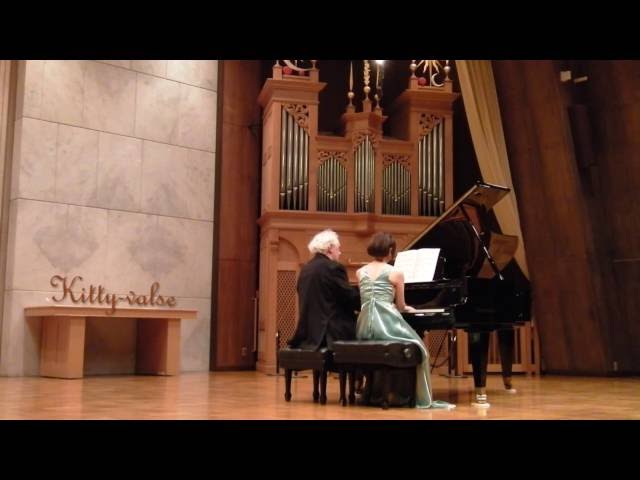
A collection of piano duets Fauré composed for the daughter of a friend.
Written between 1893 and 1896, the six pieces each bear a title inspired by events in Hélène’s life and her growth.
Ranging from the gentle “Berceuse” to the dazzling “Spanish Dance,” the set showcases a wide palette of expressions, with Fauré’s characteristic delicate harmonies and deep emotional nuance throughout.
An orchestral version was later created, and the music became widely known, even being used on a British radio program.
Graceful and approachable, this warm work brimming with affection for a child is well worth a listen.
Lullaby, No. 1 from the Suite “Dolly,” Op. 56Gabriel Fauré55rank/position

The famous piano duet masterpiece, Suite: Dolly.
Among Gabriel Fauré’s works, it is particularly well known and popular.
This time, I’d like to recommend the Piano Solo arrangement of Suite “Dolly,” Op.
56: No.
1 Berceuse, made by Alfred Cortot, one of the leading French pianists of the early 20th century.
The difficulty is around intermediate level, and its greatest charm lies in the broken chords.
It’s one of the easier pieces in Suite: Dolly and approachable even for beginners, though you might stumble at the middle section where it modulates to C major.

Suite ‘Dolly’ Op. 56 No. 3 ‘Dolly’s Garden’Gabriel Fauré56rank/position

This captivating piece fashions a new melody from an old piano sonata.
It portrays the tranquility of a garden through a child’s pure perspective, marked by a flowing, beautiful tune and the graceful harmonies characteristic of French music.
Composed as a New Year’s gift in 1895 for a friend’s daughter, it carries a gentle, delicate emotional tone, vividly depicting a child’s innocence and the beauty of nature.
Distinguished by the rich sonority afforded by the piano four-hands format and its soft expressiveness, the ensemble woven by the two pianists is sure to soothe the listener.
A work imbued with the flavor of the transition from Romanticism to Impressionism, it is an ideal choice for those who wish to savor and perform music with an elegant atmosphere.