

![Takashi Hosokawa Popular Song Rankings [2026]](https://i.ytimg.com/vi_webp/V7E3kn1Y64A/maxresdefault.webp)
Takashi Hosokawa Popular Song Rankings [2026]

He, who can be considered a grand master among Japanese enka singers, is a certified performer of the Min’yō Mihashi school and also goes by the name Michitaka Mihashi.
Renowned for his overwhelming vocal prowess, he produced numerous hit songs such as “Yagiri no Watashi” and “Naniwabushi Dayo Jinsei wa.”
Here is a collection of his popular tracks.
Takashi Hosokawa Popular Songs Ranking [2026] (1–10)
North TavernHosokawa Takashi1rank/position
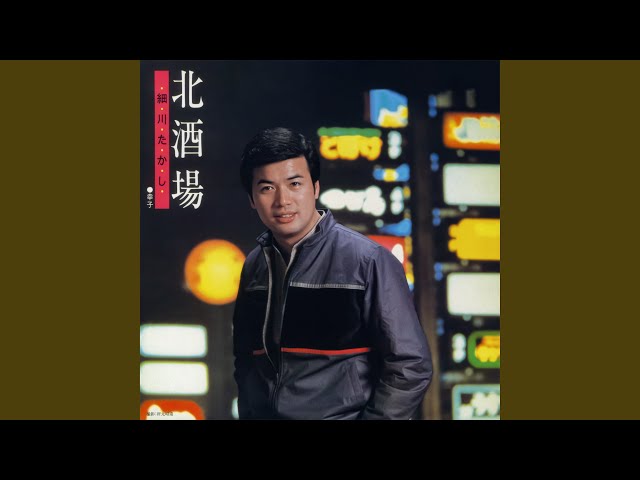
This work was released in 1982 by singer Takashi Hosokawa, who has been active since the 1970s.
Set to a lively melody typical of Showa-era kayōkyoku, it portrays an adult romance unfolding in a bar in a northern town.
The fateful encounter with someone who lights his cigarette, and the poignancy of a man reminiscing over a tilted glass, leave a strong impression.
A classic that won the Grand Prix at both the Japan Record Awards and the Japan Cable Radio Awards, it also ranked fifth on the annual Oricon chart and remains a karaoke favorite.
Since it centers on themes of alcohol and love, it’s great to listen to while sharing memories.
Singing along or adding chorus to his gentle vocals will make it even more fun.
Nostalgic JonkaraHosokawa Takashi2rank/position

Takashi Hosokawa is known for his naturally expansive high notes and exceptional vocal ability and expressiveness, grounded in a background in folk music.
This work is one of his signature songs, released in 1985—a masterpiece among masterpieces that overwhelms with its striking shamisen tones in the intro and Hosokawa’s folk-influenced singing.
Even an amateur can grasp the difficulty of mastering this song from the very beginning, but the folk-style sections are arguably the toughest part.
That said, the main sections also feature many performances marked by Hosokawa’s trademark powerful high notes and sustained tones, demanding considerable lung capacity.
You’ll likely find it very difficult to keep time in the folk-style parts as well, so listen to the original track repeatedly and train your body to internalize the rhythm and melody.
Life is like a Naniwa-bushi (a melodramatic ballad).Hosokawa Takashi3rank/position

Takashi Hosokawa’s powerful vocals resonate in the heart in “Naniwabushi da yo, Jinsei wa.” The song was originally released in 1976 as a track by Yukiko Ono, but the version Hosokawa released in August 1984 has become widely beloved.
While built on the framework of enka, it strongly reflects the mass appeal of kayōkyoku, portraying life’s joys and sorrows with memorable lyrics and bold melodic turns.
It also won the Best Vocal Performance at the 26th Japan Record Awards in 1984, so many people have likely heard it.
Its warm worldview, embracing duty, compassion, and the frustrations of life, will gently stay close to your heart and give you a nudge forward when you feel a bit worn out by everyday life.
Yagiri no Watashi (Yagiri Ferry)Hosokawa Takashi4rank/position

Known for his natural singing voice and outstanding vocal prowess, Takashi Hosokawa’s song is his 19th single, released in February 1983.
Set against the backdrop of “Yagiri no Watashi,” a ferry crossing dating back to the Edo period, the song features a wistful melody and evocative lyrics that portray the emotions of a couple eloping.
It topped the Oricon Weekly Chart for three consecutive weeks and won the 25th Japan Record Award.
It also gained major attention as an insert song in the TBS drama “You’re Not the Only One Who’s Lonely.” Hosokawa’s powerful vocals convey the couple’s strong bond and determination, leaving a deep impression on listeners.
With total sales of 1.025 million copies, this masterpiece is a must-listen for anyone standing at a crossroads in life.
lingering regretHosokawa Takashi5rank/position

As Takashi Hosokawa’s debut song, the timeless classic “Kokoro Nokori” is still loved by many.
Because it was released before Hosokawa delved into traditional folk singing, it doesn’t feature particularly complex kobushi (ornamental vocal turns).
The song sits a bit on the higher side, but the vocal line is relatively simple; as long as you focus on a smooth, sustained delivery, it’s quite singable.
The overall range isn’t very wide, so if you set it to your comfortable key, you should be able to sing it without any trouble.
Be sure to give it a listen.

Man BoatHosokawa Takashi6rank/position

A classic enka masterpiece portraying the brave figure of a fisherman confronting the rough northern seas.
The powerful melody woven by Tsugaru shamisen and trumpet vividly captures the image of a boat drifting upon a raging ocean.
The man’s feelings for his mother and the pathos surrounding a man’s way of life tug at the heart.
Released in July 2024 to commemorate Takashi Hosokawa’s 50th anniversary in the performing arts, this work is set in Esashi, Hokkaido, and sings of a man’s solitude and indomitable spirit.
The coupling track also includes “Oenka, Ikimasu,” with lyrics by Shigesato Itoi.
Highly recommended not only for enka fans but also for anyone seeking the courage to face life’s stormy seas.
Love Song of SadoHosokawa Takashi7rank/position

This is a signature song by Takashi Hosokawa, renowned for his overwhelming vocal power honed through folk music.
Released in December 1991 as his 39th single, it won the Oricon Long Seller Award and was performed at the NHK Kōhaku Uta Gassen the following year.
The song is set on Sado Island, expressing a deepening longing for a lover across the sea, sung with rich emotion.
Though so close, they remain out of reach—an aching frustration.
You can almost see the protagonist projecting their helpless feelings of love onto the waves crashing against the rugged shore and the birds flying across the sky.
Hosokawa’s own lyricism, brimming with poetic sensibility, blends beautifully with the folk-inspired phrasing inherited from his mentor, moving listeners to the core.
It’s a song that draws you into its bittersweet world—perfect for moments of travel-inspired reverie or nights when you’re thinking of someone far away.