

![Sayuri Ishikawa Karaoke Hit Songs Ranking [2026]](https://i.ytimg.com/vi_webp/jVkQm4Fpui8/maxresdefault.webp)

Speaking of Sayuri Ishikawa, she is such a famous enka singer that there’s hardly anyone who doesn’t know her.
She debuted in 1973 and has released many songs over more than 40 years of her singing career.
Here, we will introduce her popular songs in a ranking format.
- Sayuri Ishikawa Popular Song Ranking [2026]
- Classic enka songs you’ll want to sing at karaoke: recommended popular tracks
- [Queen of Enka] A Collection of Easy-to-Sing Songs by Sayuri Ishikawa [2026]
- [Karaoke] A roundup of songs that are easy for women to sing!
- Hiroshi Itsuki Popular Songs Ranking [2026]
- Chiyoko Shimakura’s Most Popular Songs Ranking [2026]
- [2026] Representative Famous Enka Songs: A Compilation of Classic Favorites [Beginner-Friendly]
- [For People in Their 40s] Karaoke Songs That Are Easy to Sing: 2026 Ranking
- Miyuki Nakajima’s Most Popular Karaoke Songs Ranking [2026]
- [For People in Their 50s] Ranking of Easy-to-Sing Karaoke Songs [2026]
- Sachiko Kobayashi Popular Songs Ranking [2026]
- Enka Singer Popularity Ranking in Karaoke [2026]
- Hitomi Ishikawa Popular Songs Ranking [2026]
Sayuri Ishikawa Karaoke Popular Songs Ranking [2026] (1–10)
Crossing Amagi PassIshikawa Sayuri1rank/position

This is a classic masterpiece in the history of Japanese popular music that won the Gold Prize at the 28th Japan Record Awards.
Set at the Amagi Pass in Izu, it dramatically portrays a woman’s intense passion and has been performed many times on the Kōhaku Uta Gassen.
When you think of Sayuri Ishikawa, the two top songs that come to mind are Amagi-goe and Tsugaru Kaikyō Fuyugeshiki.
The overall vocal range of the song is F3 to D#5, with a structure that surges from the chorus.
Since the A and B sections are quite calm, be careful not to strain when you enter the chorus.
If you take a solid breath right before the chorus and imagine projecting your voice with momentum, it should come out more easily.
The trick is to sing as if you’re aiming your voice as far into the distance as possible.

Tsugaru Strait – Winter SceneIshikawa Sayuri2rank/position
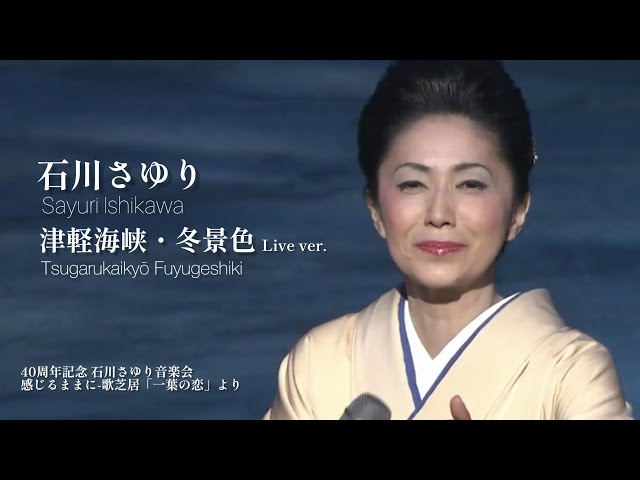
Sayuri Ishikawa’s signature song “Tsugaru Strait—Winter Scene,” released on January 1, 1977, is a masterpiece that portrays parting and resolve set against the northern strait, and it marked her turning point into a full-fledged enka singer.
The intro is also very striking—so famous you can hum it right from the start.
The song’s overall range is a slightly high F#3–D5, and the chorus suddenly leaps into the high register, so be careful—some people may end up tensing up by trying to sing powerfully.
Keep your head resonance engaged at all times, and when you go into the high notes, aim to resonate in the same place.
Eternal JourneyIshikawa Sayuri3rank/position

The single song “Tokoshie no Tabi,” released in June 2024, is a single by Sayuri Ishikawa, with lyrics by Goro Matsui, music by Tokiko Kato, and arrangement by Neko Saito.
It conveys a sense of compassionate, Buddha-like serenity that reflects her long career, while her unchangingly beautiful voice leaves you feeling purified.
While retaining elements of enka, the song has the vibe of a medium-tempo J-pop ballad, so Ishikawa refrains from kobushi ornamentation and heavy vibrato, instead delivering the wistful melody gently—making it easy to sing even for those who aren’t fond of enka.
Take time to read the lyrics thoroughly, and try to sing with heartfelt feeling.

Iyasa(ka), YassaiIshikawa Sayuri4rank/position

This enka number, themed on Noto’s traditional Abare Festival, delivers a bold, powerful impression.
With lyrics by Shohei Mozu and composition by Keisuke Hama, it’s an ambitious work set to be released in March 2025 as a song by Sayuri Ishikawa.
The layered chants create a vibrant sense of motion, while the intricate arrangement enhances the song’s appeal.
It’s a track brimming with immediacy, as if you can feel the festival’s heat and hear people’s breathing.
Carrying the spirit of a festival with a 350-year history into the present, it sings grandly of prayers for health and bountiful harvests.
It’s a song you’ll want to hear when you need a lift or when you’d like to sing along with someone special.
You like whisky, don’t you?Ishikawa Sayuri5rank/position

This song is a very popular number—a mellow, bittersweet blend of jazz and enka.
It’s also a karaoke favorite.
The melody follows a familiar flow, making it easy to sing.
The key is to take it slow and avoid rushing, singing in a way that draws listeners in.
Try delivering it with a relaxed, distinctive tempo and a mature sound.
Your karaoke room might just turn into another world (lol).

Tokyo Meguri-ai (Tokyo Serendipitous Encounters/Love by Chance in Tokyo)Ishikawa Sayuri / Kotokaze6rank/position

This is a duet released in August 1984 by the unusual pairing of Sayuri Ishikawa, known as a treasure of the enka world, and Masanori Kotonofuji (formerly the sumo wrestler Kotonofuji) after his transition from professional sumo.
The story portrays lovers who reunite in Tokyo after being apart and reaffirm their love, expressed through Rei Nakanishi’s emotionally rich lyrics and Shosuke Ichikawa’s wistful melody.
The work received the Planning Award at the 26th Japan Record Awards and was also performed at the 35th NHK Kouhaku Uta Gassen that same year.
It’s a perfect song to sing in sync with a duet partner at karaoke or in a snack bar.
Naniwa SistersShimakura Chiyoko, Ishikawa Sayuri7rank/position

For fans of enka and kayōkyoku, this is an unmissable duet: a song released in October 1987 by Chiyoko Shimakura and Sayuri Ishikawa.
Set in the back alleys of Osaka, its lyrics—sprinkled with Kansai dialect lines—vividly depict the bond of two sisters helping each other.
Carried by a gently flowing enka-style melody, their voices blend beautifully, evoking the feeling of real sisters.
Place names like “Iroha Yokocho” and “Sumiyoshi-san” also appear, steeping the song in Osaka’s atmosphere.
It’s a must for enka fans and a great pick for anyone who wants to savor the mood of the Showa era.