

![Jean-Philippe Rameau Popular Songs Ranking [2026]](https://i.ytimg.com/vi_webp/hr6l8nkMwYw/maxresdefault.webp)

Jean-Philippe Rameau, a French composer known as the first music theorist to systematically develop functional harmony and tonality.
He served as an organist at places such as Clermont Cathedral, Dijon, and Lyon, but he is also known for originally having studied law.
His title as Composer to the French Royal Court further attests to his versatility and distinguished career.
In this article, we present a ranking of Jean-Philippe Rameau’s most popular works!
- François Couperin Popular Songs Ranking [2026]
- A masterpiece by Jean-Philippe Rameau. Popular classical music.
- [Masterpiece Classics] A special showcase of gem-like masterpieces so beautiful they’ll move you to tears
- Olivier Messiaen Popular Songs Ranking [2026]
- [François Couperin] Introducing famous and popular pieces by the composer who loved the harpsichord
- Jacques Ibert Popular Song Ranking [2026]
- Francis Poulenc Popular Songs Ranking [2026]
- Gabriel Fauré Popular Songs Ranking [2026]
- Georg Friedrich Handel Popular Songs Ranking [2026]
- César Franck Popular Songs Ranking [2026]
- George Frideric Handel Popular Songs Ranking [2026]
- Jean Sibelius Popular Songs Ranking [2026]
- Jules Massenet Popular Song Rankings [2026]
Jean-Philippe Rameau Popular Songs Ranking [2026] (1–10)
tambourineJean-Philippe Rameau1rank/position

Jean-Philippe Rameau’s Tambourin is a piece included in his collection of harpsichord works published in 1724.
It is a vibrant work that splendidly fuses drum-like rhythms derived from folk dances of southern France with the refined ornamental beauty of French court culture.
Though short, it combines the powerful, percussive resonance of drums with the elegance of the Baroque style, making it highly effective in performance and striking on stage—an excellent choice for recitals.
While paying attention to delicate ornaments and clear articulation, enjoy the buoyant dance rhythms that are characteristic of the genre.
Later adapted into the opéra-ballet Les Fêtes d’Hébé, it is a captivating piece that seems to condense Rameau’s dramatic musical world.
Highly recommended for those seeking a compact yet substantial work to tackle.
Ronde from “Elegant Indian Nations”Jean-Philippe Rameau2rank/position
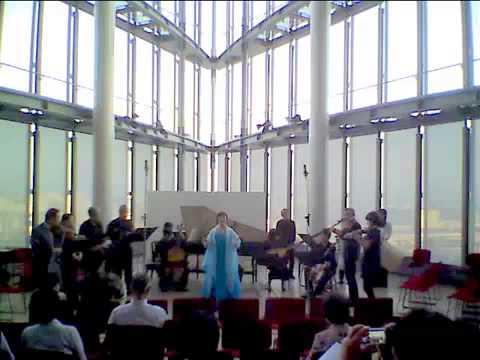
One of the composers who represent the French Baroque is Rameau.
Today, Rameau is well known for his contributions to music theory, but he was also the figure who, as Lully’s successor, developed French opera.
Les Indes galantes is a work in the genre of opéra-ballet, which was popular in the French Baroque.
Twinkle, Twinkle, Little StarJean-Philippe Rameau3rank/position

For almost everyone who has just started learning the piano, it’s no exaggeration to say that “Twinkle, Twinkle, Little Star” is the go-to beginner piece.
Its range is narrow—from C up to the A a seventh above—and it mostly moves stepwise to neighboring notes, so you can play it in time even with just one finger.
Once you’ve mastered playing the melody with a single finger, it’s a great idea to practice a one-finger accompaniment in the left hand too, so you can play with both hands.
You might also build on this by thinking, “I’ve played it with one finger—now let’s try using the other fingers!”

Hippolyte et Aricie (Ippolito to Arishī)Jean-Philippe Rameau4rank/position

At the age of fifty, Rameau made a late start as an opera composer.
His milestone first work was Hippolyte et Aricie.
With this piece, Rameau earned high acclaim as an opera composer, and its innovative, delicate orchestration moved the people of Paris.
From this work onward, Rameau would go on to lead the Parisian opera scene.
The Festival of Hebe (Les fêtes d’Hébé)Jean-Philippe Rameau5rank/position

In 1697, a style of opera known as opéra-ballet emerged, with the first work being André Campra’s L’Europe galante.
Rameau also wrote famous opéra-ballets.
His representative works include Les Indes galantes (1735) and Les fêtes d’Hébé (1739).
The Birth of Osiris La Naissance d’Osiris (Part 1/3)Jean-Philippe Rameau6rank/position

The Birth of Osiris (premiered in 1754) is an opera Rameau presented at the age of 71, created at the height of his artistic maturity.
It clearly showcases the thoughtful, intricate interplay of harmony of a composer who knew music inside out.
Hungary’s leading Capella Savaria Ensemble vividly brings out the work’s profound flavors.
Castor and Pollux (Castor et Pollux)Jean-Philippe Rameau7rank/position

“Castor et Pollux – Premiere in 1737” is a refined French Baroque drama that begins with a beautiful period-instrument prelude, leading into a serene chorus, and from there one is completely captivated by the opera’s allure.
The performance is by Nikolaus Harnoncourt with the venerable period-instrument orchestra Concentus Musicus Wien, which he founded in 1953 with members of the Vienna Symphony; they are renowned for their elegant, transparent, and superb playing.