

Jean Sibelius Popular Songs Ranking [2026]

Jean Sibelius is known as Finland’s greatest composer and is also celebrated for elevating national consciousness through his music.
The fact that his portrait appeared on banknotes until 2002 and that, since 2011, his birthday on December 8 has been celebrated as “Finnish Music Day” shows just how important he is to the Finnish people.
This time, we’ll be introducing a ranking of Jean Sibelius’s most popular works—be sure to check it out.
- Sibelius’s famous piece. Popular classical music.
- Sibelius Popular Songs Ranking [2026]
- Olivier Messiaen Popular Songs Ranking [2026]
- Yamada Kōsaku Popular Song Rankings [2026]
- Oskar Merikanto Popular Song Rankings [2026]
- César Franck Popular Songs Ranking [2026]
- Dmitri Shostakovich Popular Songs Ranking [2026]
- Bedřich Smetana Popular Songs Ranking [2026]
- Jean-Philippe Rameau Popular Songs Ranking [2026]
- Alexander Scriabin Popular Songs Ranking [2026]
- Dmitri Kabalevsky Popular Song Rankings [2026]
- Gabriel Fauré Popular Songs Ranking [2026]
- Bartók Béla Popular Song Ranking [2026]
Jean Sibelius Popular Songs Ranking [2026] (1–10)
13 Pieces Op. 76 No. 9 “Arabesque”Jean Sibelius8rank/position

Jean Sibelius, a composer who represents Finland, is especially beloved for his collections of short pieces for piano.
Among them, No.
9 “Arabesque” from the set Thirteen Pieces, Op.
76, is a work marked by speed and lightness reminiscent of Liszt’s études.
It unfolds a delicate, highly technical texture that traverses the piano’s full range, offering listeners a dynamic and captivating auditory experience.
While the piece is highly active with a bright, sprightly mood, it also conveys subtlety and refinement.
It is one of the more technically demanding works in Sibelius’s piano music and is highly recommended for pianists looking for a performance challenge.
5 Romantic Pieces, Op. 101: No. 1 “Romance”Jean Sibelius9rank/position

Jean Sibelius, born in Finland in 1865, was active from the late Romantic era into the modern period.
While he is known for patriotic orchestral works such as Finlandia, he was also a genius at creating delicate and beautiful piano miniatures.
The first piece of his late-life composition Five Romantic Pieces is a gem that fully showcases the deep emotional expression and romantic style characteristic of his later works.
By listening to or performing this piece, with its moving and memorable melody, you can fully savor the beauty of music inspired by Nordic nature and immerse yourself in Sibelius’s unique world.
5 Pieces (Suite of Trees), Op. 75: No. 2, The SpruceJean Sibelius10rank/position
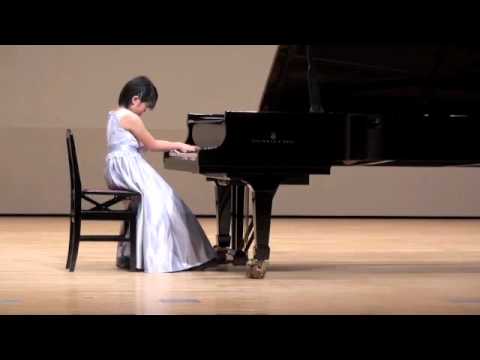
It’s a piece by Sibelius, one of the movements from the “Tree Suite.” The opening suddenly presents a cascade of many notes, which might bewilder some listeners, but it’s not as difficult to play as it sounds.
It’s a truly beautiful piece that evokes the Nordic spirit.
It is also a piece that Empress Michiko has performed.
Jean Sibelius Popular Songs Ranking [2026] (11–20)
Five Pieces (The Trees) Op. 75 No. 1: When the Rowan Tree BlossomsJean Sibelius11rank/position

The Five Pieces (Tree Suite), Op.
75 by Jean Sibelius, the composer who represents Finland in Northern Europe, is a collection that strongly reflects his deep reverence for the nature of his beloved homeland.
The first piece, When the Rowan Blossoms, features a delicate and beautiful melody evocative of the flowers of the sacred tree “rowan,” which also appears in Norse mythology.
Sibelius’s characteristic lyrical lines and romantic harmonies resonate with gentle warmth.
Brimming with the beauty and vitality of nature, this work is a masterpiece I would recommend to all music lovers with a rich sensitivity.
Five Pieces (The Trees Suite), Op. 75: No. 5 “The Spruce”Jean Sibelius12rank/position

The fifth piece, “The Spruce,” from Jean Sibelius’s Five Pieces ‘The Trees,’ Op.
75, by the renowned Finnish composer of the Nordic region.
Composed with the image of a spruce tree standing quietly in a forest, this work is among the most popular of Sibelius’s piano pieces.
Its flowing arpeggios and beautiful melodic lines evoke the mysterious beauty of Nordic nature.
It is also approachable for piano learners and is often chosen as an encore piece at recitals.
Why not savor this masterpiece while reflecting on the richly expressive spruce tree it portrays?
The Fir Tree, from Five Pieces (Suite of Trees)Jean Sibelius13rank/position

The Spruce is a piece by the Finnish composer Sibelius.
It is the fifth piece in his unique Five Pieces for Piano, Op.
75—each piece named after a tree—and is among the most frequently performed of his piano works.
Five Pieces (Flower Suite), Op. 85 No. 4 “Snapdragon”Jean Sibelius14rank/position

Jean Sibelius, born in Finland in the Nordic region, composed works filled with patriotism.
The exquisite piano miniatures he left behind evoke Finland’s beautiful landscapes.
No.
4 “Snapdragon” from Five Pieces (Flower Suite), Op.
85, expresses the pure, graceful presence of flowers blooming by the water.
By cherishing and articulating the delicate grains of sound so characteristic of Sibelius, the world of the piece expands even further.
Why not immerse yourself in the sensibilities of the Finnish people, who live in harmony with abundant nature?