

Jean Sibelius Popular Songs Ranking [2026]

Jean Sibelius is known as Finland’s greatest composer and is also celebrated for elevating national consciousness through his music.
The fact that his portrait appeared on banknotes until 2002 and that, since 2011, his birthday on December 8 has been celebrated as “Finnish Music Day” shows just how important he is to the Finnish people.
This time, we’ll be introducing a ranking of Jean Sibelius’s most popular works—be sure to check it out.
- Sibelius’s famous piece. Popular classical music.
- Sibelius Popular Songs Ranking [2026]
- Olivier Messiaen Popular Songs Ranking [2026]
- Yamada Kōsaku Popular Song Rankings [2026]
- Oskar Merikanto Popular Song Rankings [2026]
- César Franck Popular Songs Ranking [2026]
- Dmitri Shostakovich Popular Songs Ranking [2026]
- Bedřich Smetana Popular Songs Ranking [2026]
- Jean-Philippe Rameau Popular Songs Ranking [2026]
- Alexander Scriabin Popular Songs Ranking [2026]
- Dmitri Kabalevsky Popular Song Rankings [2026]
- Gabriel Fauré Popular Songs Ranking [2026]
- Bartók Béla Popular Song Ranking [2026]
Jean Sibelius Popular Songs Ranking [2026] (21–30)
Finlandia, Op. 26Jean Sibelius22rank/position

This is a symphonic poem by Finland’s national composer, Jean Sibelius.
Premiered in Helsinki in July 1900, the work was originally the final movement of a festive composition written for the “Press Pension Celebration.” It opens with solemn brass and low strings, then gradually builds in a way that feels like the vista opening up, which is especially compelling.
The famous hymn-like melody that appears near the end conveys a sense of spiritual triumph and hope.
Later embraced as a choral work as well, it is deeply connected to Finland’s history and culture.
Its grand, powerful orchestral sound makes it perfect for scenes like entrance marches at sports days or moments to boost morale before competitions.
Finlandia, Op. 26Jean Sibelius23rank/position

It is a symphonic poem composed by the Finnish composer Jean Sibelius, and perhaps the best-known among his symphonic poems.
Written in 1899, when Finland was suffering under the oppression of Imperial Russia, it was reportedly banned from performance by the Russian authorities for stoking Finnish patriotism.
Its stately, powerful character surely gave courage to many Finns.
With chorus as well, it is a masterpiece that feels ready to boil over with passionate emotion.

Symphonic Poem “Finlandia”Jean Sibelius24rank/position
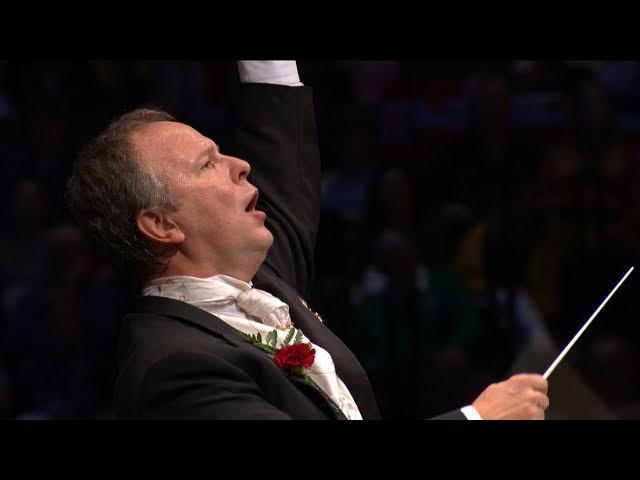
Composed in 1899, during a period when Finland was under pressure from the Russian Empire, Jean Sibelius’s symphonic poem is a historic piece that expresses resistance to oppression and hope through music.
The weighty brass and low strings at the opening create a sense of tension, which gradually gives way to a powerful rhythm that brings exhilaration.
In the finale, the beauty of the hymn-like melody that rises out of the quiet is breathtaking.
This melody was later given lyrics and has since become beloved worldwide as a choral piece.
At graduation ceremonies, playing it during the procession will envelop the entire venue in a solemn atmosphere and stage the children’s new departure with dramatic effect.
Symphonic Poem “Finlandia,” Op. 26Jean Sibelius25rank/position

Among the works of Finnish composer Jean Sibelius, one of the most famous is the symphonic poem Finlandia, Op.
26.
Composed in 1899 while Finland was striving for independence from the Russian Empire, it was banned by the imperial authorities for arousing Finnish patriotism.
It was later premiered successfully in 1900, and today its choral section is cherished as a second national anthem.
Piano solo and two-piano versions have been published, and the piece is frequently performed by many pianists.

fir treeJean Sibelius26rank/position

The Finnish composer Jean Sibelius wrote for a variety of instruments and ensembles, yet throughout his life he continued to compose small piano pieces.
The Spruce is beloved by many for its beautiful melody and its relatively easy performance demands.
Suite “Kyllikki,” Op. 41, No. 1Jean Sibelius27rank/position

The first piece from Suite “Kyllikki,” Op.
41, by Finnish composer Jean Sibelius.
Although its title is drawn from the epic Kalevala, it is not program music depicting a specific story or scene, but rather a standalone piano work to be enjoyed on its own terms.
It breathes a Romantic musicality: its three movements, colored by emotive melodies and harmonies, each reveal a different character.
While the pianist is called upon for a broad expressive range and advanced technique, playing it with thoughts of the vast Nordic nature may open a deeper musical world.
Hymn 298: “Be at Peace, O My Heart”Jean Sibelius28rank/position

Arranged in 1932 by the composer himself from the main theme of Finnish representative violinist Jean Sibelius’s symphonic poem “Finlandia” for the Presbyterian Church’s official American hymnal, The Hymnal (1933), it quickly became famous.
The symphonic poem “Finlandia” itself was composed in 1899 in Finland, which was suffering under the oppressive rule of Imperial Russia, and it is still widely sung in Finland today as a second national song after the national anthem.
It is a hymn that sings of obedience to God and hopeful longing.