

Sergei Rachmaninov Popular Songs Ranking [2026]

Rachmaninoff’s music is grand and weighty, yet his transparent melodies—never overly heavy—resonate with many listeners.
Born and raised in Russia, he had his talent recognized and nurtured by Tchaikovsky.
Here, we’ve ranked his works by popularity.
Immerse yourself in Rachmaninoff’s world!
- Rachmaninoff’s masterpieces. Recommended pieces by Rachmaninoff.
- Mily Balakirev Popular Songs Ranking [2026]
- Sergei Prokofiev Popular Songs Ranking [2026]
- Pyotr Tchaikovsky Popular Song Rankings [2026]
- Peter Ilyich Tchaikovsky Popular Songs Ranking [2026]
- Alexander Scriabin Popular Songs Ranking [2026]
- [Beginner-Friendly] Rachmaninoff’s Piano Pieces | A Curated Selection of Accessible Works!
- Aram Khachaturian Popular Song Rankings [2026]
- Rimsky-Korsakov Popular Songs Ranking [2026]
- Frederic Chopin Popular Songs Ranking [2026]
- Maurice Ravel Popular Songs Ranking [2026]
- Igor Stravinsky Popular Songs Ranking [2026]
- Modest Mussorgsky Popular Song Rankings [2026]
Sergei Rachmaninov Popular Songs Ranking [2026] (81–90)
Fantasiestücke, Op. 3 No. 1 “Elegy”Sergei Rachmaninov81rank/position

This piece is the first of five short works completed by Sergei Rachmaninoff in 1892.
It is often performed at a gentle tempo.
For that reason, while it is not particularly difficult from a technical standpoint, simply placing the notes can result in a monotonous, uninteresting performance.
If you focus on details—such as which notes the sustained tones are leading toward, which voices to bring out, and how to balance the dynamics—you can achieve a more refined and beautiful interpretation.
It is a piece that lets you fully savor its wistful, melancholy character.
Fantasy Pieces: Prelude in C-sharp minor, Op. 3 No. 2 “The Bell”Sergei Rachmaninov82rank/position
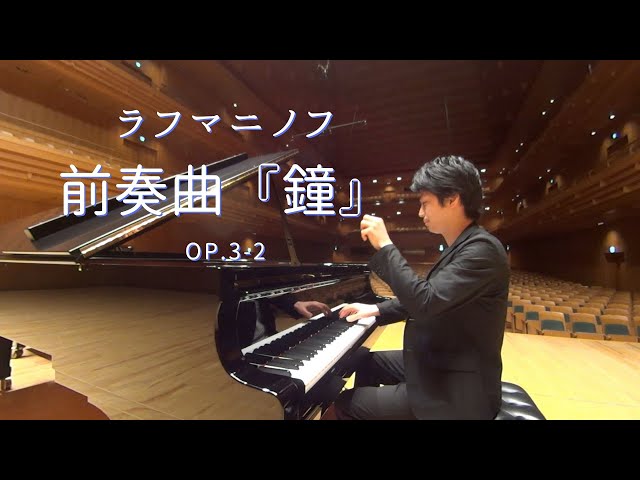
Sergei Rachmaninoff, a Russian composer who was hugely active in the 1890s.
His Prelude in C-sharp minor, Op.
3 No.
2 from the Morceaux de fantaisie, known as “The Bells,” is among his most famous works.
Its difficulty is on the higher end of the intermediate level, though for some players it can rise to an advanced level.
Rachmaninoff had very large hands, and this piece requires the ability to play tenths comfortably.
Conveying the sound of bells on the piano is also challenging, and with its abundance of octaves, the piece is difficult overall.
For those well-versed in piano, however, it makes for a highly impressive listen.

Fantasy Pieces: “Elegy” in E-flat minor, Op. 3 No. 1Sergei Rachmaninov83rank/position

A lyrical piece with a melody that seems to sing.
It is said to have been completed the year after Rachmaninoff graduated from the Moscow Conservatory.
Rather than a brief, sudden rush of sadness, it feels like waves of sorrow keep surging in and then gradually recede—that’s the impression it gives.
Easter from a Fantastical PaintingSergei Rachmaninov84rank/position

Each piece in Fantastical Pictures is a duet for two pianos.
The work depicts the journey toward a “holy victory,” as chants from the Russian Orthodox Easter and the resonance of bells are repeated and layered ever more thickly.
One is overwhelmed by the solemn peal of the bells.
Vigil Prayer, Op. 37Sergei Rachmaninov85rank/position

An unaccompanied mixed-voice choral work that Rachmaninoff composed for Orthodox prayer.
Throughout, solemn tones flow at a leisurely pace as the voices overlap.
There is also a passage where you can hear “Alleluia, Alleluia, Alleluia.” It’s a piece you’ll want to listen to on a quiet night, in a calm and peaceful mood.
Trio of Sorrow No. 1 (G minor)Sergei Rachmaninov86rank/position

A trio consisting of piano, violin, and cello.
While the violin and cello carry much of the main melody, the sparkling piano in the background also has a strong presence.
It may not be as flashy as an orchestra, but the interplay of the three instruments is even more enjoyable when accompanied by visuals, not just the sound.
Trio of Sorrow No. 2 in D minor, Op. 9Sergei Rachmaninov87rank/position

A piece composed in just over a month following the news of Tchaikovsky’s death.
It begins in a strict and solemn manner, but gradually the violin’s heartrending melody resonates as if expressing rising emotions.
The violin’s sense of urgency even sounds like memories of the lost person are racing through one’s mind.
Spring Flood Op.14-11Sergei Rachmaninov88rank/position

12 Romances, a song collection published in 1896 by Sergey Rachmaninoff, one of Russia’s representative composers.
Published in 1896, it is a work brimming with youthful passion.
The piece in question is included as No.
11 in the set.
Although originally a song, it features a fiercely surging piano part that demands extremely advanced technique, with an impact like snowmelt waters bursting through a dam.
Rather than a gentle spring, it is recommended for those who want to feel a powerful spring overflowing with vitality.
If you want to savor the dramatic moment of the transition from winter to spring, be sure to check it out.
Oriental Sketch in B-flat majorSergei Rachmaninov89rank/position

This is a short piece composed in 1917, amid the unfolding Russian Revolution, alongside Prelude in D minor and Fragments.
It was originally untitled, but later took its name from the composer’s own description, “Oriental Sketch.” Lasting just under two minutes, it is characterized by a flowing yet fiercely restless melody.
Moments Musicaux, Op. 16Sergei Rachmaninov90rank/position

A sharp-edged piece where fiercely driving melodies and gently lyrical lines take turns emerging.
A few months before this work was completed, the composer reportedly suffered the misfortune of having their money stolen on a train they happened to board.
They said it was quite difficult being short on funds, yet the piece is so polished that it betrays not the slightest hint of inner turmoil.