

Sergei Rachmaninov Popular Songs Ranking [2026]

Rachmaninoff’s music is grand and weighty, yet his transparent melodies—never overly heavy—resonate with many listeners.
Born and raised in Russia, he had his talent recognized and nurtured by Tchaikovsky.
Here, we’ve ranked his works by popularity.
Immerse yourself in Rachmaninoff’s world!
- Rachmaninoff’s masterpieces. Recommended pieces by Rachmaninoff.
- Mily Balakirev Popular Songs Ranking [2026]
- Sergei Prokofiev Popular Songs Ranking [2026]
- Pyotr Tchaikovsky Popular Song Rankings [2026]
- Peter Ilyich Tchaikovsky Popular Songs Ranking [2026]
- [Beginner-Friendly] Rachmaninoff’s Piano Pieces | A Curated Selection of Accessible Works!
- Aram Khachaturian Popular Song Rankings [2026]
- Alexander Scriabin Popular Songs Ranking [2026]
- Rimsky-Korsakov Popular Songs Ranking [2026]
- Frederic Chopin Popular Songs Ranking [2026]
- Maurice Ravel Popular Songs Ranking [2026]
- Igor Stravinsky Popular Songs Ranking [2026]
- Modest Mussorgsky Popular Song Rankings [2026]
Sergei Rachmaninov Popular Songs Ranking [2026] (41–50)
Salon Pieces Op. 10 No. 2 “Waltz”Sergei Rachmaninov50rank/position

Sergei Rachmaninoff’s piano collection Morceaux de salon, Op.
10, composed in his early twenties, includes the second piece, Waltz—a work that combines approachability and brilliance characteristic of his early style.
Its elegant melody, carried by a sprightly triple meter, evokes the atmosphere of a salon ball.
At the same time, the chromatic harmonic progressions that appear throughout impart a depth uniquely Rachmaninoff’s.
Compact yet distinguished, the work’s graceful melody and refined harmonies are woven together with poise, foreshadowing the masterpieces of his later years.
It is a gem that allows one to savor the allure of richly expressive piano music with ease.
Sergei Rachmaninov Popular Songs Ranking [2026] (51–60)
Salon Pieces, Op. 10: No. 3, BarcarolleSergei Rachmaninov51rank/position

The third piece from the collection Salon Pieces, Op.
10, which comprises seven short works of differing character.
While there are many famous Barcarolles by various composers—such as Frédéric Chopin and Pyotr Ilyich Tchaikovsky—Sergei Rachmaninoff’s Barcarolle stands apart: it is weighty, as though navigating through a storm.
The passages that seem to depict the swell of waves both large and small leave a strong impression.
It could be interesting to compare listening or performance experiences with other barcarolles.

Variations on a Theme by Chopin, Op. 22Sergei Rachmaninov52rank/position

A piece in which the theme from Chopin’s Prelude No.
20 in C minor appears repeatedly.
While the framework is unmistakably Chopin, the pervasive melancholy feels characteristic of Rachmaninoff’s touch.
After about two-thirds, the music shifts into a brisk major key heading toward the finale, introducing shimmering rapid figures and weighty chords, and it concludes dramatically.
Capriccio on Gypsy Themes, Op. 12Sergei Rachmaninov53rank/position

The Gypsies were a people scattered across various parts of Europe who possessed a unique culture of song and dance.
The piece has a base that reflects Rachmaninoff’s characteristic elegance, but here and there melodies appear that are strikingly reminiscent of dance music.
Recommended when you’re in the mood for a slightly unconventional Rachmaninoff.
Cello Sonata in G minor, Op. 19Sergei Rachmaninov54rank/position

Sergei Rachmaninoff’s Cello Sonata in G minor, Op.
19.
Composed in 1901, this four-movement sonata for cello and piano assigns a major role to the piano.
The premiere took place in Moscow, Russia, in November 1901, with cellist Anatoliy Brandukov performing on cello and the composer himself at the piano.
Cello Sonata in G minor, Op. 19Sergei Rachmaninov55rank/position

A piece said to have been written soon after the famed Piano Concerto No.
2.
While the piano spins out intricate passages with dramatic flair, the cello sings a graceful, extended melody with lyrical warmth.
Within the anxiety-tinged atmosphere that Rachmaninoff excelled at, peaceful melodies and martial rhythms surface, and the work finishes with a sense of ascent that climbs to a point of culmination.
Rhapsody on a Theme of PaganiniSergei Rachmaninov56rank/position
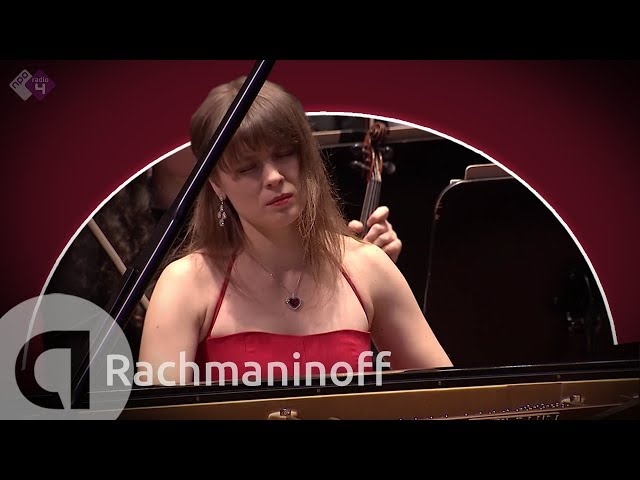
A masterpiece by Sergei Rachmaninoff, a leading composer of the Russian Romantic era.
Based on a famous work by Niccolò Paganini, it was written for piano and orchestra.
Premiered in November 1934, it consists of 24 variations.
Especially striking is the 18th variation, where Rachmaninoff presents a beautifully melancholic melody by inverting Paganini’s theme—a quintessential touch of his style.
In Japan, it’s often used as background music, so many people may recognize the melody even if they don’t know the piece by name.
Rachmaninoff himself reportedly said, “This is for the agent,” reflecting its popularity.
The medieval chant Dies Irae is also woven into the work, lending it a mystical atmosphere throughout.
With its dramatic development and brilliant virtuosity, this piece is a superb fusion—be sure to give it a listen!