

Sergei Rachmaninov Popular Songs Ranking [2026]

Rachmaninoff’s music is grand and weighty, yet his transparent melodies—never overly heavy—resonate with many listeners.
Born and raised in Russia, he had his talent recognized and nurtured by Tchaikovsky.
Here, we’ve ranked his works by popularity.
Immerse yourself in Rachmaninoff’s world!
- Rachmaninoff’s masterpieces. Recommended pieces by Rachmaninoff.
- Mily Balakirev Popular Songs Ranking [2026]
- Sergei Prokofiev Popular Songs Ranking [2026]
- Pyotr Tchaikovsky Popular Song Rankings [2026]
- Peter Ilyich Tchaikovsky Popular Songs Ranking [2026]
- [Beginner-Friendly] Rachmaninoff’s Piano Pieces | A Curated Selection of Accessible Works!
- Aram Khachaturian Popular Song Rankings [2026]
- Alexander Scriabin Popular Songs Ranking [2026]
- Rimsky-Korsakov Popular Songs Ranking [2026]
- Frederic Chopin Popular Songs Ranking [2026]
- Maurice Ravel Popular Songs Ranking [2026]
- Igor Stravinsky Popular Songs Ranking [2026]
- Modest Mussorgsky Popular Song Rankings [2026]
Sergei Rachmaninov Popular Songs Ranking [2026] (11–20)
Piano Concerto No. 3 in D minor, Op. 30Sergei Rachmaninov15rank/position

Composed by Rachmaninoff in 1909, the Piano Concerto No.
3 is renowned for the extreme technical difficulty and musical demands it places on the performer.
Its duration is about 40 minutes.
Although it is a concerto, the piano plays almost continuously, and the sheer number of notes requires considerable stamina.
Yet it is not merely difficult; it is also a celebrated masterpiece, among the most popular of all piano concertos.
In the first movement’s cadenza, there are two versions; while they do not differ in difficulty, the so‑called “big cadenza” strikes me as the most grand and passionate among cadenzas found in concertos.
Comparing the different cadenzas chosen by performers may be one of this work’s great pleasures.
The first movement develops a single theme in various forms; the second moves from a poignant introduction toward increasing brightness; and the third brims with lively, folk-like Russian character.
In each, one can sense Rachmaninoff’s characteristic beauty, sonorous weight, and monumental architecture—a true masterpiece.
Piano Concerto No. 2 in C minor, Op. 18, Movement ISergei Rachmaninov16rank/position
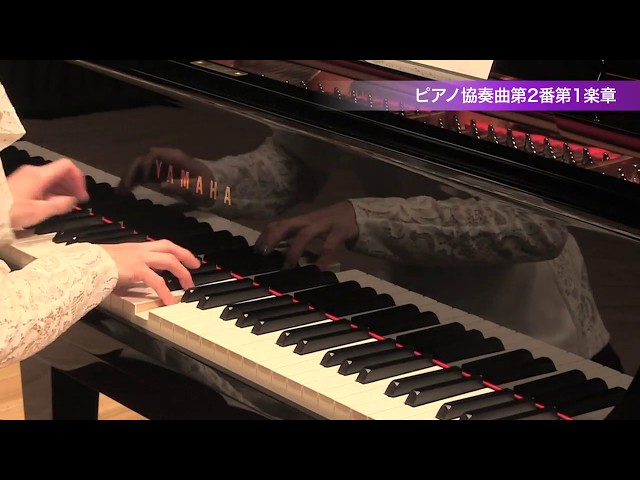
Sergei Rachmaninoff’s signature concerto, Piano Concerto No.
2 in C minor, Op.
18, is frequently heard in a variety of settings—from figure skating programs to music featured in television and film.
Although it is known as an extremely difficult work, its popularity and fame have led to many published arrangements, so even beginner and intermediate pianists can easily give it a try by choosing sheet music that suits their level.
In the first movement, the opening section can be performed as written in the original! Enjoy playing it as if you were performing alongside an orchestra.

Symphony No. 2 in E minor, Op. 27 – Movement IIISergei Rachmaninov17rank/position

Premiered in 1908 under Rachmaninoff’s own baton, this work inherits the traditions of the Russian Romantic school while weaving uniquely beautiful melodies that leave a strong impression.
Though best known for his piano concertos, the composer also displayed exceptional talent in the symphonic realm.
The melody of the third movement is especially popular—so much so that solo piano arrangements have been published.
Part of the appeal is the enjoyment of expressing the orchestra’s grand sonorities on a single piano.
It is a highly recommended piece for anyone wishing to experience the profound depth of classical music.
Piano Concerto No. 2Sergei Rachmaninov18rank/position

Rachmaninoff’s Piano Concerto No.
2 is hailed not only as the most beautiful of his piano concertos, but as one of the most beautiful among piano concertos of any era.
Following the opening chords that evoke the bells of the Russian Orthodox Church comes a succession of fiercely surging arpeggios—truly breathtaking! Moreover, because some of the chords were written to suit Rachmaninoff’s own large hands, it is impossible to play all the notes at once unless you have an exceptionally wide reach, making arpeggiation unavoidable in certain passages.
It can be fascinating to notice how different pianists choose to voice and execute these chords.
Salon Pieces Op. 10 No. 4: MelodySergei Rachmaninov19rank/position

Composed of seven pieces that evoke cohesion and refinement rather than flamboyance, the “Salon Pieces, Op.
10.” The fourth piece, “Melody,” is notable for its wistful atmosphere.
Although the tempo is relaxed, it includes a more animated middle section, allowing you to enjoy clear expressive contrasts within the calm.
Let the poignant melody sing fully and flow smoothly over the left hand’s arpeggios, and highlight the contrast with the energetic middle section.
Piano Concerto No. 2 in C minor, Op. 18 – II. Andante (Second Movement)Sergei Rachmaninov20rank/position

Sergei Rachmaninoff’s Piano Concerto No.
2 in C minor, Op.
18 is the work that brought him widespread recognition as a concerto composer.
In contrast to the vigorous first movement, the second movement is striking for its serene, prayer-like, and sublime atmosphere, and even the piano part alone offers an enchanting beauty.
Although Rachmaninoff did not leave a solo piano version, various arrangements have been published.
Choose one that suits your level, and enjoy playing the smoothly flowing melodies and the characteristically Rachmaninoffian harmonic shifts.
Sergei Rachmaninov Popular Songs Ranking [2026] (21–30)
Moments Musicaux No. 4 in E minor, “Presto”Sergei Rachmaninov21rank/position

Sergei Rachmaninoff’s masterpiece, Moments Musicaux No.
4 in E minor, “Presto,” is notable for its wistful, poignant melody.
Rachmaninoff was also highly regarded as a pianist and was known for his exceptionally large hands.
That trait is clearly reflected in this piece as well, with repeated right-hand octaves appearing throughout.
Despite the presence of delicate slurs, there are many passages that demand advanced technique—such as sections where staccato must be emphasized and stretches of continuous octaves.
If you’re an advanced player who hasn’t yet tackled this work, I encourage you to give it a try.
