

Sergei Rachmaninov Popular Songs Ranking [2026]

Rachmaninoff’s music is grand and weighty, yet his transparent melodies—never overly heavy—resonate with many listeners.
Born and raised in Russia, he had his talent recognized and nurtured by Tchaikovsky.
Here, we’ve ranked his works by popularity.
Immerse yourself in Rachmaninoff’s world!
- Rachmaninoff’s masterpieces. Recommended pieces by Rachmaninoff.
- Mily Balakirev Popular Songs Ranking [2026]
- Sergei Prokofiev Popular Songs Ranking [2026]
- Pyotr Tchaikovsky Popular Song Rankings [2026]
- Peter Ilyich Tchaikovsky Popular Songs Ranking [2026]
- [Beginner-Friendly] Rachmaninoff’s Piano Pieces | A Curated Selection of Accessible Works!
- Aram Khachaturian Popular Song Rankings [2026]
- Alexander Scriabin Popular Songs Ranking [2026]
- Rimsky-Korsakov Popular Songs Ranking [2026]
- Frederic Chopin Popular Songs Ranking [2026]
- Maurice Ravel Popular Songs Ranking [2026]
- Igor Stravinsky Popular Songs Ranking [2026]
- Modest Mussorgsky Popular Song Rankings [2026]
Sergei Rachmaninov Popular Songs Ranking [2026] (71–80)
Prelude Op. 23 No. 5 in G minorSergei Rachmaninov78rank/position

Rachmaninoff, a Russian pianist and composer who represents the 20th century.
His works are characterized by simple yet beautiful and valiant melodies, leaving a powerful impression as if raw emotion is being expressed through music.
Among his 24 preludes, this piece is one of the most well-known.
From the outset, the bold yet freely played, march-like rhythm is striking, and the romantic melody heard in the middle section possesses a beauty uniquely Rachmaninoff’s.
It is a captivating piece brimming with the rich, folkloric sentiment of Russia!

Prelude Op. 23 No. 5Sergei Rachmaninov79rank/position
Speaking of Rachmaninoff, while the Piano Concerto that Nodame and Chiaki played in Nodame Cantabile is popular, this piece is actually well-loved too.
Its catchy, brisk rhythm runs from beginning to end.
It’s straightforward, full of drive, and emotionally expressive—a piece with many different shades.
Choral Symphony “The Bells”Sergei Rachmaninov80rank/position

It is a grand choral symphony by the great Russian composer Sergei Rachmaninoff.
Completed in 1913, the work is based on a poem by Edgar Allan Poe and is structured in four movements.
Each movement evokes a different bell timbre, portraying a wide range of emotions—from the joys of life to meditations on death.
Rachmaninoff himself called it one of his favorite works, and his musical voice shines throughout.
The magnificent fusion of orchestra and chorus leaves a deep impression on listeners.
Highly recommended for anyone wishing to fully savor the allure of Romantic music.
Sergei Rachmaninov Popular Songs Ranking [2026] (81–90)
Fantasiestücke, Op. 3 No. 1 “Elegy”Sergei Rachmaninov81rank/position

This piece is the first of five short works completed by Sergei Rachmaninoff in 1892.
It is often performed at a gentle tempo.
For that reason, while it is not particularly difficult from a technical standpoint, simply placing the notes can result in a monotonous, uninteresting performance.
If you focus on details—such as which notes the sustained tones are leading toward, which voices to bring out, and how to balance the dynamics—you can achieve a more refined and beautiful interpretation.
It is a piece that lets you fully savor its wistful, melancholy character.
Fantasy Pieces: Prelude in C-sharp minor, Op. 3 No. 2 “The Bell”Sergei Rachmaninov82rank/position
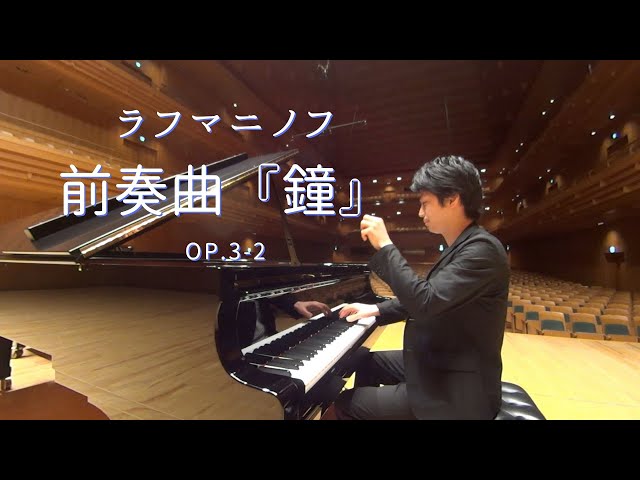
Sergei Rachmaninoff, a Russian composer who was hugely active in the 1890s.
His Prelude in C-sharp minor, Op.
3 No.
2 from the Morceaux de fantaisie, known as “The Bells,” is among his most famous works.
Its difficulty is on the higher end of the intermediate level, though for some players it can rise to an advanced level.
Rachmaninoff had very large hands, and this piece requires the ability to play tenths comfortably.
Conveying the sound of bells on the piano is also challenging, and with its abundance of octaves, the piece is difficult overall.
For those well-versed in piano, however, it makes for a highly impressive listen.

Fantasy Pieces: “Elegy” in E-flat minor, Op. 3 No. 1Sergei Rachmaninov83rank/position

A lyrical piece with a melody that seems to sing.
It is said to have been completed the year after Rachmaninoff graduated from the Moscow Conservatory.
Rather than a brief, sudden rush of sadness, it feels like waves of sorrow keep surging in and then gradually recede—that’s the impression it gives.
Easter from a Fantastical PaintingSergei Rachmaninov84rank/position

Each piece in Fantastical Pictures is a duet for two pianos.
The work depicts the journey toward a “holy victory,” as chants from the Russian Orthodox Easter and the resonance of bells are repeated and layered ever more thickly.
One is overwhelmed by the solemn peal of the bells.