

Sergei Rachmaninov Popular Songs Ranking [2026]

Rachmaninoff’s music is grand and weighty, yet his transparent melodies—never overly heavy—resonate with many listeners.
Born and raised in Russia, he had his talent recognized and nurtured by Tchaikovsky.
Here, we’ve ranked his works by popularity.
Immerse yourself in Rachmaninoff’s world!
- Rachmaninoff’s masterpieces. Recommended pieces by Rachmaninoff.
- Mily Balakirev Popular Songs Ranking [2026]
- Sergei Prokofiev Popular Songs Ranking [2026]
- Pyotr Tchaikovsky Popular Song Rankings [2026]
- Peter Ilyich Tchaikovsky Popular Songs Ranking [2026]
- Alexander Scriabin Popular Songs Ranking [2026]
- [Beginner-Friendly] Rachmaninoff’s Piano Pieces | A Curated Selection of Accessible Works!
- Aram Khachaturian Popular Song Rankings [2026]
- Rimsky-Korsakov Popular Songs Ranking [2026]
- Frederic Chopin Popular Songs Ranking [2026]
- Maurice Ravel Popular Songs Ranking [2026]
- Igor Stravinsky Popular Songs Ranking [2026]
- Modest Mussorgsky Popular Song Rankings [2026]
Sergei Rachmaninov Popular Songs Ranking [2026] (51–60)
Salon Pieces, Op. 10: No. 3, BarcarolleSergei Rachmaninov51rank/position

The third piece from the collection Salon Pieces, Op.
10, which comprises seven short works of differing character.
While there are many famous Barcarolles by various composers—such as Frédéric Chopin and Pyotr Ilyich Tchaikovsky—Sergei Rachmaninoff’s Barcarolle stands apart: it is weighty, as though navigating through a storm.
The passages that seem to depict the swell of waves both large and small leave a strong impression.
It could be interesting to compare listening or performance experiences with other barcarolles.

Variations on a Theme by Chopin, Op. 22Sergei Rachmaninov52rank/position

A piece in which the theme from Chopin’s Prelude No.
20 in C minor appears repeatedly.
While the framework is unmistakably Chopin, the pervasive melancholy feels characteristic of Rachmaninoff’s touch.
After about two-thirds, the music shifts into a brisk major key heading toward the finale, introducing shimmering rapid figures and weighty chords, and it concludes dramatically.
Capriccio on Gypsy Themes, Op. 12Sergei Rachmaninov53rank/position

The Gypsies were a people scattered across various parts of Europe who possessed a unique culture of song and dance.
The piece has a base that reflects Rachmaninoff’s characteristic elegance, but here and there melodies appear that are strikingly reminiscent of dance music.
Recommended when you’re in the mood for a slightly unconventional Rachmaninoff.
Cello Sonata in G minor, Op. 19Sergei Rachmaninov54rank/position

Sergei Rachmaninoff’s Cello Sonata in G minor, Op.
19.
Composed in 1901, this four-movement sonata for cello and piano assigns a major role to the piano.
The premiere took place in Moscow, Russia, in November 1901, with cellist Anatoliy Brandukov performing on cello and the composer himself at the piano.
Cello Sonata in G minor, Op. 19Sergei Rachmaninov55rank/position

A piece said to have been written soon after the famed Piano Concerto No.
2.
While the piano spins out intricate passages with dramatic flair, the cello sings a graceful, extended melody with lyrical warmth.
Within the anxiety-tinged atmosphere that Rachmaninoff excelled at, peaceful melodies and martial rhythms surface, and the work finishes with a sense of ascent that climbs to a point of culmination.
Rhapsody on a Theme of PaganiniSergei Rachmaninov56rank/position
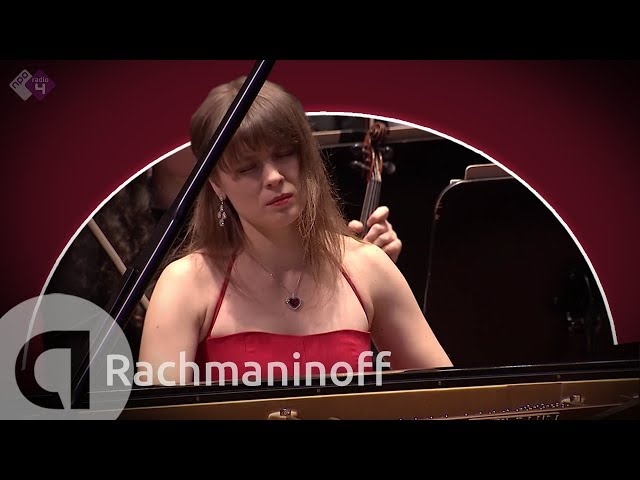
A masterpiece by Sergei Rachmaninoff, a leading composer of the Russian Romantic era.
Based on a famous work by Niccolò Paganini, it was written for piano and orchestra.
Premiered in November 1934, it consists of 24 variations.
Especially striking is the 18th variation, where Rachmaninoff presents a beautifully melancholic melody by inverting Paganini’s theme—a quintessential touch of his style.
In Japan, it’s often used as background music, so many people may recognize the melody even if they don’t know the piece by name.
Rachmaninoff himself reportedly said, “This is for the agent,” reflecting its popularity.
The medieval chant Dies Irae is also woven into the work, lending it a mystical atmosphere throughout.
With its dramatic development and brilliant virtuosity, this piece is a superb fusion—be sure to give it a listen!
Rhapsody on a Theme of Paganini, Op. 43Sergei Rachmaninov57rank/position

Rhapsody on a Theme of Paganini, Op.
43, by the great master of the Russian Romantic era Sergei Rachmaninoff, is a work for piano and orchestra based on the final piece of 19th-century legendary violinist Niccolò Paganini’s 24 Caprices.
Its sequence of 24 varied variations—by turns passionate, virtuosic, and at times even humorous—never fails to captivate the listener.
Among them, the most famous is Variation 18, notable for its beautiful melody.
Gentle yet somehow imbued with a romantic aura, it leaves a lasting impression.
This work distills Rachmaninoff’s creativity and transcendental technique, and can truly be called one of his signature masterpieces.
Rhapsody on a Theme of Paganini, Variation 18: Andante cantabileSergei Rachmaninov58rank/position

Composed by Sergei Rachmaninoff, this piece is one of his most beloved for its soothing melody.
The beautiful interplay between piano and orchestra has captivated countless listeners.
Premiered in November 1934, it has since been featured in films and commercials, gaining popularity across a wide audience.
It’s also a favorite choice for wedding ceremonies and receptions, perfectly suited to creating an elegant and moving atmosphere.
The calm, graceful melody seems to bless the happy couple as they embark on their new life together.
Please enjoy this heartwarming piece that accompanies cherished memories with your loved one.
Rhapsody on a Theme of Paganini in A minor, Op. 43Sergei Rachmaninov59rank/position

A piece composed by Rachmaninoff after he emigrated to America, during a summer stay at a lakeside villa on Lake Lucerne in Switzerland.
It employs the theme from Paganini’s work, the 24 Caprices, famed for the violinist’s virtuosity.
It moves from a dramatic opening to a tense middle section filled with urgent piano chords, and concludes in brilliant fashion.
Piano Sonata No. 2 in B-flat minor, Op. 36Sergei Rachmaninov60rank/position

This piece was created by Rachmaninoff during his stay in Italy.
Tchaikovsky, who was also from Russia like Rachmaninoff, had spent time in Italy as well, and it is said that Rachmaninoff composed this work in the very room where Tchaikovsky had stayed.
It is a dramatic piece in which rich harmonies flow seamlessly without pause.