

Ryuichi Sakamoto Popular Song Ranking [2026]

Ryuichi Sakamoto, a Tokyo University of the Arts graduate affectionately known as “Professor,” became a household name through his work with Yellow Magic Orchestra, formed in 1978.
In 1987, he became the first Japanese recipient of the Academy Award for Best Original Score for the film The Last Emperor.
What are the rankings of SAKAMOTO’s most popular songs on the global stage?
- [Ryuichi Sakamoto] Piano Works | A Selection of Moving and Healing Masterpieces
- Maaya Sakamoto Popular Songs Ranking [2026]
- Joe Hisaishi Popular Songs Ranking [2026]
- Yellow Magic Orchestra Popular Song Ranking [2026]
- [Tearjerker] Songs that make your heart tremble with tears & moving tracks with lyrics that touch the soul
- Joe Hisaishi’s Wedding Songs: Popular Song Rankings [2026]
- Ranking of Ami Sakaguchi’s Popular Songs [2026]
- Kyu Sakamoto’s Most Popular Karaoke Songs Ranking [2026]
- [So touching it makes you cry] A heartbreakingly wistful and sad song that tightens your chest
- [Touching the Heart] Timeless Ballad Masterpieces. A Collection of Unfading Classics and the Latest Songs [2026]
- [A Cheer for Myself] A pep song dedicated to you who are doing your very best
- [YMO] Revisiting the classic songs of YELLOW MAGIC ORCHESTRA!
- Ichirō Fujiyama Popular Song Ranking [2026]
Ryuichi Sakamoto Popular Songs Ranking [2026] (31–40)
RelâchéSakamoto Ryuichi36rank/position

Since we’ve introduced solo tracks by Haruomi Hosono and Yukihiro Takahashi, we should naturally cover a solo piece by “Professor” Ryuichi Sakamoto as well.
In this article, I’d like to highlight Relâche, included on Sakamoto’s third solo album, Left-Handed Dream, released in 1981 during what could be called the heyday of technopop.
It’s an instrumental track that, while deserving to be discussed in the technopop context, possesses a unique atmosphere—featuring guitarist Adrian Belew, a world-renowned musician known for his work with King Crimson, and also crediting Robin Scott, who scored a massive hit as M with Pop Muzik.
The looping synth riff has a curious allure, and the suddenly introduced telephone sound is oddly amusing.
With Haruomi Hosono on bass and Yukihiro Takahashi on drums generating a powerful groove, it’s essentially YMO, yet it unmistakably remains Sakamoto’s own world—which is part of the fun.

ReversingSakamoto Ryuichi37rank/position

Let me introduce a hidden gem, remarkable for its beautiful layers of harmonies that resonate in the silence.
Belonging to the lineage of the landmark album BTTB, it’s a piece released back in August 2002 that, while embracing the coloristic sensibilities of French modernists like Satie and Ravel, invites you to listen closely to subtle shifts born of repetition.
Rather than pushing a melody to the forefront to speak in overt emotion, the work’s brilliance lies in how even the afterglow of sounds—rising and then dissolving into space—is meticulously crafted.
It’s a perfect track for those who want to savor the piano’s inherent richness without relying on flashy ornamentation.
How about setting aside the bustle of everyday life and spending some calm time in which each note seeps gently into your heart?
SolitudeSakamoto Ryuichi38rank/position

“Solitude” is a piece included on the original soundtrack for the 2004 film Tony Takitani.
Tony Takitani is a film adaptation of a short story by Haruki Murakami, with all compositions and performances handled by Ryuichi Sakamoto himself.
Although there were initially no plans for a CD release, the decision was made after growing anticipation for the soundtrack following the film’s theatrical run.
Recorded using a distinctive method—bringing a screen into the studio and improvising while watching the footage—this track vividly conveys something like Sakamoto’s own cry from the heart.

Tokyo StorySakamoto Ryuichi39rank/position

A masterpiece that captures the city’s breathing in sound.
Featured on the album “Sweet Revenge,” released in September 1994, this piece was inspired by the film “Tokyo Story.” The serene worldview woven by Ryuichi Sakamoto’s delicate sensibilities resonates deeply with listeners.
Its distinctive sound, which deliberately incorporates irregular rhythms, seems to express the multifaceted nature of Tokyo itself.
True to Sakamoto’s reputation as a master of film music, the track is rich in narrative quality.
It’s a perfect song for stepping away from the city’s clamor and taking time for quiet introspection.
Yamazaki 2002Sakamoto Ryuichi40rank/position
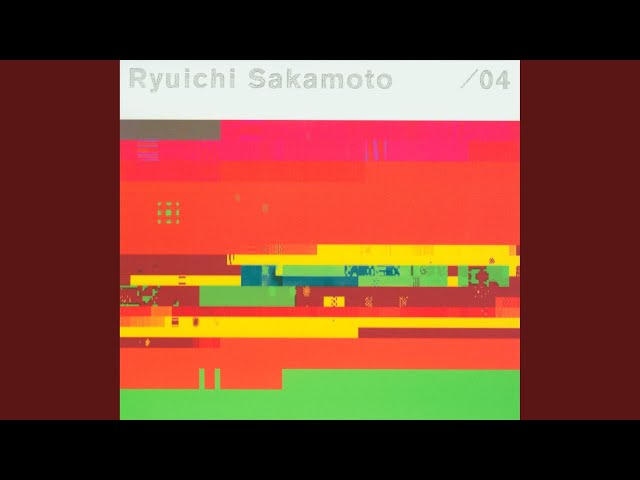
Titled with a product name and a year, this piece is a beautiful piano work that cherishes the spaces between sounds.
Composed in 2002 as music for a Suntory Whisky commercial and included that October in a collection of CM music, it was later re-presented as a standalone listening piece on the acclaimed 2004 album “/04.” The poised right-hand melody overlaps with left-hand arpeggios, evoking matured silence and the accumulation of time.
With few notes, it paints deep scenes, showcasing Sakamoto’s characteristically delicate expression.
Because it requires no flashy virtuosity, it’s ideal for those who want to savor the quiet resonance of each note as it gently permeates the heart.
Why not try playing it when you want to spend a leisurely, unhurried time?
Ryuichi Sakamoto Popular Song Rankings [2026] (41–50)
a flower is not a flowerSakamoto Ryuichi41rank/position

Ryuichi Sakamoto’s 1997 piece “A Flower Is Not A Flower” can be regarded as one of the special works in his rich discography.
The track was originally contributed to the album of Taipei-born erhu player Kennei Wen, and was later included in Sakamoto’s compilation “The Very Best of Güt,” which collects several of his signature works.
Sakamoto’s musicality spans a wide range, and “A Flower Is Not A Flower” likewise reflects his experimental approach.
As its title—derived from a Chinese saying, “A flower is not a flower”—suggests, the piece explores the essence of things, likely evoking different feelings and thoughts in each listener.
andataSakamoto Ryuichi42rank/position

This is a piece whose piano timbre, like being in a quiet church, gently accompanies moments when you want to focus deeply.
It opens Ryuichi Sakamoto’s album “async,” released in March 2017 by the world-renowned musician.
As suggested by its title, which in Italian means “that which has gone away,” the solemn resonance that evokes an awareness of endings is striking.
It was also used in the documentary film “Ryuichi Sakamoto: Coda,” so many of you may remember it.
Simple yet spacious in sound, it strips away unnecessary thoughts and helps you immerse yourself in the task at hand.
It’s perfect for late-night study when you want to calm your mind, or as a companion to creative work.
Why not quietly lend an ear to the beautiful melody left to us by a great musician?