

[60s] Karaoke Popularity Rankings by Generation [2026]

We’re excited to present the latest rankings from the Karaoke Chart by Age: 60s category, listed in order of most views! Classic hits and staple songs, including enka and kayōkyoku, have made the list, showing just how strong their popularity remains.
If you’re from a younger generation and find songs you haven’t heard before, why not give them a listen? You might discover something new.
The playlist is updated every week.
- [For People in Their 60s] Karaoke Songs That Get the Crowd Going: Ranking [2026]
- [2026 Edition] Songs Loved by People in Their 60s: Classic Hits from Their Youth
- [For People in Their 60s] Ranking of Easy-to-Sing Karaoke Songs [2026]
- Recommended for women in their 60s! Easy-to-sing Japanese karaoke songs
- Karaoke songs that are sure to get a 60-something man fired up
- Popularity Ranking of Songs by Generation: 60s [2026]
- Recommended for women in their 60s! Songs that get the crowd going at karaoke
- [For People in Their 50s] Ranking of Easy-to-Sing Karaoke Songs [2026]
- Best Karaoke Songs and Popular Band Rankings for Lively Fun in Your 60s [2026]
- Karaoke Popularity Ranking by Generation [50s] [2026]
- Love songs that resonate with women in their 60s: gem-like romance tunes that revive memories of youth.
- [Ages 60s] Popular Japanese Music / J-POP Rankings [By Generation]
- Japanese karaoke songs that are easy for men in their 60s to sing
[60s] Karaoke Popularity Ranking by Generation [2026] (21–30)
Kiyoshi’s Zundoko SongHikawa Kiyoshi22rank/position

A heartwarming, approachable song that makes the most of rhythms found in folk songs and enka.
This masterpiece fully showcases Kiyoshi Hikawa’s charm, beautifully expressing the bittersweetness of love, masculine strength, and longing for one’s hometown.
With his natural vocal talent and refreshing appeal, Hikawa presents a uniquely modern take on the traditional enka worldview.
It was released by Nippon Columbia in February 2002.
The song won the Gold Prize at the 44th Japan Record Awards and is known as one of Hikawa’s signature tracks.
With its relaxed tempo and narrow melodic range, it’s a piece you can sing with a calm mindset.
During the chorus, it’s also nice to have listeners add call-and-response interjections!
outdatedKawashima Eigo23rank/position

Singer-songwriter Eigo Kawashima, whose refined musicality earned him immense support from men.
For those in their 60s, he might be the perfect artist.
Kawashima produced many masterpieces, but the one I especially recommend is “Jidai Okure” (Behind the Times).
A no-nonsense piece portraying a man that men admire, it became a major hit in the 1980s.
What’s more, it’s a very singable song: the range is narrow, there are few long notes, and it doesn’t require much vibrato, so even those who aren’t confident in their singing should be able to handle it without trouble.

Stars on EarthNakajima Miyuki24rank/position

Miyuki Nakajima’s classic “Chijō no Hoshi” has earned support across a wide range of generations.
While the song is memorable for its incredibly powerful, almost growling vocals, the actual pitch movement isn’t that extreme.
The vocal range is compact, from mid1F to hiA#, and at BPM 100 the tempo is also relaxed.
Even so, the song achieves that level of impact not only through Nakajima’s singing style but also thanks to its strong composition.
Adding a shout at the opening lines brings you closer to the intensity of the original, so if you want to really heat up the karaoke room, try incorporating shouts and give it a shot.
Sake, Tears, Men, and WomenKawashima Eigo25rank/position

Even men who always act cool sometimes feel like letting loose and forgetting everything.
“Sake, Tears, Men and Women,” which captures those feelings, was Eigo Kawashima’s solo debut single released in 1976.
Originally, it was included on the debut album Jinrui (Humanity), released in 1975 by the group Eigo Kawashima & Homo Sapiens, to which Kawashima belonged.
Men in their sixties who have tasted both the bitter and the sweet of life may also have things they’d rather forget, just like in this song.
At times like that, sing this tune and let it all out!

Let yourself go with the flow of timeTeresa Ten26rank/position

When it comes to iconic adult romantic ballads that portray the aching emotions of a woman, this song is indispensable.
Released in 1986, it is known as one of Teresa Teng’s signature works, beloved not only in Japan but across Asia.
Its delicate emotional expression, carried by a gentle, unhurried melody, resonates with many listeners and has become a karaoke staple.
In a 2010 popularity survey conducted by Teresa Teng’s foundation, the Chinese version ranked second, demonstrating its enduring appeal over the years.
The fact that many artists, including Faye Wong and Jackie Chan, have covered the song further attests to its lasting charm.
Pink sighTakahashi Mariko27rank/position
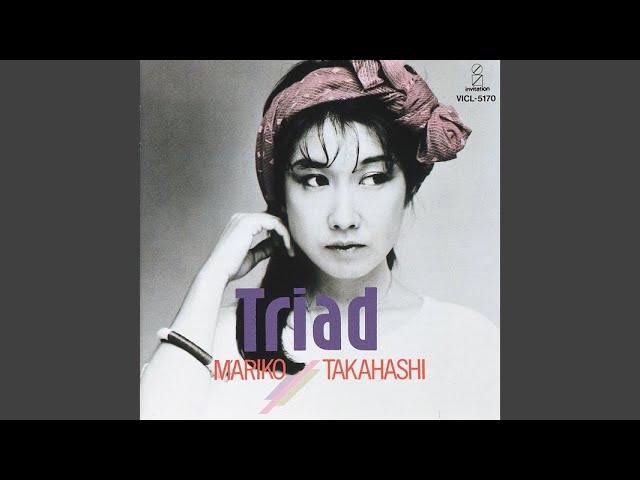
Mariko Takahashi’s classic “Momoiro Toiki.” It features a distinctly exotic melody and, while it carries elements of mood kayō (mood enka), it also incorporates contemporary J-pop characteristics.
The piece sits within a relatively narrow vocal range of mid1 G# to high C.
Since the most frequent pitch is around mid2 G#, most women should be able to sing it without difficulty.
As the song prioritizes mood, it’s recommended to sing with careful dynamics.
If a phrase ends with a consonant, letting it fade out as a voiceless sound can be an effective touch.
Tokyoyashiki takajin28rank/position

Released in March 1993, this mood-kayō song fuses tearful enka with sophisticated urban pop.
Through Kansai-dialect lyrics, it movingly portrays a romance and breakup with a man she met in Tokyo, along with her complex feelings toward the city.
Takajin Yashiki was an artist who was active mainly in the Kansai region, also serving as a host of the popular program “Sei! Young.” This piece became a hit as requests on cable radio surged, ultimately selling a total of 600,000 copies.
In live performances, he would sometimes change the place name in the chorus to match the concert location, valuing a sense of unity with the audience.
When singing it at karaoke, it’s recommended to sing at an easy, relaxed pace while thinking of your hometown and the special people you’ve met.