

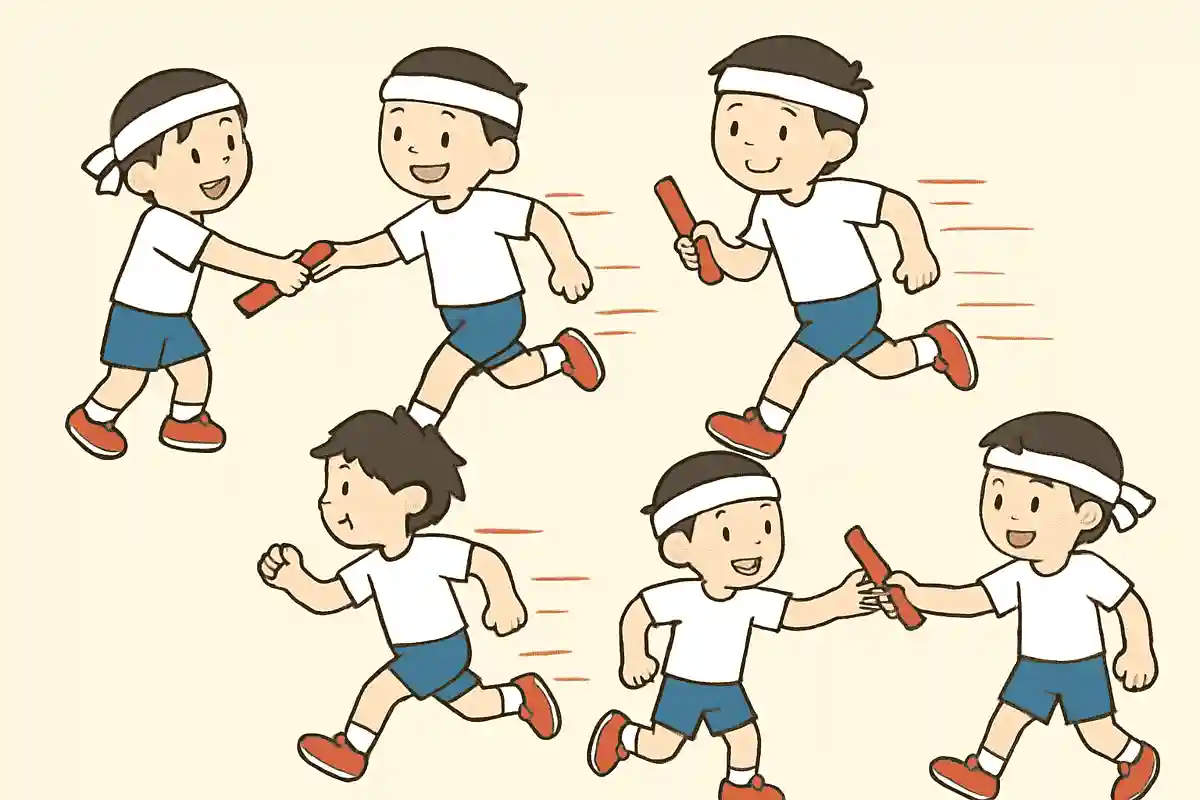


When it comes to relays, it wouldn’t be an exaggeration to say they’re one of the most exciting marquee events at a sports day! While it’s common for people confident in their speed to take part, the fun—and the challenge—of a relay is that you can’t win on individual speed alone.
In addition to each runner’s pace, smooth baton passes are crucial for relay speed.
In this article, we’ll share tips for running faster in relays, touching on basic sprinting form as well as baton passing, which is the key to success in relays.
Practice is essential for improving your baton pass, but we’ll also introduce tips you can implement right away just by being mindful—so please use them as a reference!
- Dances that elementary school kids can do! Recommended tracks to liven up a school sports day
- [Sports Day] A roundup of exhilarating, fast-paced tracks perfect for relay race BGM!
- [Sports Day] Songs for footraces: tracks that make kids want to run [classics & J-pop]
- [Youth Songs] Songs that liven up sports days and athletic festivals. Music that adds color to the event.
- [Korean-Style Hair Arrangements] Perfect for Sports Day! Carefully Selected Recommended and Trendy Hairstyles
- [Ekiden Theme Song] Masterpieces that mirror the act of running—cheering anthems that give you courage
- Recommended exit songs for sports day: A collection of tracks that are perfect for a brisk, quick-march exit.
- [March, Foot Races, Dance] Energetic songs and the latest hits to liven up a sports day
- [Sports Day] A roundup of popular Japanese songs perfect for mass performances [Athletic Festival]
- From classics to fan favorites! A catalog of music and BGM to liven up your sports day
- [Dance Tracks] Perfect for School Sports Days! A Curated Selection of Fun, Popular Songs to Dance To [2026]
- [Sports Day Cheer Songs] A roundup of classic cheer anthems and recommended parody-song picks [2026]
- Pump Up the Sports Day! A Collection of Cool Flag Dance Song Ideas with Flags
Form (1–10)
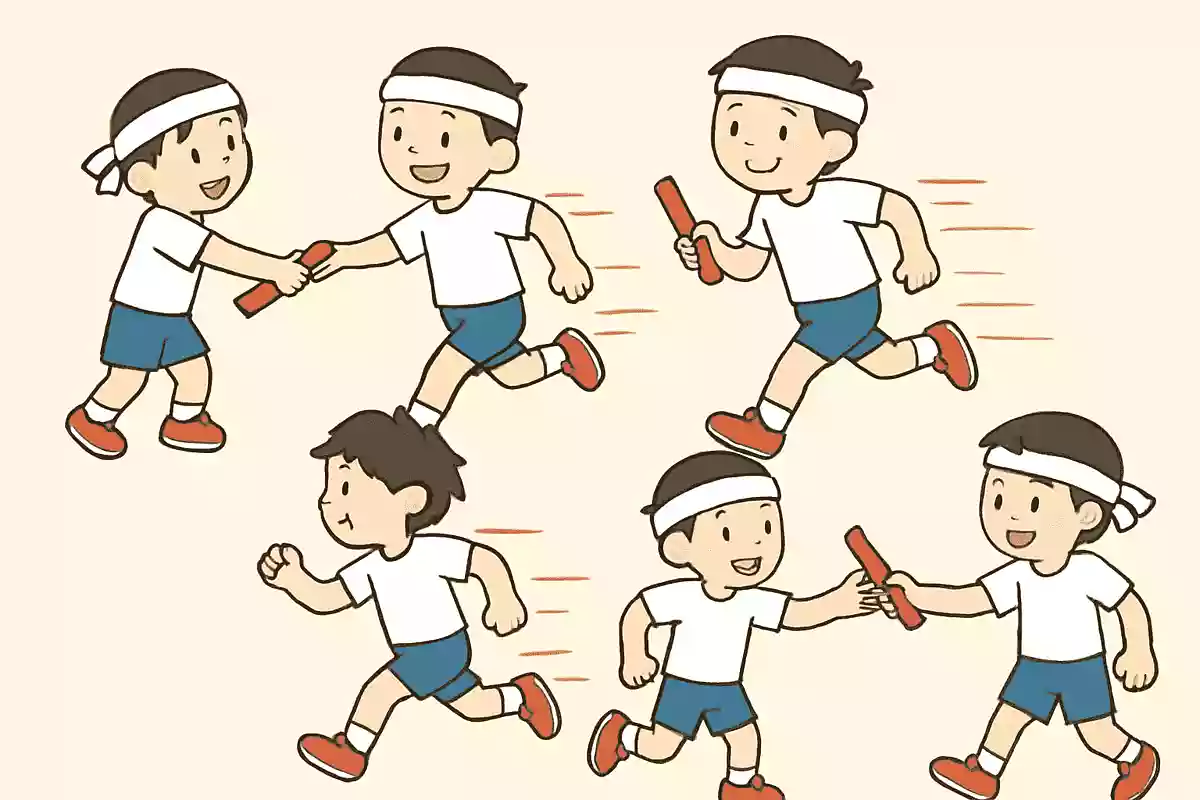
As mentioned at the beginning, to run a relay faster, both individual running speed and smooth baton passing are crucial.
First, let me introduce the key elements of form that are important for each person to run fast.
In relays, a sprinting form is effective, and just knowing a few key points can make a difference, so please give them a try.
swing your arms firmly

The first tip I want to introduce is to swing your arms firmly so that your fingertips come up to about your chin.
Arm swing is always mentioned as a key to running, but there are specific points to how you swing.
Bend your elbows at a right angle and move from the shoulder blades.
When you focus on moving from the shoulder blades, you can swing your arms more broadly, and keeping your elbows at 90 degrees prevents your arms from drifting too far from your body.
As a result, you can swing your arms solidly without your upper body wobbling, achieving an efficient arm swing.
Straighten your back

Next, I’d like to talk about running posture.
It’s important to imagine your body in a straight line from head to toe with your back straight.
Doing so allows you to transfer force efficiently to the ground, which helps you run faster.
Don’t lower your gaze.

The third tip is about your line of sight, which is often talked about as a key to performing well in any sport.
It’s important to keep your head up and look straight ahead rather than down, and when you’re running along the inside of the course, try to keep the line in the corner of your vision as you run.
Also, if each runner has an assigned lane, focus your eyes 5 to 10 meters ahead within your own lane.
By being mindful of this, you’ll keep your gaze up and steady, which in turn makes it easier to maintain the upright posture mentioned earlier.
The hand without the baton is open (a flat palm).
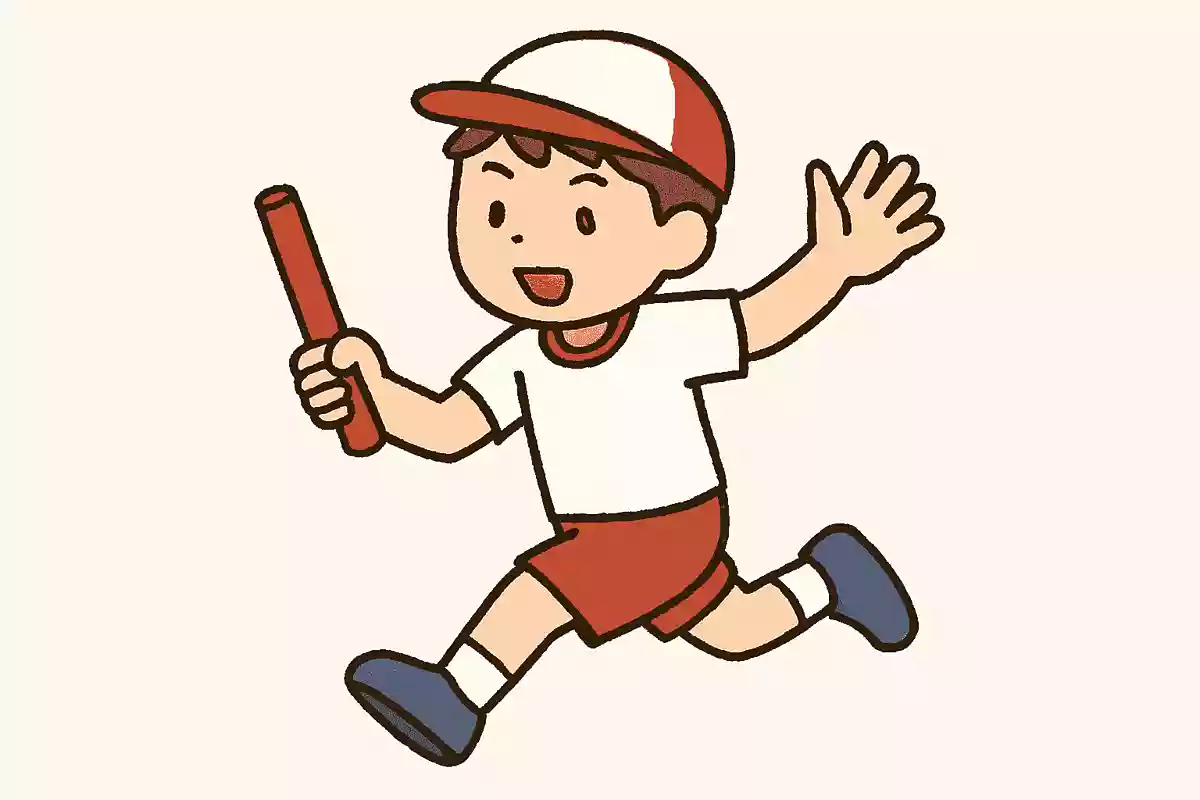
The last point I want to share about running form is the shape of the hand that isn’t holding the baton.
To get straight to the point, in sprinting it’s best to keep your hand open.
If you clench your hand into a fist, the tension will travel up to your shoulders and prevent smooth arm swings.
As I mentioned in the first key point about form, arm swing plays a very important role, so be mindful of your hand shape and make sure you can swing your arms properly.
How to Run (1–10)
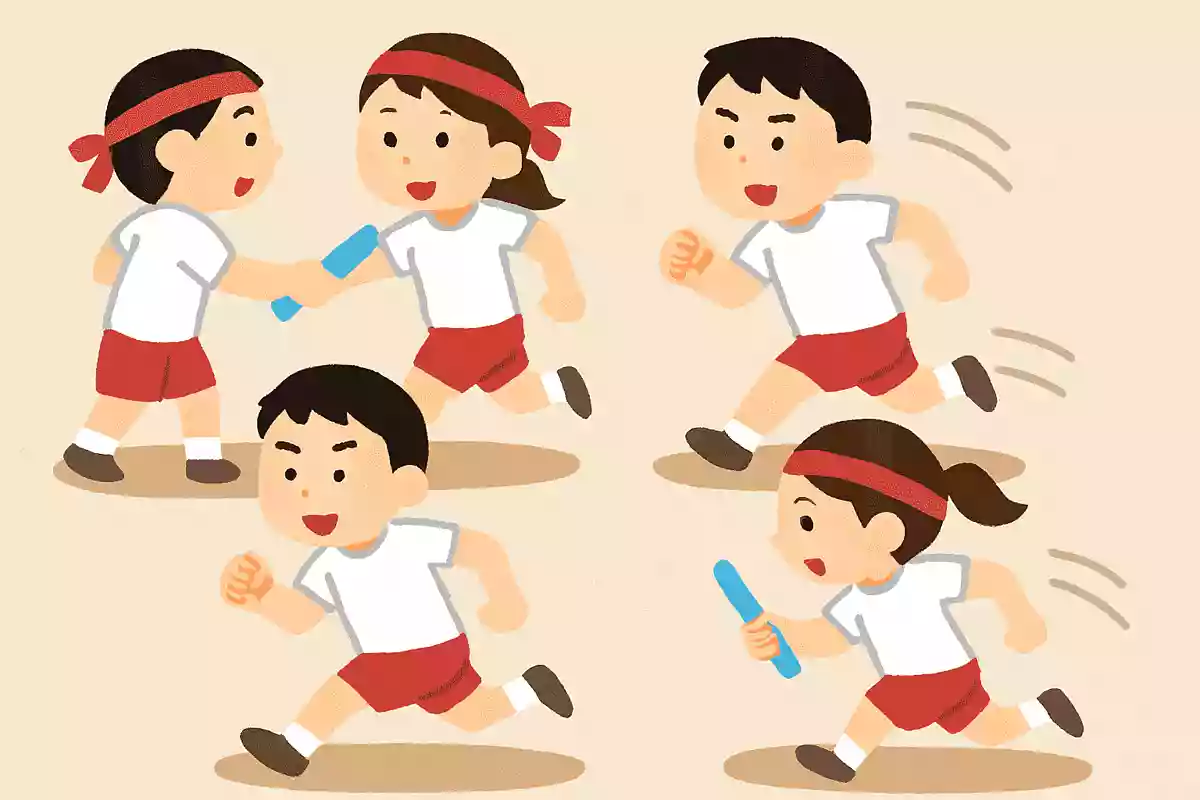
First, I talked about running form.
Next, I’ll introduce tips on how to run.
I’ll focus on three key points here.
You can start applying all of them right away, so give them a try and practice until they become second nature.
Run landing on your toes

The first tip I want to share about running form is how to land.
By “landing,” I mean which part of your lifted foot touches the ground first.
The standard approach when running is to land on your forefoot (the balls of your feet).
If you land on your heels instead, force is directed opposite your direction of travel, which acts like a brake.
It also increases the amount of time your foot stays in contact with the ground, causing more energy loss.
By landing on your forefoot, you can avoid braking and make use of the rebound when you push off the ground, so give it a try.
How to accelerate from the start
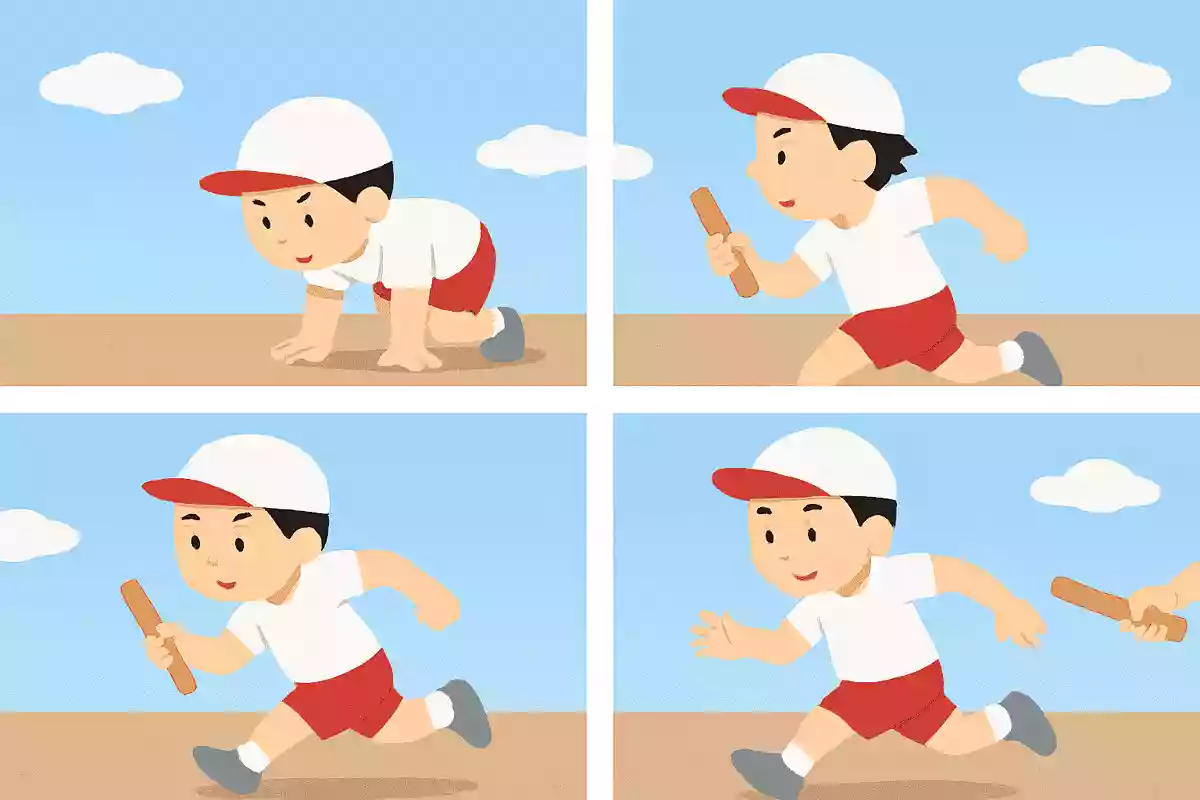
The second tip for running is about your posture from the start through the acceleration phase.
Earlier in the article, we introduced “keeping your back straight” as the basic posture, but it’s a bit different when you’re starting and accelerating.
At the start, bend your knees and lean forward to shift your weight ahead, and get a feel for your body naturally moving forward.
Once you can start smoothly, keep accelerating by consciously leaning your body so that it’s at about a 45-degree angle to the ground.
This way, you can use not only the strength of your legs but also the forward-leaning force of your body to accelerate.
Lean your body toward the inside of the corner.

Finally, as a running tip, let’s talk about corners.
Many people may feel they can’t run well because their speed drops in corners.
What you should focus on is leaning your body toward the inside of the turn.
Instead of tilting only your head, keep the basic posture of “a straight line from head to feet” and tilt your whole body slightly.
This will help you convert centrifugal force into energy and run more smoothly.
Your line of sight is also important when taking corners: by looking 5 to 10 meters ahead in the direction you’re going, it naturally becomes easier to turn, so be mindful of where you’re looking.
Baton Pass (1–10)
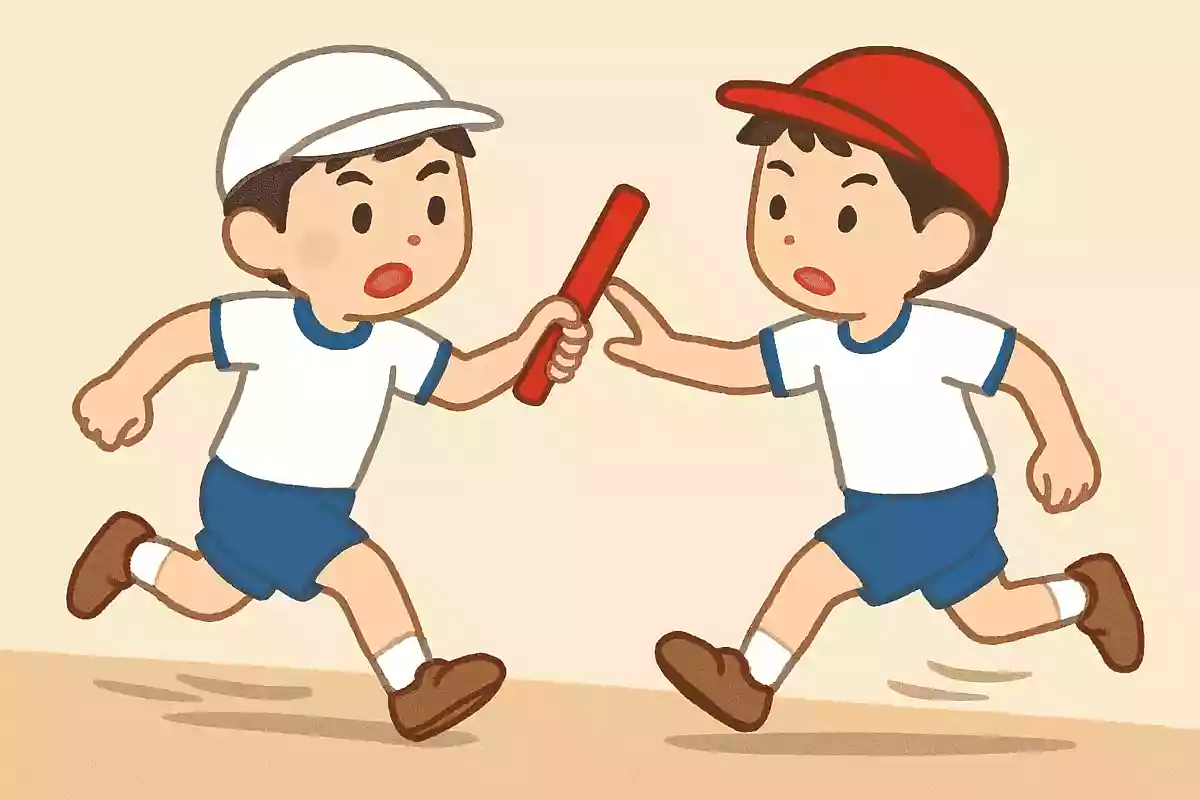
Next, I’d like to talk about the baton pass, which is crucial in relays.
As I mentioned at the beginning, a relay requires both individual running speed and smooth baton exchanges, so it’s no exaggeration to say that the baton pass can decide the outcome.
Practicing baton passes with your teammates is essential, and it may not be something you can master overnight.
However, the better you get, the closer you’ll be to victory, so I hope you’ll find this helpful.