

A big hit at after-school childcare! A special feature on group games and activities you can play without any equipment


Many of you may be looking for games that captivate children and are indispensable for the exciting activity time in after-school care.
Group play unique to after-school programs includes plenty of activities—both outdoors and indoors—that get everyone lively and engaged, while naturally nurturing motor skills and communication.
Here, we introduce fun game ideas that spark smiles, such as group shiritori, the telephone game, and DIY archery.
These activities are enjoyable for both small and large groups, so be sure to try them out in your after-school care setting!
- [Elementary School] Quick and Easy! Indoor Recreational Activities Perfect for Lower Grades
- [Play Right Away!] Exciting Recreation Games Recommended for Elementary School Students
- [For Kids] Indoor Fun! Large-Group Recreational Activities and Games
- Recommended for upper elementary grades! Exciting indoor recreation and games
- Play ideas kids can enjoy from 1st to 6th grade [indoors & outdoors]
- [For Kids] Have Fun at After-School Day Service! A Special Feature on Indoor Game Ideas
- [Elementary School Rec] Recommended Games and Performances for a Fun Party
- Elementary School Fun Day a Big Hit! Indoor Game Idea Collection
- [List] A roundup of games and recreational activities kids love
- Simple yet amazing crafts: craft ideas that elementary school students will want to make
- [Children’s Club] Easy and fun indoor games. Exciting party games
- [For Kids] Exciting Class-vs-Class Games: Team Competition Activities
- [For Kids] Today's Recommended Recreation Idea Collection
Big hits for after-school childcare! A special collection of group play and game ideas you can do without any equipment (41–50)
A game developed by NASA

Let’s try playing a game developed by NASA, the National Aeronautics and Space Administration.
To briefly explain the game: it assumes a situation where a spaceship has malfunctioned, and you rank 15 items you have on hand.
You assign ranks in order of necessity, and decide them through group discussion.
First, each person should make their own ranking based on their interpretation, and then discuss and reconcile the differences with the group.
Can you determine the correct order—and survive?

Big hits in after-school care! A special collection of group play and game ideas you can do without equipment (51–60)
Rock-Paper-Scissors Game Jump!
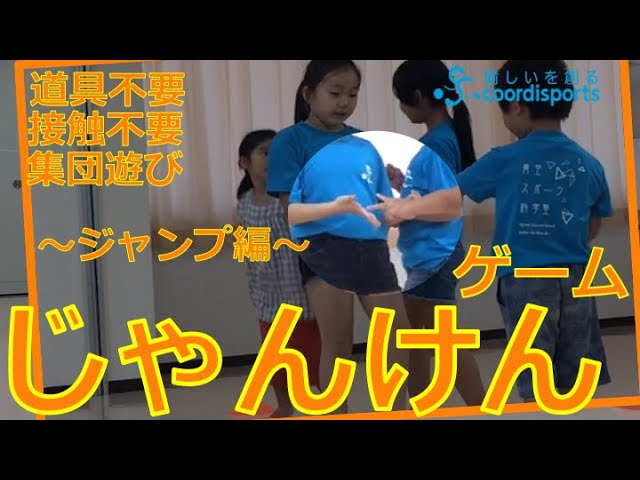
Participants split into two teams and face each other from opposite ends of the room.
When the signal to start is given, play rock-paper-scissors with a teammate; those who win move toward the opposite side by jumping.
Once you reach the other side, play rock-paper-scissors again, and repeat.
It’s a very simple game, so incorporate different types of jumps for the movement: a “rock” jump where you hop with both feet together, then a “scissors” jump that’s like practicing skipping, and next a “paper” jump with your legs spread wide.
It feels like you’re evolving as you go, and it’s a lot of fun.
Arranged ice ogre

In freeze tag, if a child is touched by the It (oni), they freeze and can’t move; if a teammate touches them, they can run again.
It’s a classic game of tag that kids have loved for ages.
First, decide who’s It with rock-paper-scissors or similar.
Choose the number of Its based on the total number of players.
At the start signal, the children run away and the It chases them.
The It should not only chase the runners but also guard frozen players to prevent them from being rescued.
When freezing, standing still is fine, but you can also add a twist—like striking a monkey pose—so it’s clear they’ve been tagged.
World Play! ‘Please Statue Play’

The American game “statue game” is basically a form of tag.
However, the tagger plays the role of a sculptor, and anyone who gets tagged has to freeze into a statue within the time it takes to spin around twice, becoming whatever statue the tagger calls out.
If the tagger says “frog,” everyone who’s been caught has to hold a frog pose and can’t move until everyone is tagged, so depending on the type of statue, it can be pretty tough.
Once everyone is caught, the tagger chooses their favorite statue and names that person as the next tagger.
Top 5 most entertaining tag games in the world

Tag, a classic outdoor game for children, is actually enjoyed in many countries around the world.
Tag from around the world… you’re curious what those games are like, right? This time, we’ll introduce five versions: the Filipino tag game “Buwan-Buwan,” the Sri Lankan tag game “Gini Hangima,” the Moroccan tag game “The Hen and the Caterpillar,” the German tag game “The Spinning Top on the Rock,” and the Bangladeshi tag game “Chi-Buri.” Depending on the country, the rules and ways to play vary—like having the tagger move only along lines or adding a treasure-hunt element—so give these different kinds of tag a try and enjoy a twist on the usual game!
Adults going all out at the park!

Games we used to play as kids can be surprisingly fun even after we grow up.
So why not enjoy some outdoor games for the first time in a while? Here we introduce two types of tag games: “Kotorokotoro” and “Hyotan Oni.” In Kotorokotoro, players are divided into one chaser (oni) and the children.
The children line up, placing their hands on the shoulders of the person in front.
The oni faces the line, and wins if they can tag the child at the very end.
In Hyotan Oni, you draw a gourd-shaped safe zone on the ground, and the children run around inside it.
The oni reaches in from outside the gourd, and if they manage to tag someone, they swap roles with that person.
Tag, where kids and adults both have fun: “Hand-Holding Oni (Tag)”

Participants are divided into one “it” and the “children.” The children form pairs and hold hands.
At the start signal, the children run away, and “it” chases them and tries to touch their joined hands.
When a pair is touched by “it,” they must let go, find a new partner, hold hands again, and keep running.
At the finish signal, any child who is in a pair is safe; any child left alone loses.
If there are many children, you can increase the number of “it” players.
It’s a game everyone can enjoy, and it helps people get friendly even if they’re meeting for the first time.