

Become a trivia master with a multiple-choice quiz for elementary schoolers! A fun problem collection that captivates both kids and adults


Want to try a multiple-choice quiz for elementary school kids?These fun trivia quizzes about familiar things—like the secret of an egg’s color or how long a line you can draw with a single pencil—are full of “Wait, really?!” moments.With four choices, you can use the options as hints, making it perfect for lively fun with family and friends.In this article, we’ve gathered a bunch of entertaining four-choice quizzes that will captivate elementary schoolers.Aim for a perfect score and jump right in!
- [Easy] Quizzes That Elementary School Students Can Solve! A Collection to Nurture Wisdom
- Let's take on a four-choice quiz that everyone can enjoy together!
- [Interesting] Compilation of Trivia Quiz Questions
- Quiz for elementary school students: Easy! Fun! Question collection
- [Common Sense & Trivia] True-or-False Quiz with Knowledge for Elementary School Students
- Surprisingly unknown? Trivia Quiz [Multiple Choice: 3 Options]
- Fun quizzes for elementary school kids: a collection of questions everyone can enjoy together
- Let's get excited with a two-choice quiz that everyone—from kids to adults—can enjoy!
- [For Elementary School Students] A Four-Choice Proverb Quiz Recommended for Kids
- [For Elementary School Students] Animal Quiz to Learn Knowledge and Fun Facts
- How Much Do You Know? Food Quiz for Elementary School Students
- [Killing Time] A Collection of Fun Trivia Quizzes You'll Want to Share with Someone
- [Knowledge Expander!] A Three-Choice Quiz about Fish for Elementary School Students
Become a Trivia Master with a Four-Choice Quiz for Elementary Schoolers! A Collection of Fun Questions (21–30) That Kids and Adults Alike Will Love
How much does it cost to make a one-yen coin?

- 0.3 yen
- 0.6 yen
- 1 yen
- 3 yen
See the answer
3 yen
The 1-yen coin is made of aluminum. The raw material cost per coin is about 0.3 yen, but when you add processing and other expenses, it comes to 3 yen. By the way, it reportedly costs 10 yen to make a 5-yen coin, 13 yen for a 10-yen coin, and finally drops to 12 yen for a 50-yen coin, so try remembering these together.

Why is it called a blackboard even though it’s green?

- Because it costs too much to make
- Because the light is reflecting and it's hard to see.
- Because green is easy on the eyes.
- Because we can’t make a black blackboard.
See the answer
Because the light is reflecting and it's hard to see.
There is a theory that, in postwar schools, the baby boom led to an increase in the number of students, and in the packed classrooms, the glare on the blackboard from the windows made it hard to see from the front row, which is why the boards were changed to green. Nowadays, more schools are using whiteboards and monitors for lessons, but many people still associate school classrooms with blackboards.
For what original reason were buttons attached to suit sleeves?

- decoration
- so as not to wipe my nose
- spare button
- To change the width of the cuffs
See the answer
so as not to wipe my nose
The origin of suit sleeve buttons is said to trace back to Napoleon, renowned as a French hero. During France’s invasion of Russia, it’s said that soldiers, suffering from the extreme cold, wiped their runny noses on their jacket sleeves. As a result, when they marched, many soldiers’ sleeves were stiff with dried mucus. A leading theory holds that metal buttons were added to the sleeves to prevent soldiers from wiping their noses on them.
At zoos, you often see koalas sleeping, but how many hours a day do koalas sleep?

- 8 hours
- 12 hours
- 16 hours
- 20 hours
See the answer
20 hours
Eucalyptus, the main food of koalas, is fibrous, highly toxic, and low in nutrients, so digesting it requires a lot of energy. For this reason, it’s said that they sleep about 20 hours a day to conserve energy. On the other hand, when they really run, they are said to reach about 30 km/h, which shows just how fascinating animals can be.
In bullfighting, what are the bulls reacting to when they go on a rampage?
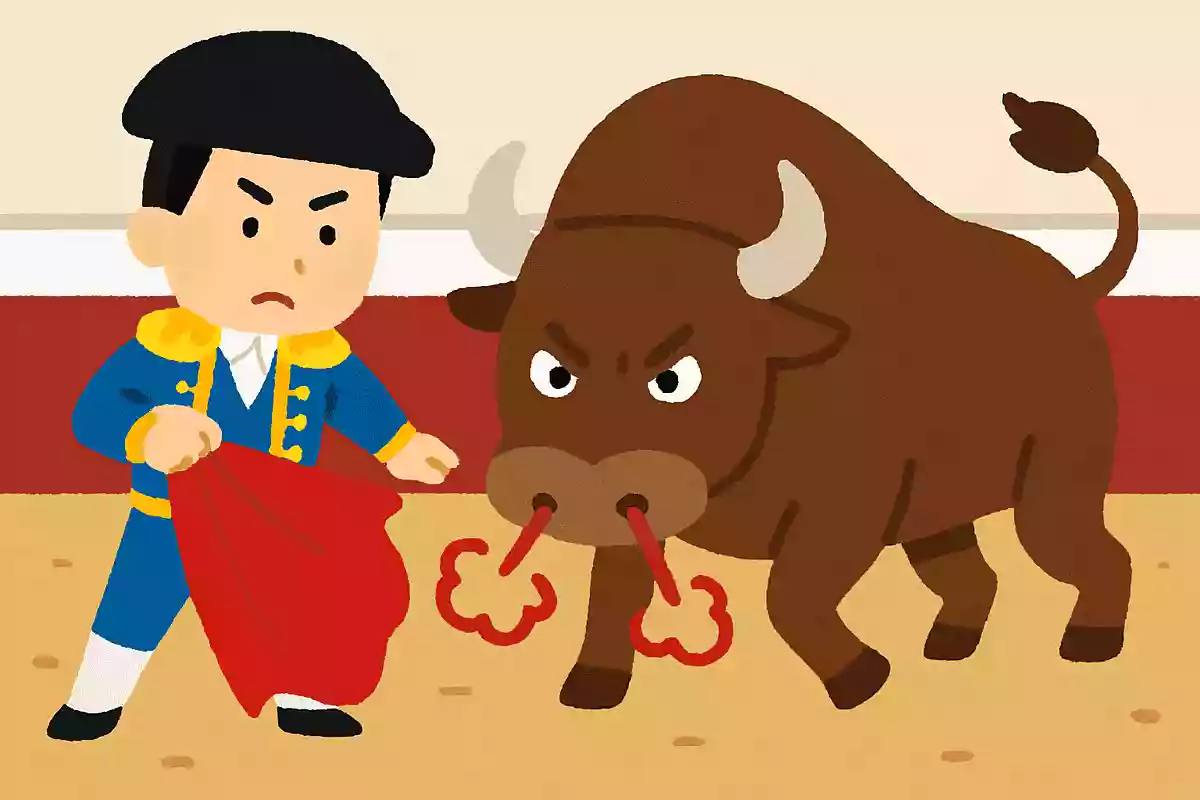
- Voice of the matador
- The way the fabric moves
- red cloth
- audience voices
See the answer
The way the fabric moves
People tend to think bulls go wild because of the color red, but in reality, bulls see in monochrome and cannot distinguish colors. To protect themselves from predators, they react to unfamiliar or moving objects; due to this instinct, they charge at a fluttering cloth. Therefore, the color of the cloth is irrelevant. In bullfighting, however, red is used to evoke images of blood and danger, which serves to excite the audience rather than the bull.
There is a round feature on the Great Buddha’s forehead called the “byakugō.” What does it represent?

- The Third Eye
- Accessories
- hair
- mole (skin spot)
See the answer
hair
Byakugō refers to the long, white, right-twisting hair that grows slightly above the space between the Great Buddha’s eyebrows. It is said that the light emitted from the byakugō illuminates the world, and if extended, it is about 4.5 meters long. In Hinduism, some deities are depicted with a third eye in the same position, so it can be easy to confuse the two.
How many legs does a squid have?

- two (long cylindrical objects)
- 4 items
- 8 pieces
- 10 pieces
See the answer
8 pieces
Because of how they look, people often assume octopuses have eight legs and squids have ten, but in fact squids also have eight legs. The two that make them appear to have ten are called tentacular arms, used for catching prey, and are counted as arms rather than legs. If you look closely, you’ll notice they differ in shape and length from the other eight, so be sure to observe them carefully.