


Let's take on a four-choice quiz that everyone can enjoy together!


“What’s the official name for a train?” “What language is the word ‘coupon’ from?” and more…
We’ll introduce trivia about culture and everyday life—things you think you know but actually might not—in a four-choice quiz format! You can have fun learning interesting facts about Japan and the world with your family and friends.
With answers that will make you say, “Wow!”, it’s sure to get everyone excited! Let’s uncover the secrets behind the things we use and see every day by solving quizzes.
So, how many questions can you answer?
Unexpected trivia about culture and life (1–10)
What is the place that served as the origin of the proverb “More haste, less speed” (isogaba maware)?

- Mount Fuji
- Kiyomizu-dera (Kiyomizu Temple)
- Itsukushima Shrine
- Lake Biwa
See the answer
Lake Biwa
In the past, there were only two ways to reach Kyoto: either cross Lake Biwa by boat or walk around it. This proverb arose from the teaching that, to avoid boats capsizing in the sudden gusts blowing down from Mount Hiei, it’s better to choose the longer but safer route.
Whose job is it at school to be the first to eat the school lunch?

- principal
- Vice Principal
- School nurse
- student server (cafeteria server)
See the answer
principal
At school, the person responsible for eating the school lunch first is the principal. The principal samples the meal before the students begin eating to check that there are no problems with preparation or hygiene. This practice is a safety measure to prevent incidents such as food poisoning, and by taking the lead in tasting the meal, the principal provides reassurance to the children. It is one of the important roles in ensuring that school lunches are served safely.

What does the word “loafer” mean in English when it comes to shoes?

- lazy person
- hard worker
- a fortunate person
- a very rich person
See the answer
lazy person
Loafer means “lazy person” in English. The shoe was named after its characteristic of being easy to slip on without tying laces.
What is the name of the C-shaped figure used in vision tests?
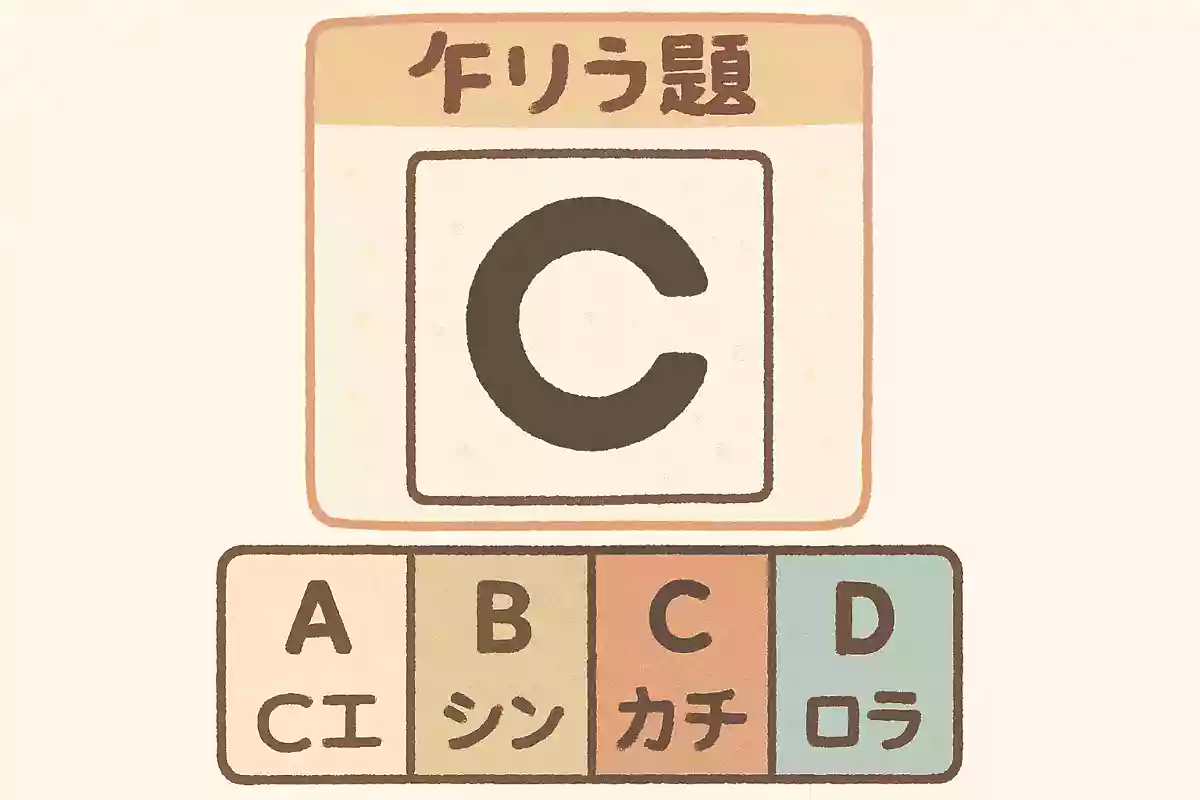
- C mark
- Vision mark
- Circle C
- Landolt ring
See the answer
Landolt ring
The symbol used in vision tests that looks like a C with a gap is called the Landolt ring. It was named after the French ophthalmologist Edouard Landolt, who devised it. Test subjects have their visual acuity measured by indicating the direction of the gap in the Landolt ring. In Japan, it is widely used in schools and health checkups, and is one of the standard methods for eye examinations.
What is the English word for “座右の銘”?

- Anthem
- Slogan
- boom
- Motto
See the answer
Motto
We call the direction and values one cherishes in life a “motto.” It’s a word that is often used in Japanese as well, written in katakana.
Why are the classroom windows on the left?
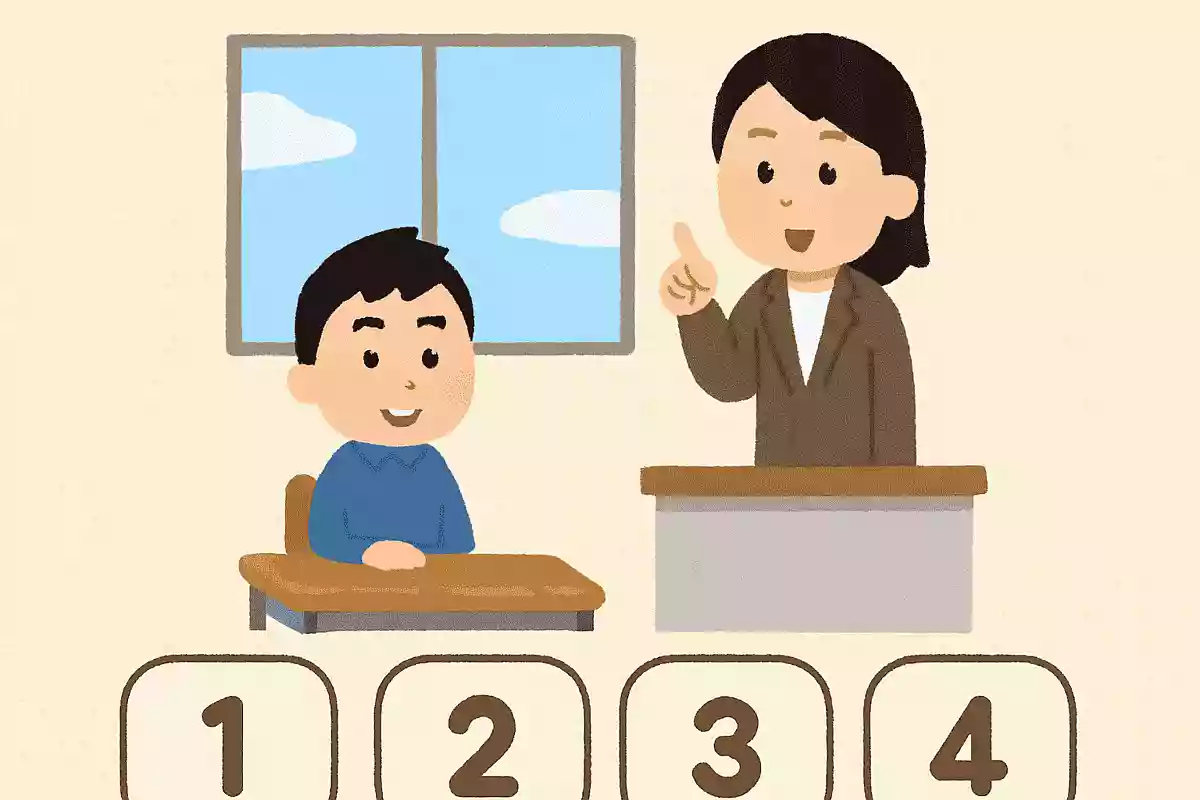
- To reduce construction costs
- so that you don’t cast a shadow with your own hand when writing notes
- Because it’s considered good in feng shui.
- Because you can see outside well.
See the answer
so that you don’t cast a shadow with your own hand when writing notes
In Japan, because right-handed people are the majority, placing windows on the left side of classrooms lets natural light come in from the left, preventing the paper from being shaded by one’s own hand when writing. This helps keep the field of view bright and makes it easier to concentrate on learning. In the past, when lighting was not as bright as it is today, the placement of windows was an important design consideration.

The word “coupon,” which lets you shop at a discount in stores, comes from which language?

- English
- German
- Portuguese
- French
See the answer
French
The word “coupon” comes from French and means “to cut off” or “to detach.” It was originally used to refer to tickets or vouchers, but nowadays it has become established as a term for discount vouchers.