

![[For Elementary School Students] Fukushima Prefecture Local Quiz! A Fun Workbook for Parents and Kids](https://media.ragnet.co.jp/img/1200__png__https://www.ragnet.co.jp/files/2025/12/e0c85cf06a75d2deb731ad68bd8b78f8.webp)
[For Elementary School Students] Fukushima Prefecture Local Quiz! A Fun Workbook for Parents and Kids

There are probably many children and adults who don’t know much about Fukushima Prefecture.
Fukushima is full of fun discoveries, like the other name of Aizuwakamatsu Castle, the prefectural tree, flower, and bird, and the secret behind delicious Kitakata ramen.
In this article, we’ve gathered a set of local quizzes for elementary school students that let you enjoy learning about Fukushima’s history, nature, dialects, and specialties.
What does “obankata” mean? What is the name of the mysterious island in Lake Inawashiro? Read on while guessing the answers! If adults join in too, it’ll make for lively conversation!
[For Elementary School Students] Fukushima Prefecture Local Quiz! A Fun Parent-Child Workbook (1–10)
What was the name of the long-established department store that used to be in Iwaki City?
- Daikokuya
- Usui Department Store
- Chuugou
See the answer
Daikokuya
Daikokuya was a department store in Iwaki City with a very long history dating back to the Meiji era. It was loved not only as a place to shop but also as a popular meeting spot, and it served as a symbol of Iwaki City. In Fukushima Prefecture, there were other department stores as well, such as Usui in Koriyama and Nakago in Fukushima City, which helped bring vibrancy to their towns. They are treasured places filled with many memories.

What tree is famous in Fukushima Prefecture?
- Japanese zelkova
- Sakura
- white birch
See the answer
Japanese zelkova
The Japanese zelkova is a very sturdy tree that grows tall and straight. Its vigorous growth was seen as overlapping with the bright future of Fukushima Prefecture, and in 1966 it was chosen as the prefecture’s official tree. In summer it provides shade, and in autumn it shows beautiful leaves. It also carries the message of cherishing nature.
What is the Japanese confection whose name is derived from a traditional performing art handed down in Iwaki City?

- Mamadōru
- Jangara
- thin-skinned steamed bun (usukawa manju)
See the answer
Jangara
Jangara is a confection named after the traditional performing art “Jangara Nenbutsu Dance” from Iwaki City in Fukushima Prefecture. The Jangara Nenbutsu Dance is an event where participants dance while playing drums and hand gongs, and it has been carefully passed down since long ago. A distinctive feature of the sweet is that its shape resembles the gong used in the dance. With its gentle sweetness, it’s popular as a souvenir and is a confection that represents Iwaki City.
What is the alternate name for Aizuwakamatsu Castle?
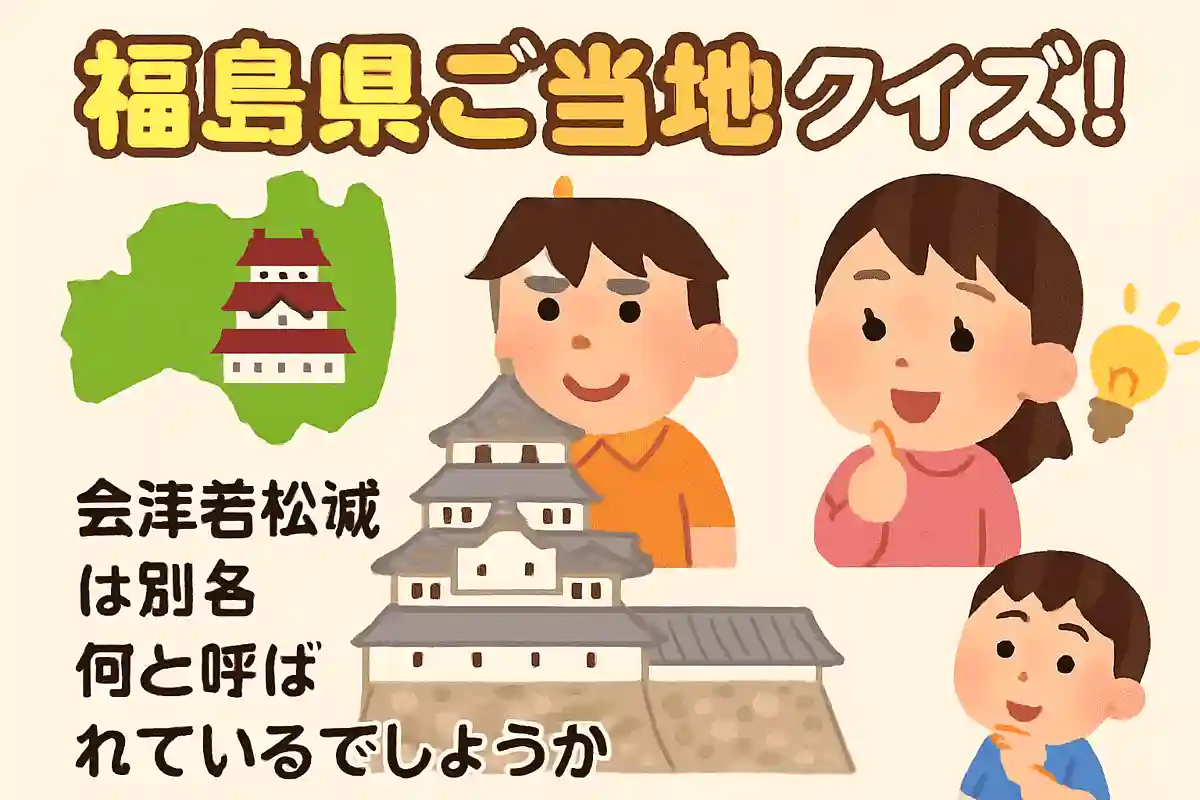
- Tsuruga Castle
- Kamega Castle
- Washigajō
See the answer
Tsuruga Castle
In Fukushima Prefecture, it is better known as Tsuruga Castle than as Aizuwakamatsu Castle. Its distinctive features are the white walls and the reddish red-tile roof. It’s said to be the only castle in Japan with red tiles. Having withstood battles of the past, it still stands today as a cherished castle that conveys Fukushima’s history and pride. In spring, the cherry blossoms are beautiful, and many people come to see them.
What is the name of the only island that appears in Lake Inawashiro when it is at full water level?
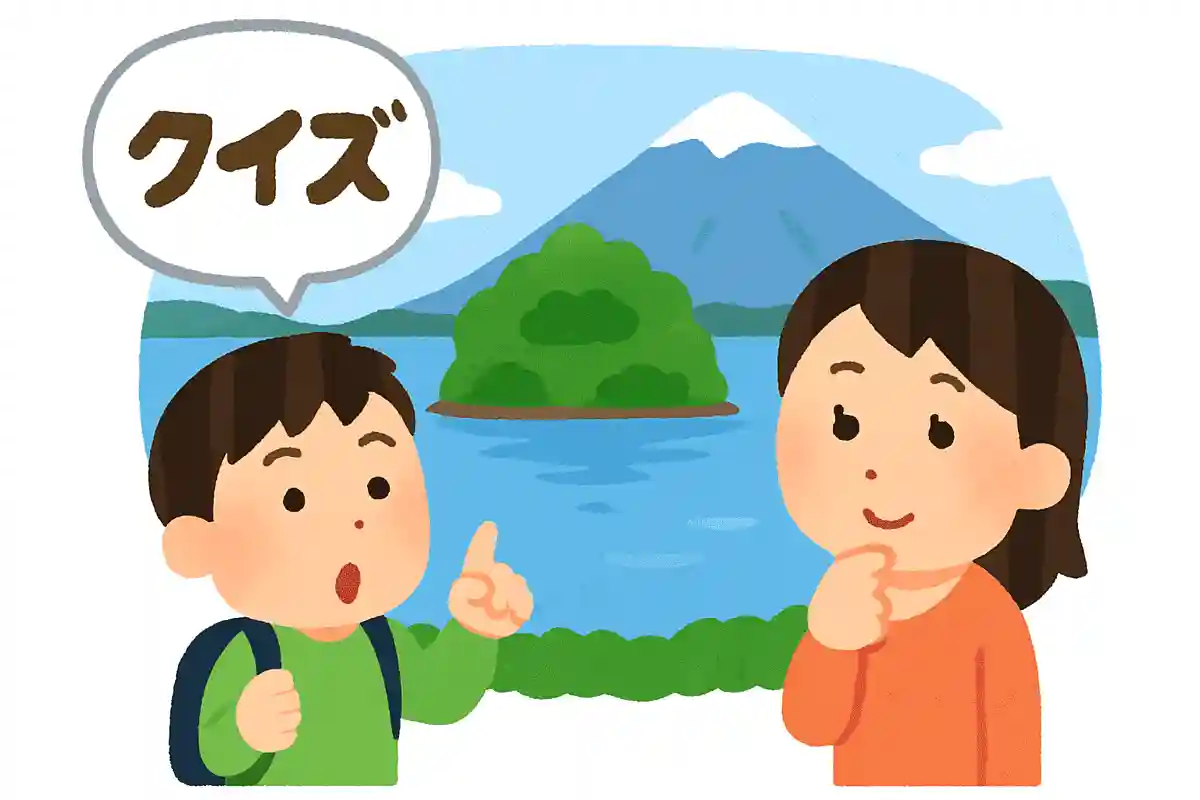
- Oujima
- Tsurushima
- Kamejima
See the answer
Oujima
Okinoshima is a small island on the north side of Lake Inawashiro. When the water level is low, it connects to the shore and looks like a path, but when the water rises, it becomes an island surrounded by water. Its curious shape is popular. Nearby are the place where Hideyo Noguchi, a renowned physician, spent his childhood and a memorial museum, making it a spot where you can learn about both nature and history.
What local ramen is Fukushima Prefecture famous for?
- Shirakawa Ramen
- Takeoka Ramen
- Kitakata Ramen
See the answer
Kitakata Ramen
Kitakata ramen is a famous local ramen that originated in Kitakata City, Fukushima Prefecture. The noodles are thick and wavy, and their chewy texture is especially popular. The soup is often a light soy sauce flavor, making it enjoyable for both children and adults. In Kitakata City, there’s even a custom of eating ramen in the morning called “asa-ra,” and many people come from all over the country to try it.
During which time of day is the greeting “obankata,” used in Fukushima Prefecture, typically said?

- early morning
- evening
- noon
See the answer
evening
Obankata is a dialectal expression used in places like Fukushima Prefecture, derived from the word “bankata” (evening). Bankata refers to the time from late afternoon into night. For that reason, obankata is used as a greeting when you meet someone in the evening or at night, and it means the same as “good evening.” It’s a regionally unique way of speaking that conveys a warm feeling.