

Performances that liven up an elementary school thank-you party! A collection of ideas everyone can enjoy

Even if you’ve been put in charge of a performance for an elementary school thank-you party, it can be hard to decide what to do.
You’ll want something that both children and adults can enjoy together.
Don’t worry if you don’t have much time to prepare.
With a bit of creativity, there are plenty of ideas that can turn it into an unforgettable memory—like projection mapping made with PowerPoint, body percussion that can be practiced solo, and quizzes or games that everyone at the venue can join.
Here, we introduce performance ideas for a thank-you party that kids and adults can enjoy together.
Please use them as a reference!
- Recommended performances for elementary school thank-you parties: carefully selected games and skits that will liven things up!
- Performances for a farewell party for sixth graders: from funny skits to moving ideas
- [For Elementary Schools] Recommended Exhibits and Recreational Activities for a Cultural Festival
- [From kindergarten to elementary and junior high school] Entertainment and performances that liven up farewell parties
- Party games that get everyone excited at school
- [For Elementary School Students] Recommended Recreational Activities to Enjoy at a Farewell Party
- [Children's Association] A Collection of Fun Entertainment and Activity Ideas
- [Hilarious] Rhythm Gags That Kill at Parties and Performances
- [One-Shot Gag] A roundup of sure-fire skits that will definitely get elementary school kids excited!
- A collection of performance ideas that will liven up a graduation party. Crowd-pleasing entertainment.
- Simple! Easy one-shot gags. Surefire bits that liven up parties and performances [2026]
- [Idea] A roundup of recommended performances for lower grades at school arts festivals and learning presentations
- Farewell party entertainment and performance ideas to liven things up: presentations that convey gratitude
Performances that liven up an elementary school thank-you party! A collection of ideas everyone can enjoy (41–50)
Kitchen time

“Kitchen Time” is a performance that uses kitchen utensils as percussion instruments to play rhythms.
Depending on the utensils used, you can produce a variety of timbres, allowing for a broader range of arrangements than body percussion or tambourine ensemble pieces.
Since the performers are elementary school students, extremely advanced rhythms may be difficult to play, but with thoughtful part assignments, high-level arrangements are still possible.
It’s recommended to assign the hi-hat part—which requires strong time-keeping ability—to students with musical experience; doing so quickly tightens the overall sense of rhythm.

Which is the AI-generated image?

AI technology has advanced rapidly in recent years, and we’re now seeing fake images so accurate they look completely real.
A quiz game that uses such AI images can really liven up a party at a thank-you event.
You show two images and have participants guess which one is real and which one was generated by AI.
The key to keeping it exciting is to start with easy questions and gradually increase the difficulty.
Even genuine photos can look AI-generated depending on how they’re shot, the effects used, or the lighting, which can make them hard to tell apart.
It’s the kind of game that’s likely to fill the room with surprise and smiles.

A game where you guess someone from a part of their face

It’s a game where you show a photo of a body part and have people guess who it is.
It seems like it tests how much you usually look at and know about that person.
The photos can be of celebrities or participants at a graduation party—both are fine! It’s best to take and present parts like the mouth, eyes, or eyebrows—features that seem recognizable but aren’t too obvious.
However, if the pool of possible answers is too broad, no one will get it right, so be sure to give hints that narrow it down.
Picking unexpected people—like a teacher or a historical figure—could also make the game more exciting.

Illusion Dance
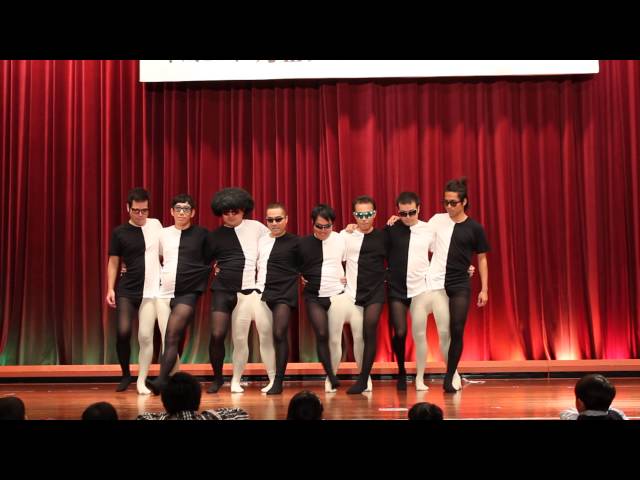
“Huh!? What’s going on!?” An optical-illusion dance that’ll make you doubt your eyes for a moment.
How about it for an elementary school thank-you party performance? If the performers wear costumes that look offset by half a body compared to the person next to them, the dance itself actually seems pretty simple.
A mysterious dance like this is sure to get everyone excited!
Chalk art

As a final memory with your classmates, why not try creating some chalkboard art? Chalk comes not only in white but in a variety of colors, so you can make vibrant, colorful drawings.
By rubbing the chalk with your finger after writing, you can adjust the intensity and create gradients and textures.
Talk together about what kind of chalkboard art you’d like to make as your last memory, and collaborate to bring it to life.
The time you spend creating it—and the time you spend taking photos together in front of the finished piece—will surely become a special memory.
Snacks with a two-person haori (two-person performance)!

The classic party act known as futari-baori is performed in pairs.
Two people wear an oversized haori together, and the person in the back tries to feed the person in front—that’s the usual setup.
It’s simple, but it really gets the crowd going.
Since the person in the back can’t see, they often end up pressing the food against the other’s cheek or nose instead of getting it into their mouth.
A team competition to see who finishes eating first is also a lot of fun, so definitely give it a try with everyone and liven things up.
Adults go all out! Gesture game

If you want to enjoy a game with everyone, how about Charades? It’s a game where you convey prompts using only gestures, without words—and depending on the prompt, it can be pretty hard to get your message across.
Try coming up with prompts that everyone can enjoy, from easy-to-imagine ones like baseball or soccer to animals or prompts with a bit of a story.
If you have a large group, we recommend splitting into teams, setting a time limit, and competing to see which team can guess the most prompts correctly.
Cups

“Cups” is an a cappella performance that keeps rhythm using a plastic cup.
Its first big boom started with a scene in the American film Pitch Perfect.
In Japan, it became known when the cast danced to it in the ending of the 2015 TV drama ‘Mondai no Aru Restaurant’ (A Restaurant with Issues).
You clap with your hands, tap the floor or the bottom of the cup, and more.
Using the various sounds you can create with a cup and your own hands, you build the rhythm—that’s Cups.
When many people do it together, the sound becomes louder and more festive, and everyone naturally smiles! Doing it as a group also creates a sense of connection.

Challenge the bamboo dance

Why not try your hand at a bamboo dance that uses long bamboo poles? It originated as a traditional dance in places like the Philippines, but in Japan it’s also well known as a children’s activity.
The operators open and close four bamboo poles to a waltz-like three-beat rhythm, while the dancers step nimbly to avoid getting caught by the poles.
Because coordination between the operators and dancers is crucial, it’s a great recommendation for those looking for a party trick to perform with close friends or classmates.
Start by practicing with two poles, then increase the number once you’ve got the rhythm down.
Having multiple dancers raises the difficulty, but it also adds to the performance’s color and impact.
I wonder what’s inside the box?

It’s the “What’s in the box?” game.
You often see it on TV variety shows.
You put “something” inside a box whose front is visible, with holes on the sides where only your hands can go in.
The player sticks their hands in and guesses what’s inside by touch.
Only one person plays, but the audience gets excited too—it’s a fun bit of entertainment that makes everyone laugh and chime in with jokes.
