

[For Elementary School Students] A Collection of Game Ideas to Use in Social Studies Classes

Many of you are probably hoping to get children more interested in studying.
But doing things the same old way can get boring… That’s when you should check this out! In this article, we’ve put together a selection of games and quizzes that we highly recommend incorporating into elementary school social studies classes.
They range from easy activities you can do while watching videos to more advanced recreational games that test applied skills using dedicated materials.
Be sure to read to the end and find the ones that are the perfect fit for you!
- [Play Right Away!] Exciting Recreation Games Recommended for Elementary School Students
- [For Elementary School Students] Recommended Riddle Collection
- [For Elementary School Students] Fun and Effective Prefecture Quiz
- A roundup of exciting grade-level recreational activities for junior high school students
- Elementary School Fun Day a Big Hit! Indoor Game Idea Collection
- [For Elementary School Students] Learn about the SDGs by Answering Quizzes!
- [Elementary School] Recommended Ideas for Morality Games: Learn Through Play
- [For Elementary School Students] Collection of Science-Related Games and Quizzes
- Recommended for upper elementary grades! Exciting indoor recreation and games
- Become a trivia master with a multiple-choice quiz for elementary schoolers! A fun problem collection that captivates both kids and adults
- [For Kids] Fun Indoor Game Ideas for After-School Day Services
- [Elementary School] Treasure Discovered! A Collection of DIY Puzzle Treasure Hunt Ideas
- Ideas for Performances That Inspire Laughter and Tears: Perfect for Upper Grades at School Arts and Learning Showcases
[For Elementary School Students] A Collection of Game Ideas to Use in Social Studies Classes (11–20)
Map Symbols Quiz
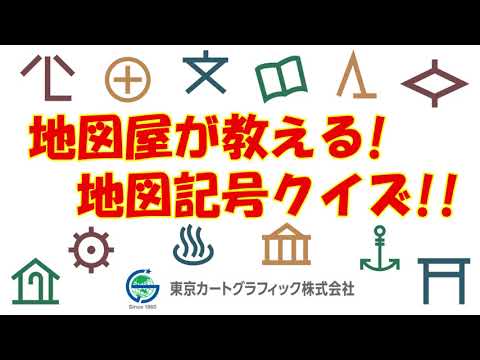
Map symbols learned in third grade.
Many people probably know marks like the post office symbol even before they learn them at school.
It would be fun to turn these map symbols into quizzes for social studies.
You can simply ask, “What does this symbol represent?”, but if you’re targeting upper grades, you could go a step further with questions like “Why is the lighthouse map symbol designed the way it is?” or “As of 2024, what is the newest map symbol?” It’s also a good idea for each group to create map symbol quizzes and exchange them.
By the way, the newest map symbol is the ‘Natural Disaster Memorial Monument.’ Look up the symbol yourself!
Historical Figures Karuta

New Year’s card games like karuta don’t get people as excited as they used to, but it’s still a lot of fun when everyone gets together to play.
So let’s build up our history knowledge with a history-themed karuta focusing on historical figures! For example: “How huge! Nara’s Great Buddha—astonishing! Now, who was the one who had it built?” And make sure the reader recites the cards in that classic Hyakunin Isshu chant; it definitely makes the game livelier.
By the way, the answer card is Emperor Shōmu.
If you’re an elementary school student, many of you might already be making local karuta sets as part of integrated studies.
Creating a history karuta together sounds like a great learning activity.
World map puzzle

An educational toy that turns the world map directly into a puzzle—some elementary schools probably have them in their libraries or recreation rooms.
As of 2024, there are 196 countries in the world.
It would be fun to learn about those countries through a puzzle.
Creating even more detailed world map puzzles—like dividing them by continents such as Asia or Africa and having everyone work on each region—could make for enjoyable learning as well.
You could also study less familiar countries like Brunei, the Republic of Malta, and Timor-Leste.
Political Terminology Quiz

Let’s learn political terms through quizzes.
We’ve gathered quizzes about politics that are taught in elementary school.
Most political topics are studied in the upper grades.
However, some lower- and middle-grade elementary school students may develop an interest in politics through TV news and newspapers.
When interest begins to grow, a single-question quiz format is an easy way to get started.
It can also lead to thinking more deeply based on the answers.
For example, suppose the answer is “Respect for fundamental human rights.” It’s one of the three pillars of the Constitution of Japan, and it can prompt students to consider or look up the other two.
Creating their own questions and more can make learning enjoyable.

Local Specialty Quiz

We’re going to think about local specialties from each prefecture.
Many specialties are closely related to a prefecture’s climate, geography, and history.
For example, Aomori Prefecture is the top producer of apples in Japan—do you know why? Aomori has cool summers and plenty of land, which makes it well-suited for growing apples.
Additionally, there was a period when cold-weather damage led to poor rice harvests, so people devoted themselves to cultivating apples.
Learning about a single specialty can broaden your knowledge, right? Please use this to help deepen your understanding of Japan’s prefectures.
Class Recreation Consensus Game: Deserted Island Edition
This is an activity where you choose 8 items out of 17 under the scenario that you’ve been caught in a storm and stranded on an uninhabited island.
There isn’t a single correct answer; the key is to discuss why you choose each item as you make your decisions.
The criteria for what seems necessary—such as tools to make fire, food, or items to call for help—vary from person to person.
In small groups, considering what’s essential for survival will also test your ability to cooperate and persuade.
By engaging in conversation and exploring your teammates’ thinking, understanding deepens, and the adventurous theme fosters excitement and a sense of unity.

Debate showdown

Convince your opponent! Here are some ideas for debate showdowns.
These ideas are great for developing logical thinking and communication skills.
Participants exchange opinions based on a given theme and strengthen their persuasive power to convince others.
In this game, you can train not only your speaking skills but also your listening skills and the ability to change your views flexibly.
By choosing familiar issues as themes and engaging in discussions at school or at home, you can also learn the importance of constructive exchanges of ideas.
Greeting game

Let’s greet according to the time of day! Here are some greeting game ideas.
These fun activities help you learn greetings suited to different times and cultures in a game-like way.
Walk around to music, and when the music stops, look at the illustration the teacher shows and say the appropriate greeting for that time of day—this helps develop decision-making skills! You can also incorporate greetings from other cultures, such as the United States and France, to learn greetings from around the world and expand your vocabulary.
Give it a try!
Air-reading game

Let’s read the room so we don’t overlap with our friends! Here’s an idea for a “reading the room” game.
It’s a unique game that helps elementary school students develop the ability to act while watching the timing and what’s happening around them.
In a group of 4–5 players sitting in a circle, you take turns standing up while calling out numbers.
The rule is simple, but what matters is avoiding overlapping timing with your friends.
Through the game, kids can build awareness of others and quick decision-making skills.
The atmosphere is tense at the start, but when two people stand up at the same time, everyone can’t help bursting into laughter!
Disaster Preparedness Quiz

Learn with a quiz! Here are some ideas for disaster-prevention quizzes.
If you acquire knowledge to protect yourself from disasters like earthquakes and fires, you’ll be able to act without hesitation when the time comes.
This time, let’s deepen our learning through a disaster-prevention quiz.
For example, a question might be: “What is the most important thing to do first when an earthquake occurs?” You can choose your answer from three options, so pick the one closest to what you think.
It’s an important quiz that helps protect lives!