

Recommended performances for elementary school thank-you parties: carefully selected games and skits that will liven things up!


Here are some ideas for games and quizzes that are perfect for an elementary school thank-you party!
A thank-you party is a great chance for graduates to express their gratitude to the teachers who supported them, and it often includes activities that both teachers and students can enjoy together.
I’m sure many parents are putting a lot of thought into making it a fun time for everyone.
In this article, we’ve gathered games you can play in a classroom or gym, along with quizzes that will get everyone excited.
It’s also a great idea to try a theme that puts the teachers in the spotlight.
We’ve compiled ideas to help you create a memorable thank-you party, so feel free to use them as a reference!
- Performances that liven up an elementary school thank-you party! A collection of ideas everyone can enjoy
- Recommended for upper elementary grades! Exciting indoor recreation and games
- [For Elementary School Students] Recommended Recreational Activities to Enjoy at a Farewell Party
- Games to Liven Up Your 2026 Graduation Party and Thank-You Banquet
- Elementary School Fun Day a Big Hit! Indoor Game Idea Collection
- [Play Right Away!] Exciting Recreation Games Recommended for Elementary School Students
- Play ideas kids can enjoy from 1st to 6th grade [indoors & outdoors]
- Performances for a farewell party for sixth graders: from funny skits to moving ideas
- [Elementary School Rec] Recommended Games and Performances for a Fun Party
- Games to Liven Up a Farewell Party: Ideas That Will Make Everyone Smile
- Recreation Activities That Excite Kids’ Clubs! Plans and Ideas Children Will Love
- Fun quizzes for elementary school kids: a collection of questions everyone can enjoy together
- [Children’s Club] Easy and fun indoor games. Exciting party games
Recommended performances for elementary school thank-you parties: carefully selected games and skits that will liven things up! (21–30)
Gesture Game Showdown
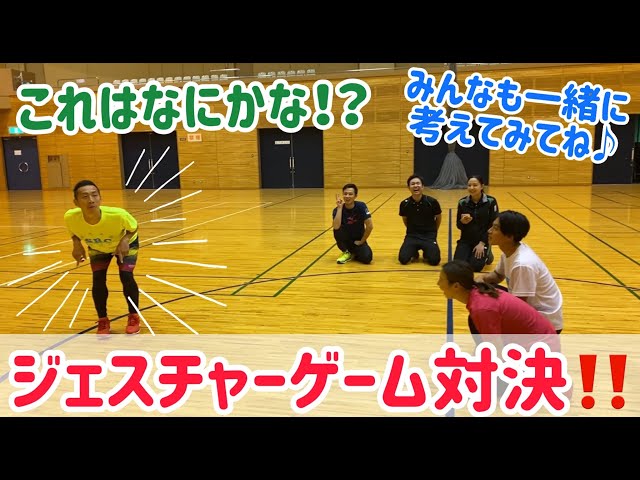
The gesture game, where you convey prompts using only gestures, is a lively activity you can enjoy without speaking.
It gets even more exciting when the actions are easy for kids to understand—like animals, sports, things found at school, or even popular anime characters.
Watching the person up front try their best to express the prompt will naturally bring smiles to everyone’s faces.
More important than getting the right answer is the effort to communicate creatively.
It’s a fun activity that can bring a class or entire grade closer together during a thank-you party or similar event.

Get hyped! 5 bizarre relay races

When it comes to activities that are easy to set up and get both kids and adults excited, relays are the way to go.
In bingo relays, color-matching relays, hand-holding relays, obstacle relays, and pinnie (bib) relays, it’s not just running speed that matters—being able to read the situation and think on your feet is key.
Because these games incorporate a variety of movements, children won’t get bored and will feel motivated to take on the next challenge.
Everyone gets to be the star, working together and having fun, so be sure to try these relay games at your thank-you party.

Recommended performances for elementary school thank-you parties: A curated list of crowd-pleasing games and skits (31–40)
What’s in the box? Showdown!

This game, where you guess what’s inside a box by touching it with your hands, is an exciting activity you can enjoy using only your sense of touch, without relying on sight.
If you fill the box with safe-to-touch items like stationery, stuffed toys, or handkerchiefs, anyone can join in easily.
Setting aside time for everyone to talk about what they felt by touch naturally leads to conversation—“What is it?” “I think I know!” You don’t have to reveal the answer right away; the time spent thinking is part of the fun.
It’s a perfect game for a thank-you party, where friends and teachers can all get excited together.
Games of all ages and places

“Kokon Tozai” is a classic party game that always livens up banquets and gatherings.
Let’s quickly review the rules.
First, choose a theme.
Then, starting on a cue, everyone takes turns quickly saying words that fit the theme in rhythm; anyone who misses the beat or can’t think of an answer is out, and the last person remaining wins.
For a thank-you party, how about themes related to school or teachers? Choosing prompts that only insiders understand can also spark lots of fond memories and stories.

Poker Face Game

It’s a game that tests your acting skills called the “Poker Face Game.” For example, two people eat sushi at the same time—one has a lot of wasabi in it and the other is normal.
One of them is acting, and you have to guess who ate the wasabi-filled sushi.
Only one person actually eats the wasabi sushi, but it’s possible that neither of them is acting, or that both of them are acting.
Some people are easy to read, but there are those who are really good at this kind of thing (lol).

Paper Cup Relay

The “Paper Cup Relay” looks simple, but it’s surprisingly hard and can make you panic! Prepare three paper cups: place two side by side on the table and stack the third one on top.
At the start signal, slide the two bottom cups sideways; if the top cup lands on the table without tipping over, you can pass the baton to the next person.
The rules are simple and it looks easy at first glance, but the lightweight cups tip over more easily than you’d expect, so it’s not as straightforward as it seems.
That frustrating challenge is sure to add excitement to the venue!
Where is this? Quiz

Let’s try a “Where is this?” quiz using photos.
It’s a game where you guess the location from pictures alone, but even if you’ve been there before, the name doesn’t always come to mind, so it can be surprisingly hard to answer.
If you’re doing it at a graduation party or thank-you banquet, it’s a great idea to pick places and photos that everyone shares memories of, like field trip spots or school trip destinations.
Just projecting funny photos with classmates on a screen will liven things up, and having prizes ready for the quiz winners will make it even more fun.
