

Introducing famous songs about Shizuoka: Local anthems and popular tracks [2026]

Shizuoka Prefecture, one of Japan’s most nature-rich regions.
With its majestic Mount Fuji, vast tea fields, and the shimmering waters of Suruga Bay, the breathtaking scenery this land boasts has stirred the hearts of many artists and set the stage for countless beloved songs.
From pieces sung by local musicians pouring their love for their hometown into the music, to works in which visitors transformed their moving experiences into sound, songs connected to Shizuoka are truly diverse.
Why not lend an ear to a musical world filled with the unique charm of this land, woven from the blessings of nature and the lives of its people?
- Introducing famous songs about Shizuoka: Local anthems and popular tracks [2026]
- [Japan’s Tallest Mountain] Famous songs about Mount Fuji: recommended popular tracks
- [Local Songs] Recommended tracks packed with Japan’s nationwide classics and hometown pride
- Songs related to Mie Prefecture. Beloved local tunes of Mie that continue to be cherished.
- A famous song about Fukuoka. The heart of the hometown passed down through song.
- A classic song that sings of Toyama. The enduring heart of our hometown.
- Recommended songs about mountains: classic and popular tracks for mountaineering and mountain songs
- [Songs of Saitama] A Wealth of Humor-Filled Classics! Local Anthems Packed with Love for Saitama
- The soul’s cry woven into Japanese elegies: unraveling supreme masterpieces that resonate with the heart.
- [Songs of Kanagawa] A showcase of classic masterpieces that sing of port-town scenes and the feelings of its people!
- Classic Songs About Nara: Local Anthems and Popular Hits [2026]
- A classic song about Miyazaki. A song filled with feelings for one’s hometown [2026]
- [2026] Masterpieces themed on Ehime: from local songs to municipal anthems
Introducing classic songs about Shizuoka: Local anthems and popular tracks roundup [2026] (11–20)
Descending the Tenryū Riverichimaru

This is a signature song by Ichimaru, a renowned geisha singer who also served as the 17th head of the Nakamura school of Edo kouta, released in the early Showa era.
Its theme is the majestic descent of the Tenryu River, which runs from her hometown of Nagano through Shizuoka to the Pacific Ocean.
The lively tones woven by shamisen and shakuhachi match perfectly with Ichimaru’s glossy, soaring vocals.
You can almost see the scene of the raft forging ahead through the spray right before your eyes.
The cheerful calls, tinged with a certain nostalgia, seem to convey the energy of people from that time.
Izu ShowerKitagawa Yūji

A wistful song beautifully rendered with deep emotion by veteran enka singer Yuji Kitagawa.
Released in 2018, this piece is a lyrical enka number where the rain-veiled scenery of Izu intersects with a helpless yearning for love.
As the gentle intro begins, it feels as if a cold autumn drizzle, a shigure, is pouring into your heart.
Perhaps it is a journey retracing memories of a love that has passed.
Kitagawa’s rich, warm voice blends exquisitely with the imagery of the Amagi mountains and the lonely coastline, tightening the listener’s chest.
Many will likely see themselves in the protagonist who, burdened by heartbreak, wanders alone through Izu.
Sataro of IzuTakada Kōkichi
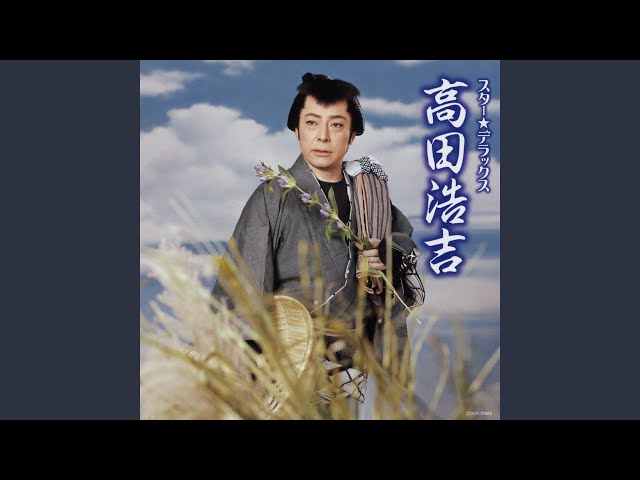
One of Hiroyoshi Takada’s signature songs that gloriously marked his postwar comeback, “Sataro of Izu.” Set on the spring-hazed roads of Izu, this classic matabi-kayō (itinerant traveler ballad) portrays a wanderer returning to his hometown.
After crossing the Amagi mountains, which emerge faintly like ink wash painting, the protagonist finally reaches familiar soil.
Yet he wavers—should he meet old acquaintances, or slip away as he is? That inner conflict intertwines exquisitely with Takada’s stylish, resonant vocals and the wistful tones of the shamisen, seeping deeply into the listener’s heart.
By the time the song ends, you’re enveloped in a bittersweet, abundant feeling, as though you had watched a full period drama on film.
The Dancing Girl of IzuYamaguchi Momoe

Yasunari Kawabata’s representative work The Izu Dancer is a novel set on the Izu Peninsula.
It has been adapted into films many times, and this song was the theme for the 1974 film, sung by Momoe Yamaguchi, who starred in it.
It was included as the B-side of Fuyu no Iro (Winter’s Color).
Song of Tojin O-Kichi (Akegarasu Edition)Fujimoto Nisankichi

This is “The Song of Tojin Okichi (Ake-garasu Version),” sung by Fujimoto Fumiko, celebrated as the “Nightingale Geisha.” Born as the theme song for a 1930 film, it is set in Shimoda Port at the end of the Edo period and portrays the heartrending fate of a young woman.
The emotive vocals, the wistful timbre of the shamisen, and the modern piano accompaniment blend exquisitely.
You can almost see the scenes—the rain-veiled harbor and camellia blossoms falling in fleeting beauty—and feel your chest tighten with the heroine’s sorrow.
A masterpiece deeply rooted in Shizuoka’s history, it is still lovingly passed down and sung at local festivals today.
Elegy of the Hot Spring TownŌmi Toshirō

It is a song themed around Ito Onsen in Ito City and is one of Toshiro Omi’s signature works.
Released in 1948, it became a hit, selling 400,000 copies.
The music was composed by Masao Koga, and the lyrics were written by Toshio Nomura.
There is also a film titled “Yunomachi Elegy” that is based on this song.
Introducing Classic Songs About Shizuoka: Local Anthems and Popular Tracks [2026] (21–30)
Mount FujiTōhō Gakuen Daigaku TOHO Amici

Mount Fuji, the highest mountain in Japan, is also cherished as a symbol of Shizuoka Prefecture.
This song, whose lyrics were written by Iwaya Sazanami, celebrates the grandeur of Mount Fuji; the composer is unknown.
In Shizuoka Prefecture, it is also used as a chime for traffic signals.