

![[2026] Masterpieces themed on Ehime: from local songs to municipal anthems](https://i.ytimg.com/vi_webp/spzV5WxNiRU/maxresdefault.webp)
[2026] Masterpieces themed on Ehime: from local songs to municipal anthems

Ehime Prefecture brims with hometown pride.
Blessed with the beautiful Seto Inland Sea, Mount Takanawa—the highest in Japan—and a mild climate, this land is home to countless wonderful songs.
From municipal anthems every local can hum to regional tunes that extol Ehime’s charms, the variety is truly abundant! In this article, we’ll take our time introducing a selection of gem-like pieces that express Ehime’s nature, culture, and everyday life through music.
Whether you’re from Ehime or visiting as a tourist, you’re sure to rediscover the prefecture’s allure through these songs.
[2026] Masterpieces themed around Ehime: Introducing everything from local songs to municipal anthems (1–10)
Blues of the DawnItsuki Hiroshi

Mr.
Matsuya Raymond from Ehime Prefecture wrote the lyrics and composed the music, and he also sings the song himself.
Nibancho in Matsuyama City is an entertainment district, and the story centers on an adult romance.
The prelude is quite stylish, and it has a similar vibe to “Izakaya,” the duet sung by Hiroshi Itsuki.
It’s not enka; this song is mood kayō (romantic pop).
The Tangerine SongSEX MACHINEGUNS

As a local song from Ehime, this might be one of the most famous! The shocking track “Mikan no Uta,” released in 1999 by SEX MACHINEGUNS, one of Japan’s leading heavy metal bands, is, contrary to its cozy-sounding title, a characteristically aggressive metal song.
It’s a classic that powerfully sings of frontman Anchang’s deep love for mikan, a specialty of his home prefecture of Ehime.
It’s a huge hit at karaoke, so be sure to give it a try!

Woman of IyoKitajima Saburō

Saburo Kitajima also has many local-themed songs, and while the standard tends to be tragic love or journeys in search of something, this one is what you’d call a happy ending.
It’s a song where you can catch glimpses of manliness alongside sights from Ehime throughout.
The lyrics mention the Ishite River, which might be unfamiliar unless you’re local.
It’s a Class A river that runs through Matsuyama City in Ehime Prefecture, with the Ishite River Dam upstream—details that really enhance the local-song feel.
Chief wardenMiyako Harumi

This is a song sung during the Niihama Taiko Festival, and it’s said that participants get even more fired up by Harumi Miyako’s powerful vocals.
First, what does the unfamiliar word “chō-osaja” mean? “Chōsa” refers to a taiko float fitted with carrying poles, and “ja” can be taken as something like “ya” or “you know.” So think of it as a chant meaning, “The taiko float is coming through!” or “It’s the taiko float!” Rendered in standard Japanese, it somehow sounds a bit flat or lacking in punch.
osmanthus (fragrant orange osmanthus; sweet olive)LUNKHEAD

LUNKHEAD’s song “Kinmokusei,” created by members from Niihama City in Ehime Prefecture, is filled with vocalist Yoshitaro Odaka’s feelings for his hometown, layered over his own high school days.
The lyrics weave in local scenery like Besshiyama and the Hiuchi-nada Sea, and along with the sweet, wistful fragrance of osmanthus, they awaken the youthful memories we all keep tucked away.
The image of tossing a school uniform—still a bit early for the seasonal change—into a bicycle basket feels like a scene from a film.
It’s a song that gently wraps the hearts of everyone who longs for their hometown.
STU48 Ehime ver.STU48
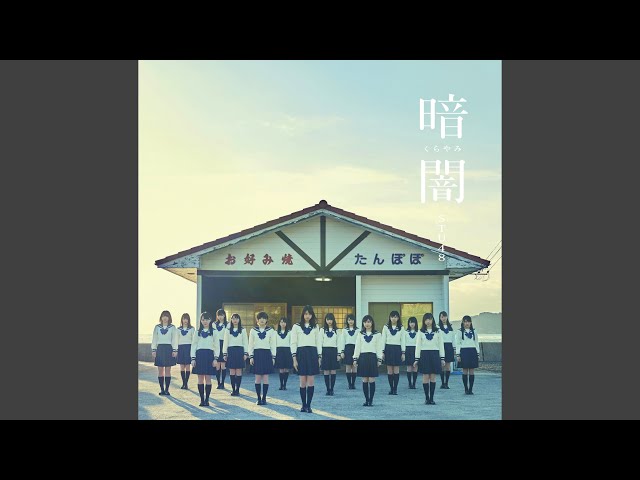
A local song overflowing with love for Ehime by STU48, a group based across the seven Setouchi prefectures.
This track, included on their debut single, makes its appeal unmistakably clear once you listen to the lyrics.
From tourist spots like Matsuyama Castle, the Shimanami Kaido, and the Botchan Train to specialties such as jakoten fish cakes and Imabari towels, Ehime’s “treasures” appear one after another.
It feels as if all the answers to “What is Ehime known for?” are packed into this one song.
Their refreshing vocals and the up-tempo melody are sure to vividly bring back memories of places you’ve visited.
A buoyant track that conveys their love for their hometown straight from the heart.
Aleutian mountain-heath (Phyllodoce caerulea)Kondō Nana

This is a legendary song released under Nana Mizuki’s real name, Nana Kondo, who is active as a voice actress and singer.
The theme is the Besshi Copper Mine, a source of pride for her hometown of Niihama City, and it paints a worldview that overlays the once-thriving prosperity and people’s lives with the “tsugazakura” flowers that now bloom quietly.
It’s hard to believe she was a junior high school student at the time—the straightforward, pure vocals blend beautifully with the wistful enka melody.
Listening to this song conjures up a grand story set against the history of the copper mine.
Filled with deep love and pride for her hometown, this gem of a local song makes you long for the land of Niihama.