

A Collection of Hit Japanese Songs from the Late 1970s to 1980s

When we think of the late Showa era (the late 1970s to 1980s), it was a time when Japan had successfully achieved postwar recovery from World War II and was rapidly heading into the bubble economy—a period brimming with energy.
In music, too, it felt like an era when entirely new sounds and expressive techniques emerged in music production, thanks to the development and spread of synthesizers and sequencers, as well as advances in multitrack recorders.
Perhaps reflecting that backdrop, the charts were a dazzling free-for-all, with hit songs blooming in profusion across a vast range of genres—from enka to New Music.
Amid such fierce competition, many masterpieces have survived and continue to be enjoyed to this day.
I hope you’ll take pleasure in listening to them.
- Hit songs in Japan in the late 1960s
- Good songs recommended for people in their 50s: classic and popular J-pop tracks.
- Classic and hit songs by nostalgic Japanese idols from the 1970s
- Nostalgic Japanese hit songs from the 1960s. A collection of popular Showa-era classic melodies.
- Classic and hit Japanese pop songs from the nostalgic 1960s
- Cool songs from the Showa era. Masterpieces from Showa that shine with sensuality, passion, and rugged charm.
- Now’s the time to listen! Uplifting Showa-era songs that brightened Japan
- Popular Showa-era pop. Timeless hit songs.
- Dance music in Japanese (J-pop) that people in their 50s used to listen to. Nostalgic classic hits.
- Nostalgic yet fresh!? Classic masterpieces of Japanese rock from the 1970s and 1980s
- Heart-touching, tear-jerking masterpieces from the Showa era
- So nostalgic it feels new? Showa retro classics that colored Japan’s period of rapid economic growth
- [Showa Era] A Collection of Enka Hits: Timeless Classics Loved Across Generations
[Showa 50s] Summary of Hit Japanese Songs (11–20)
A Midsummer Night’s DreamNoguchi Goro

This was Goro Noguchi’s 30th single overall, released in April 1979 (Showa 54).
As the title suggests, it’s a song whose wistful melody evokes the fleeting nature of “A Midsummer Night’s Dream,” and it really sticks in your ears.
The image of Noguchi himself playing the guitar while singing was also very striking.
Listening to it now, the song is, in a sense, complex—constructed from a variety of melodies—but I’m impressed that each and every one of those melodies is so memorable.

blue eyesJakkī Yoshikawa to Burū Komettsu

A masterpiece where a wistful melody merges with a stirring band sound.
First released during the dawn of the Group Sounds era—its English version in March 1966 and Japanese version in July—the song portrays a bittersweet romance with a woman encountered at the end of a journey through northern landscapes.
Following the English version’s sales of over 100,000 copies, the Japanese version became a massive hit, surpassing 500,000.
It earned Jackie Yoshikawa and the Blue Comets a spot in the 17th NHK Kōhaku Uta Gassen and helped ignite the GS boom.
With its polished performance and harmonies, this sonic world is a perfect pick for anyone wishing to bask in memories of first love and youth.
Tsubpari High School Rock ’n’ Roll (Going-to-School Edition)Yokohama Ginbae
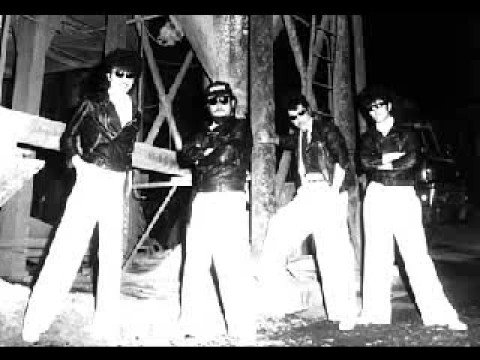
This is a single released in January 1981 that portrays the relationship between a headstrong high schooler and their parent with lively rock ’n’ roll.
The lyrics follow a 7-7-7-5 meter, creating a pleasing sense of rhythm and comically expressing the inner world of a rebellious youth.
While it vividly depicts the style and behavior of a delinquent, it’s also a nuanced work that reveals glimpses of care for the mother and a search for one’s own way of life.
It has remained beloved across generations, appearing in a 2008 commercial for Suntory’s canned chuhai “Calori.” and covered in a 2011 Asahi Soft Drinks “Jurokucha” ad featuring Yui Aragaki.
Today, it’s a trending track for posting dance videos on social media with simple, modern choreography.
Imperial Regent Declarationsadamasashi

This is singer-songwriter Masashi Sada’s 14th single, released in July 1979 (Showa 54).
While the song itself has a somewhat comical, upbeat melody, its lyrics, which emphasize being a domineering husband, sparked controversy at the time, drawing criticism from women’s groups as “sexist” and “male chauvinist.” Perhaps that controversy helped boost its visibility, as it went on to become a massive hit, selling over 1.6 million copies.
However, if you listen closely to the very end, you can clearly see that it expresses deep affection for the woman who is about to become his wife.
It’s a classic of Showa-era folk, with an acoustic guitar–centered backing track and Sada’s distinctively high voice to enjoy.
Galaxy Express 999Godaigo

This is Godiego’s 11th single, released in July 1979 (Showa 54).
The subtitle, by the way, is “A JOURNEY TO THE STARS.” It was produced as the theme song for the feature-length anime Galaxy Express 999, and the B-side track, “Taking Off!,” was also used as an insert song in the film.
It was especially memorable when this song played at the end of the movie, as the protagonists Tetsuro and Maetel part ways.
During the instrumental break, the Hammond organ solo by keyboardist Mickey Yoshino is absolutely wonderful—definitely a point to listen for.
Also, the way the chorus fades out at the end seems to hint at some kind of new future… doesn’t it give you that feeling?
Tsugaru Strait – Winter SceneIshikawa Sayuri
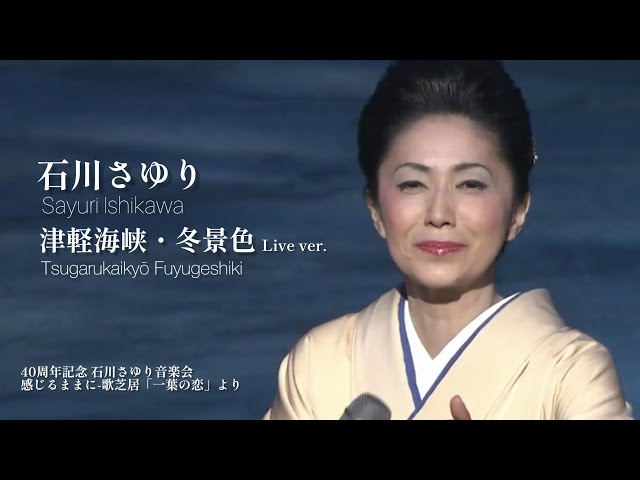
Sayuri Ishikawa’s 15th single overall, released in January 1977.
Thanks to this smash hit, she received numerous awards, including the 19th Japan Record Awards’ Vocal Performance Award and the Grand Prix/Best Vocal Performance at the 6th FNS Music Festival.
From the intro to the very end, the song vividly depicts the snowy scenery of the Tsugaru Strait, and Ishikawa’s vocal ability and expressive power in delivering it are truly outstanding.
Even listening to it now, it’s easy to understand why it became such a major hit.
[Showa 50s] Compilation of Japanese hit songs (21–30)
The Apple Murder CaseGō Hiromi, Kigeki Kirin
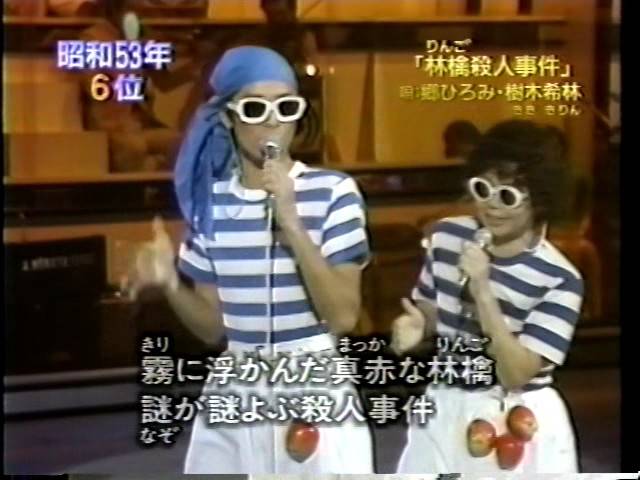
This was Hiromi Go’s 27th single, released in June 1978 (Showa 53).
It’s a collaborative track with Kirin Kiki, following their previous song “Obake no Rock.” Although the title includes the rather ominous phrase “murder case,” the song itself is very comical and, just by listening, I think it’s a classic that puts you in a great mood.
The collaboration between Hiromi Go and Kirin Kiki—two artists with arguably contrasting personas—creates a delightful mismatch.
Another timeless gem from the Showa era! Please enjoy it!