


When we think of the late Showa era (the late 1970s to 1980s), it was a time when Japan had successfully achieved postwar recovery from World War II and was rapidly heading into the bubble economy—a period brimming with energy.
In music, too, it felt like an era when entirely new sounds and expressive techniques emerged in music production, thanks to the development and spread of synthesizers and sequencers, as well as advances in multitrack recorders.
Perhaps reflecting that backdrop, the charts were a dazzling free-for-all, with hit songs blooming in profusion across a vast range of genres—from enka to New Music.
Amid such fierce competition, many masterpieces have survived and continue to be enjoyed to this day.
I hope you’ll take pleasure in listening to them.
- Hit songs in Japan in the late 1960s
- Good songs recommended for people in their 50s: classic and popular J-pop tracks.
- Classic and hit songs by nostalgic Japanese idols from the 1970s
- Nostalgic Japanese hit songs from the 1960s. A collection of popular Showa-era classic melodies.
- Classic and hit Japanese pop songs from the nostalgic 1960s
- Cool songs from the Showa era. Masterpieces from Showa that shine with sensuality, passion, and rugged charm.
- Now’s the time to listen! Uplifting Showa-era songs that brightened Japan
- Popular Showa-era pop. Timeless hit songs.
- Dance music in Japanese (J-pop) that people in their 50s used to listen to. Nostalgic classic hits.
- Nostalgic yet fresh!? Classic masterpieces of Japanese rock from the 1970s and 1980s
- Heart-touching, tear-jerking masterpieces from the Showa era
- So nostalgic it feels new? Showa retro classics that colored Japan’s period of rapid economic growth
- [Showa Era] A Collection of Enka Hits: Timeless Classics Loved Across Generations
[The 1975–1984 era] Summary of Japanese hit songs (1–10)
Your MorningKishida Satoshi

This was Satoshi Kishida’s (now Toshiyuki Kishida) eighth single overall, released in March 1979 (Showa 54).
It was used as an insert song in the TBS TV drama “Ai to Kassai to,” in which Kishida himself also appeared.
The gentle piano phrase in the intro begins, and Kishida’s tender, translucent vocals layered on top vividly evoke the feeling of a morning atmosphere.
Yet it’s not merely a refreshing depiction of morning; elements like the lyrics in the B section convey something profoundly weighty, giving the song a distinctly dramatic quality.
Another unquestionable masterpiece of the Showa era—please enjoy!

ChampionArisu
It was Alice’s 14th single, released in December 1978, and it became the band’s biggest hit.
Although Alice is often seen as a driving force behind the New Music boom of the time, this was apparently their only song to reach No.
1 on the Oricon charts.
In the opening section, Shinji Tanimura and Takao Horiuchi alternate as lead vocalists, highlighting the differences in their appeal as singers, and then the chorus soars with the two of them harmonizing—an excellent vocal arrangement that makes this a true classic.
Do whatever the hell you want.sawada kenji

This was Kenji Sawada’s (Julie’s) 19th single, released in May 1977 (Showa 52).
If you lived through the Showa 50s era in real time, it’s probably a hit song everyone knows.
For many men, there are likely fond memories of singing this at elementary school parties back then and tossing a hat just like he did.
I was one of those elementary school kids myself (lol).
I’m listening to the song again now as I write this, and I’m once more moved by the excellence of the melody and arrangement, and by Kenji Sawada’s outstanding vocal ability!
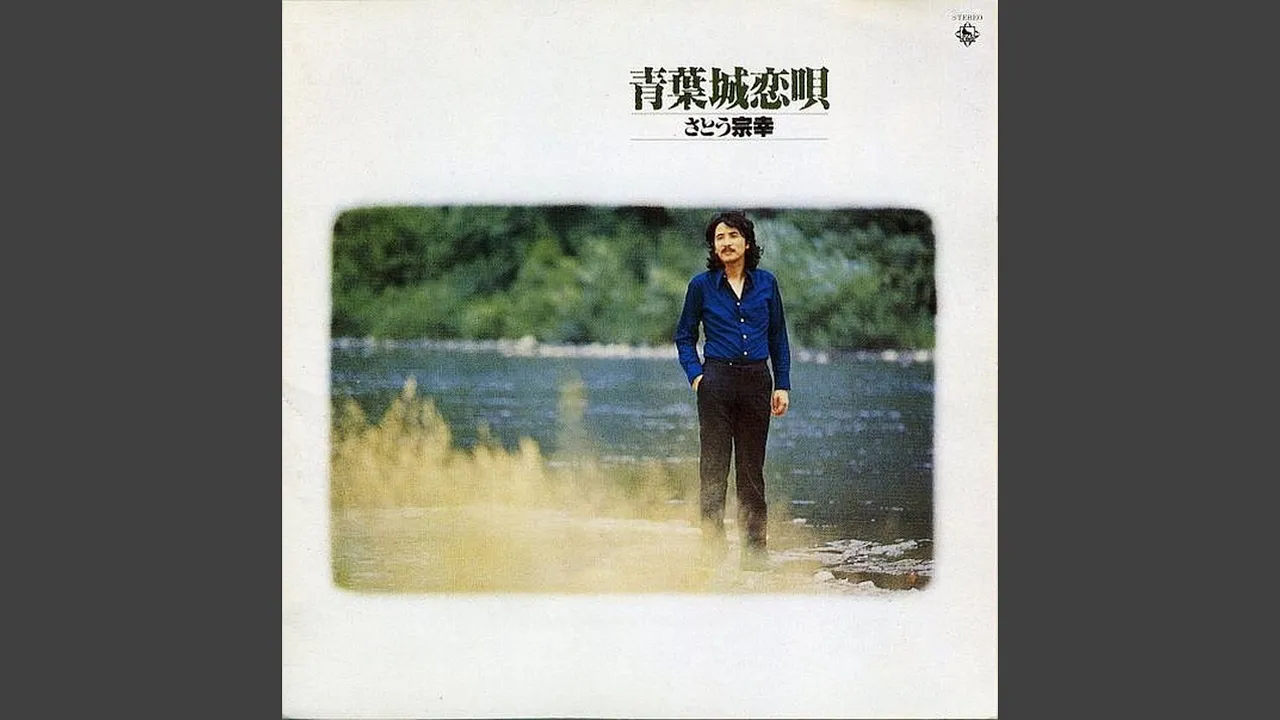
Aoba Castle Love Songsatou muneyuki

This was Muneyuki Sato’s major-label debut single, released in May 1978 (Showa 53).
“Aoba Castle” refers to Sendai Castle in Sendai City, Miyagi Prefecture.
Simply listening to this song—woven from its lyrical melody and lyrics—conjures images of the castle town of Sendai and leaves you with a feeling of being cleansed; it’s truly one of the classic masterpieces of the Showa era.
I understand that Muneyuki Sato was born in 1949 (Showa 24), which means he was 29 at the time of the release! Even now, as I listen again while writing this piece, I’m struck by the depth and mature mood of his voice—hard to believe he was in his twenties.
Besides Sato himself, several other artists and groups have covered the song, and many versions have been released, so if you’re interested, it might be fun to do a little research and compare them.
Goodbyeofukōsu

This is the 17th single by Off Course, led by Kazumasa Oda, released in December 1979.
It’s a classic Showa-era ballad where you can enjoy Oda’s captivating high-tone vocals.
In particular, his high notes in the chorus have a crystalline clarity that almost evokes the crisp, cold air of winter, reminding you that his voice is truly one of a kind.
Please enjoy this masterpiece of a Showa ballad.
A Smile in Returnkyandīzu

This was also the last single released during the active years of Candies, another major idol group of the Showa era, put out in February 1978 (Showa 53).
Being a song produced as their final single, it truly serves as a culmination of Candies’ work: the lyrics are sprinkled with titles of their past hits, and the choreography incorporates many motifs from the dances used in those songs.
It’s a bright, major-key tune, yet it still evokes a certain wistfulness as you listen—an irresistibly clever touch.
The trio’s superb chorus work is outstanding as well!
YOUNG MAN (Y.M.C.A.)Saijō Hideki

This was Hideki Saijo’s 28th single, released in February 1979 (Showa 54).
It was produced as a youthful pop cover of the Village People’s “Y.M.C.A.,” which was a hit in America at the time as disco music, and it became a huge success, selling over 800,000 copies.
I still remember how the choreography that spelled out the four letters “Y,” “M,” “C,” and “A” with the whole body became a massive craze back then.
I even recall the entire student body dancing it during elementary school morning assemblies.
It’s a classic Showa-era song that celebrates youth heading toward a bright future!