

[Classic Hits] Popular Anime Songs Representing the Showa Era. Also Introducing Recommended Anime Songs!

There are so many masterpieces from the Showa-era anime that have gone down in history, aren’t there?
Even if you don’t remember the plots that well, many people can still sing the theme songs—or the moment they hear a song, the anime comes rushing back.
Here, we’re showcasing a generous selection, including anime songs that were big hits in the Showa period and tracks that are being reappraised today through the lens of city pop’s popularity.
When you get together with friends from the same generation who watched those shows, a karaoke session with a “Showa anime songs only” rule is sure to be a blast.
And of course, even if you don’t know much about anime from that era but are curious, please give these songs a listen!
- [Showa Classics] A Collection of Nostalgic 70s Anime Songs
- [Nostalgic] A roundup of anime songs and theme songs that were hits in the 1980s
- Recommended anime songs for people in their 50s. Classic and popular anime theme songs.
- Anime songs recommended for people in their 40s, from nostalgic classics to the latest hits.
- Anime songs recommended for people in their 60s: from nostalgic classics to the latest hits
- [Nostalgic Songs] A compilation of classic anime themes that hit home for those born in the Showa and Heisei eras
- Moving and iconic anime songs, popular tracks
- [Nostalgic] A special feature on legendary anime theme songs: revisiting those classic tracks
- Cool songs from the Showa era. Masterpieces from Showa that shine with sensuality, passion, and rugged charm.
- Revival hits driven by social media! Classic Showa-era songs popular with Gen Z
- Including global smash hits! Anime songs recommended for Gen Z
- Hit songs in Japan in the late 1960s
- [Nostalgic] Classic and Popular Anime Songs Recommended for People in Their 30s
Classic Hits: Popular Anime Songs Representing the Showa Era. Recommended Anime Songs, Too! (1–10)
Love me gentlyOta Takako

Truly an everlasting classic for magical girl anime fans! Sung by Takako Ohta in the 1980s, this song drew major attention as the theme for the anime “Magical Angel Creamy Mami.” Its lyrics delicately portray the complexities of a woman’s feelings in love, paired with a catchy melody.
Ohta’s clear, transparent voice further elevates the song’s world.
In December 2008, a complete box set including this track was released, prompting a renewed appreciation of its charm.
It’s a perfect song for anyone who wants to savor that nostalgic Showa-era atmosphere or empathize with the emotions of a woman struggling with love.
Roses fall beautifullySuzuki Hiroko

A song by female singer Hiroko Suzuki, known as the opening theme for the TV anime The Rose of Versailles.
Its lyrical lyrics and classical melody evoke the atmosphere of the French Revolution, the very setting of the work.
Although released in 1979, the fact that it has been covered by numerous musicians—such as the metal band Animetal and the visual kei band LAREINE—speaks to its enduring, cross-generational popularity.
While an anime song, its majestic arrangement harmonizes perfectly with the series, making it an immortal classic.

Full of memoriesH₂O

The fifth single by the musical duo H2O, known for their distinctive name that conveys a wish to “spark a chemical reaction.” The song was used as the ending theme for the TV anime Miyuki, and the sheer number of cover versions attests to its status as a classic.
Its clear, beautiful harmonies and lyrics evoking youth, together with the imagery of the series, create a gentle listening experience.
Even today, it is often sung at elementary and junior high school choir competitions—a number loved across generations, transcending both the confines of anime songs and the passage of time.
Classic Hits: Popular Anime Songs Representing the Showa Era. Also Introducing Recommended Anime Songs! (11–20)
Love is a boomerangMatsutani Yūko

Known as the theme song of a classic Showa-era anime, this piece is memorable for Yuko Matsutani’s vocals.
It features a light, upbeat rhythm and a romantic melody, with lyrics that liken the complexities of love to a boomerang—an image that truly resonates.
Released in January 1984, it was used as the theme song for director Mamoru Oshii’s theatrical anime Urusei Yatsura 2: Beautiful Dreamer.
Today, it’s being rediscovered from a city-pop perspective and has gained support from overseas music fans as well.
Naturally, it’s a perfect recommendation for anyone seeking that nostalgic Showa vibe or a heartwarming love song.
Pegasus FantasyMAKE-UP

The fourth single by MAKE-UP, a five-piece rock band that gained popularity with hard rock and metal-infused tracks centered around vocalist Nobuo Yamada.
The song was created as the opening theme for the TV anime Saint Seiya and is still frequently performed live by DAIDA LAIDA, the rock band Yamada currently belongs to.
Its arrangement, full of the speed and explosive energy characteristic of shonen manga, surely thrilled viewers waiting in front of their TVs for the anime to begin.
A timeless classic that reaffirms the strong affinity between rock and anime.
Safari EyesMatsubara Miki

This track encapsulates the quintessential Japanese city pop sound of the 1980s.
Featuring Miki Matsubara’s powerful vocals and a catchy melody, it was released in February 1987.
Used as the opening theme for the anime film Dirty Pair: The Movie, the song blends elements of funk with cinematic themes.
Its lyrics, which depict exploration of unknown worlds and the new experiences found there, closely tie into the film’s story and immediately draw viewers into its narrative.
It remains one of the most popular songs in Matsubara’s discography and is highly recommended for anyone interested in city pop or Japanese music from the ’80s.
Being human is niceNakajima Yoshimi, Yangu Furesshu
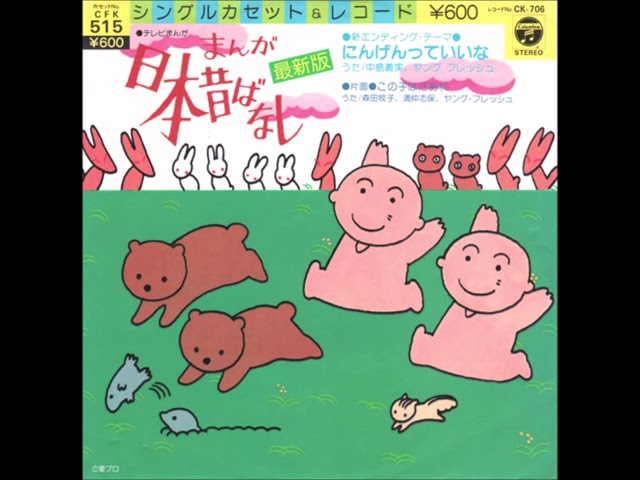
This song, which celebrates warm family scenes and the beauty of human relationships, was released in February 1984, performed by Yoshimi Nakajima and Young Fresh.
With music by Asei Kobayashi, lyrics by Akari Yamaguchi, and arrangement by Joe Hisaishi—a truly stellar lineup—it was used as the ending theme for “Manga Nihon Mukashibanashi” and continued to air for ten years.
Simple yet deeply moving in both melody and lyrics, the piece has been beloved across generations, from children to adults.
As a classic of the Showa era, it remains a popular choice even today, enjoyed at karaoke and beyond.