

![[Showa Era] A Collection of Enka Hits: Timeless Classics Loved Across Generations](https://i.ytimg.com/vi_webp/wBYDPo9d6Pk/maxresdefault.webp)

During the Showa era, countless hit songs were born and continue to be cherished as masterpieces that transcend time.
When discussing those Showa-era hits, enka is surely one indispensable musical genre.
Often called the “heart of Japan,” enka has long been loved as a representative form of Japanese musical culture.
In this article, we’ll introduce many classic enka songs that were especially big hits during the Showa period.
These are timeless masterpieces that continue to be sung across generations, so please take this opportunity to listen closely and enjoy.
- Classic enka songs you’ll want to sing at karaoke: recommended popular tracks
- Great enka masterpieces and hit songs of the 1970s
- Nostalgic enka. A collection of classic enka hits from the Showa era.
- Cool masterpieces of enka, the heart of Japan
- Great enka masterpieces and hit songs of the 1980s
- Heart-touching, tear-jerking masterpieces from the Showa era
- [For Beginners] Recommended Enka Masterpieces for Karaoke — Male Singers Edition
- [2026] Representative Famous Enka Songs: A Compilation of Classic Favorites [Beginner-Friendly]
- Legendary enka songs that fire up the crowd. A song catalog of enka picks you won’t go wrong with at karaoke.
- A roundup of hit enka songs from the Heisei era
- [For Women] A roundup of enka songs that can score high in karaoke
- A roundup of female enka singers in their 70s: voices that evoke nostalgia
- [2026] Easy Enka Songs for Karaoke: Recommended Picks — Women Singers Edition
[Showa] A compilation of hit enka songs: a collection of timeless classics (1–10)
Crossing Amagi PassIshikawa Sayuri

Released in 1986 and still cherished by many as an enduring masterpiece, Sayuri Ishikawa’s “Amagi-goe” blends the song’s intense passion and inner conflict seamlessly with Ishikawa’s vocals, deeply moving listeners.
The lyrics portray a woman whose unwavering love and anguish are laid bare, with a passionate drama vividly expressed throughout.
In particular, the story of a woman who accepts the pain that comes with love yet continues to pursue it with single-minded devotion remains fresh and deeply resonant even today.
Boat SongYashiro Aki

This song was created by the team of Aki Yashiro, known for her husky voice, and the renowned hitmakers Yū Aku and Keisuke Hama.
Because its lyrics have the flavor of a “man’s song,” having a woman sing it brought a sense of freshness and boldness, leaving a deep mark on Japan’s Showa-era music scene.
Its presence was affirmed when it was featured in a 2006 commercial for Suntory Boss.
It’s a powerful, moving piece that lingers after just one listen, evoking the sights and sounds of the Showa period.
It’s also recommended for younger listeners who want to experience classic Showa masterpieces.

Memories SakeKobayashi Sachiko

“Omoide-zake” by Sachiko Kobayashi, a singer emblematic of the Showa era, was a major hit in 1979.
Selling over two million copies, the song portrays a heartrending breakup while highlighting the spiritual beauty of Japanese women.
In the lyrics, the protagonist can’t get over her parting with her lover; as she drinks, she vividly immerses herself in memories of the past—an emotional pain that resonated with many listeners.
Blending anguish with longing, this is a timeless classic I highly recommend to anyone who has experienced heartbreak.
Ringo OiwakeMisora Hibari

Ringo Oiwake is a masterpiece of enka filled with pathos, featuring Hibari Misora’s deeply emotive singing set against the natural scenery of the Tsugaru region.
Since its release in 1952, it has inspired countless cover versions and conveyed a timeless, universal beauty.
The lyrics, which liken parting from one’s mother to falling apple blossoms, evoke a poignant sorrow and profound maternal love.
With Hibari Misora’s delicate emotional nuance and overwhelming vocal power leaving a deep imprint on listeners, this work can be said to be a song that resonates across generations with the pain of parting from loved ones.
North TavernHosokawa Takashi

Released on March 21, 1982, “Kita Sakaba” opened a new chapter in Takashi Hosokawa’s career.
Unusually for his repertoire at the time, it was crafted with a kayōkyoku and J-pop flavor, bringing a fresh breeze to the enka scene.
Set in the evocative atmosphere of a northern tavern, the song captures the moment a romance begins from a chance encounter, drawing listeners into the story of a single night.
Its stylish lyrics depicting men and women gathered in a northern bar evoke the mood of the Showa era.
Savor the lively, body-swaying melody while appreciating Hosokawa’s richly expressive vocals.
celebratory sakeSakamoto Fuyumi
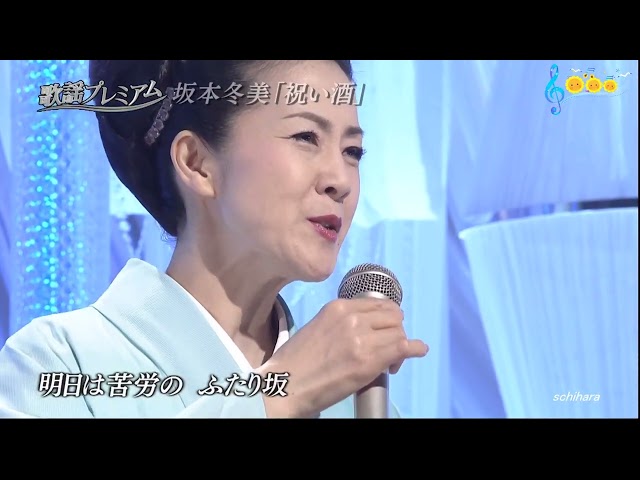
Fuyumi Sakamoto’s “Iwaizake” is a song that has continued to be loved by many since its release in 1988, thanks to its beautiful melody and heartwarming lyrics.
The piece is a blessing for a young couple embarking on a new chapter in life.
With unwavering love, any trial can be overcome—a powerful message conveyed by Sakamoto’s strong, expressive vocals.
It has remained cherished across generations, with a 7-inch analog edition released on September 20, 2023.
It’s a perfect song to play when you want to offer heartfelt congratulations.
Dream-Chasing SakeAtsumi Jirō

Yumeoi-zake (Dream-Chasing Sake), released in 1978 by the accomplished enka singer Jiro Atsumi, is one of his signature songs.
It was his third single and topped the Oricon annual chart in 1979.
Even with such glory, the song continues to be loved by many fans today.
The aching feelings of a heartbroken woman drinking and reflecting on her thoughts reach straight to the heart.
I hope you can sense the timeless charm found in masterpieces of the Showa era through this song.
It’s a track that stays close to those bearing the wounds of heartbreak—sure to resonate deeply.