

[Spring Songs Born in the Showa Era] A Curated Selection of Kayōkyoku That Colored the Times and Timeless Classics Still Sung Today


When the first reports of cherry blossoms start to arrive, is there a melody you find yourself humming without thinking?Spring is a season of meetings and partings, and also the time when many masterpieces were born.In the Shōwa era, songs that colored spring were delivered without cease—from the lyrical prewar pieces, to the energetic kayōkyoku of the high-growth years, and on to dazzling pops.Nostalgic spring songs from Shōwa continue to resonate in many hearts across generations even today.In this article, we introduce a wide range of springtime songs born in the Shōwa period, from kayōkyoku that capture the spirit of their times to timeless gems still sung today.Please enjoy them as you picture the scenes from back then!
- Spring songs from the early Showa era: a collection of kayōkyoku and shōka that evoke spring
- [Spring Songs] Classic and Latest Hit Collections Perfect for a Bright, Gentle Spring
- [For Seniors] Classic spring songs to sing in April: A heartwarming moment with nostalgic children’s songs and kayōkyoku (Japanese popular songs)
- Spring songs for people in their 60s: A collection of classic tracks about cherry blossoms and farewells
- [Spring Songs Recommended for People in Their 40s] Relive Your Youth! A Selection of Nostalgic Tracks
- [Spring Songs] Masterpieces for Mid-Spring to Listen to in March. Spring Tunes
- [For Seniors] Spring Songs You'll Want to Hum: Feel the Season with Nostalgic Classics
- Youth songs you want to listen to in spring. Classic and popular spring songs.
- [2026] Time-Travel to Your Memories Just by Listening! Recommended Spring Songs for People in Their 50s
- [Spring Songs] Masterpieces to Listen to in April: Classic Tracks that Color the Month
- Spring song medley. The best classic tunes to listen to in spring.
- Uplifting songs to listen to in spring. Classic spring tunes that warm the heart.
- Moving songs to listen to in spring. Classic and popular spring tracks.
[Spring Songs Born in the Showa Era] Carefully Selected Kayokyoku That Colored the Times & Masterpieces Still Sung Today (21–30)
Tulipdōyō

With the arrival of spring, that flower which brightens the flowerbeds—isn’t it the one from a children’s song everyone has hummed at least once? The lyrics depict rows of blossoms in vivid reds, whites, and yellows, and, while simple, they brim with a gentle warmth as they affirm that each flower is beautiful in its own way.
In fact, this piece first appeared in July 1932 in the publication Picture Book Songs: Summer Edition, where the lyricist’s name was withheld; later, after a court case, Miyako Kondo was recognized as the author.
It was recorded in 1933, and ever since it has been cherished at kindergarten entrance ceremonies and other spring events.
It’s perfect as a first song for little children to sing, and it’s also lovely to listen to its nostalgic melody and feel the calm cheer of spring.
Flower Towndōyō

Flowers in the Town, which spread through the NHK radio program “Women’s Hour” in 1947 (Showa 22), is a quintessential postwar spring children’s song whose beautiful lyrics by Shoko Ema and refined melody by Ikuma Dan resonate deeply.
Imbued with an earnest prayer for peace, this work brought people in Japan—where war scars still lingered—visions of an almost dreamlike, longed-for spring.
Released as a single in April 1952 and later selected in 2006 for the “100 Best Japanese Songs,” it remains beloved across generations.
Many likely sang it in school classes or choir competitions.
Within its fantastical worldview lies a depth where a hint of real sorrow slips in, making it a song to be quietly passed down on gentle spring days while reflecting on the preciousness of peace.
[Spring Songs Born in the Showa Era] Carefully Selected Kayōkyoku That Colored the Times & Timeless Classics Still Sung Today (31–40)
Spring somewhereSakushi: Momota Sōji / Sakkyoku: Kusakawa Shin

In the lingering chill of early spring, don’t you sometimes catch a hint of the season to come in a fleeting moment? It’s at times like these that you naturally find yourself humming this piece composed by Shin Kusakawa.
Rather than announcing a flamboyant arrival of spring, its lyrics, which invite you to listen closely and sense the turning of the seasons, create a quietly moving children’s song.
This work was published in March 1923 in the magazine Shogaku Dansei, with lyrics by the poet Soji Momota.
Cherished for many years through textbooks and collections of children’s songs, it was selected in 2007 for the 100 Best Songs of Japan by the Agency for Cultural Affairs and the National Congress of PTA.
It seems like the perfect song for quietly rejoicing in the certain coming of spring, or for parents and children to feel the season together.
Spring breeze blowing at nightsayo fukuko
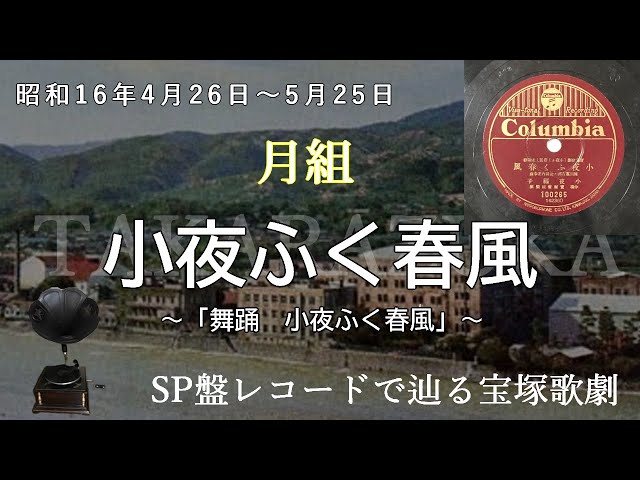
Released in April 1941 to coincide with the Takarazuka Revue’s Moon Troupe dance performance, this piece features vocals by Fukuko Sayo, who at the time was the Moon Troupe leader and a popular otokoyaku (male-role) star.
The lyrics and direction were by Keikichi Okada, with music by Masayuki Iwagōchi, and the arrangement—set to the Takarazuka Orchestra—evokes the atmosphere of a spring night, capturing the theater’s ambiance in all its splendor.
Notably, the song was created as the main theme for the same production, with “Ō-Yamato no Uta” coupled on the B-side of the record.
It served both as a keepsake that rekindled memories of the stage and as music to enjoy spring at home.
Why not spend a retro springtime moment listening to Fukuko Sayo’s elegant singing voice?
Hate and the spring breezeFujimoto Nisankichi

Have you ever found yourself, carried by the spring breeze, suddenly thinking of someone? The song Nikuya Harukaze is charming in how the word “nikuya” in the title doesn’t mean hatred, but rather expresses a chic, Edo-style feeling like “how delightfully irresistible” or “so stylish.” Released by Victor in April of 1931 as a new record, it features lyrics by Shinsui Itō and music by Keizō Saitō, radiating a modern allure as a “jazz-style popular song” of its time.
It’s sung by Fumiko Fujimoto, famed as the “Nightingale Geisha,” whose beautifully trained melodic phrasing from the hauta tradition blends with an urbane sensibility to transport listeners to a modern spring of early Shōwa.
It’s the perfect track for when the spring air puts you in a slightly retro mood to enjoy a drink, or when you want to touch the refined stirrings of an adult romance.
First loveMurashita Kōzō

With the arrival of spring, Kozo Murashita’s classic “Hatsukoi” brings a heartwarming melody that wells up in quiet moments.
Released on February 25, 1983, this single became one of his signature songs.
Unraveling the lyrics reveals a gentle portrait of the sweet, aching feelings of first love, softly resonating with listeners.
Many may relate to the inability to express one’s feelings, just like the song’s protagonist.
From young people to the elderly, I hope you’ll listen to this song while basking in the spring sunlight.
See, spring has come.ushirogami hikaretai

The fourth single by Ushirogami Hikaretai, the group that featured Shizuka Kudo and Akiko Ikuina.
It was used as the opening song for the anime Tsuide ni Tonchinkan.
The pop sound and upbeat lyrics convey that springtime feeling of “Something good might happen!” and “I wonder if I’ll meet someone nice?” Spring can easily make you feel a bit down, with encounters and farewells and changes in your surroundings.
This is a song you’ll want to listen to when you want to blow away that seasonal haze.
