

The Complete Guide to Showa-Era Toys: From Showa retro to toys still loved today

In the Showa era, many toys appeared that captivated children of the time.
Some have since disappeared, while others became long-running series and are still loved across generations.
In this article, we’ll introduce a whole lineup of those nostalgic Showa-era toys!
For those who remember the era, it’ll be nostalgic; for those who don’t, it should feel fresh and new.
If any toy catches your interest, be sure to check auctions, flea market apps, or recycle shops to try and find it.
Encyclopedia of Showa-era Toys: From Showa Retro to Toys Still Loved Today (1–10)
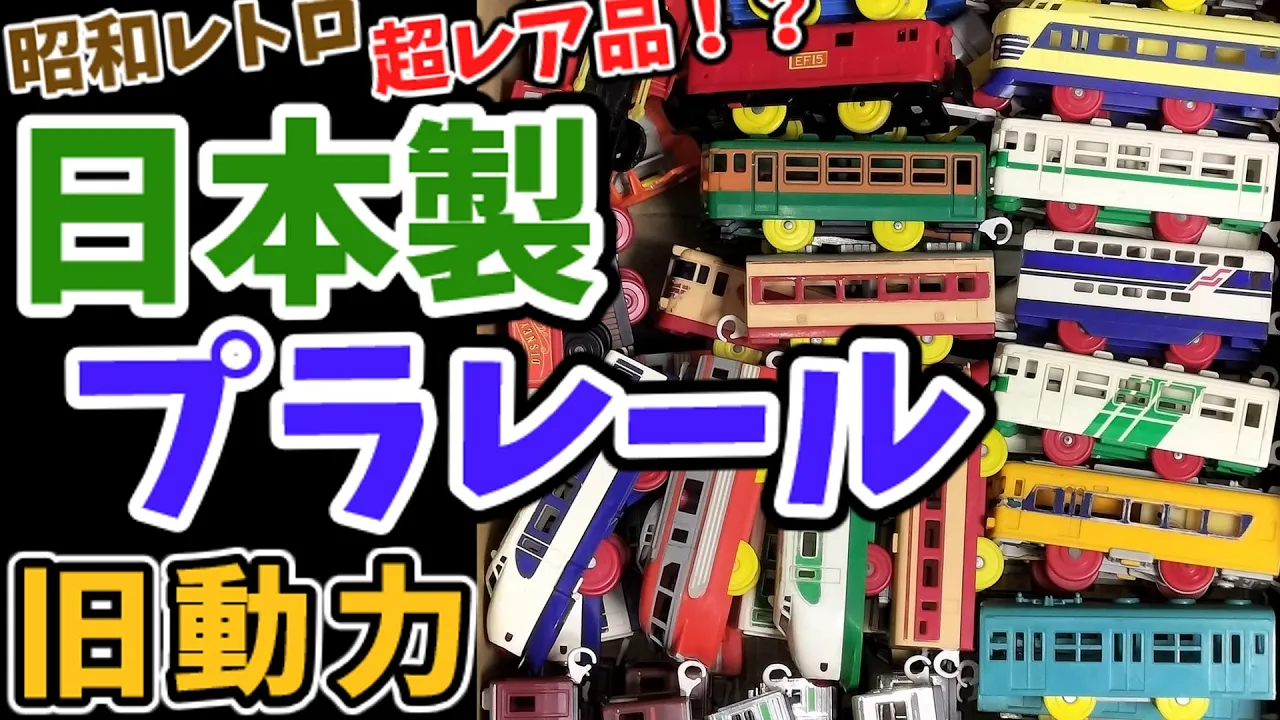
Plarail

Plarail is a railway toy that remains popular today, especially among boys.
Starting with the Highway Set—released in 1958 and considered the origin of Plarail—many railway toys have been sold up to the present.
There’s a real sense of satisfaction in having realistic trains and Shinkansen run through the tracks and towns you build yourself.
Plarail’s greatest appeal is said to be its freedom.
It isn’t something you play with in a fixed way; the real thrill lies in freely assembling the rails and running the trains.
It seems that many adults who played with Plarail as children are still fans today.

Family Computer

The Family Computer, released by Nintendo in 1983 and commonly known as the Famicom, is a game console with a white body and red controllers.
At a time when game consoles were less well known and less widespread than today, it became a huge hit at launch, recording sales of 60 million units.
In an era when the prevailing idea was that game consoles were for solo play, one reason for the Famicom’s popularity was that it let multiple people play together.
A wide variety of Famicom games were released, and some even became social phenomena.
The Famicom had a major impact on the development of Japanese video games.
Although production ended in 2003, it remains a legendary game console to this day.
baseball board game

The baseball board game is still popular today.
When the first version debuted in 1958 (Showa 33), it reportedly became a major hit, selling 2,000 units per month.
Many of you have probably played it at home.
Reflecting the times in which it was sold, the game has introduced a variety of new features over the years, such as the “vanishing magic pitch,” “Slugger,” and “3D Ace.” By the way, the vanishing magic pitch was inspired by Major League Ball No.
2 from the manga Star of the Giants, in which the ball disappears over home plate.
Gale kite

The Gayla kite is a type of kite that became a craze in the 1970s.
Its hallmark is that it can climb high into the sky stably even without a tail.
The Gayla kite’s shape was invented by a former developer from NACA, NASA’s predecessor, and is based on the Rogallo wing.
Though it’s lightweight—made of vinyl with a plastic frame—it rides the wind and soars to heights that astonish everyone.
The eye design also made a big impact when it was first sold.
It’s still available today, and there are even plain white Gayla kites you can decorate with your own illustrations and designs.
Choro-Q

Its cute, super-deformed design and the novelty of how you operate it were key to its popularity.
Choro-Q cars are powered by a spring: you pull them back firmly and let go, and they move forward.
If you played with one back then, you probably remember the grr-grr-grr sound it made when you pulled it back.
The name “Choro-Q” is said to come from the way the tiny minicars scurry around.
Sales began in 1981, and these moving minicars—unlike anything before—became a huge hit.
In just one year, total sales reached 10 million units.
Later versions even let you register driving patterns by inputting programs, and could be remote-controlled with a separately sold controller.
It’s a long-loved toy that the whole family can enjoy.
Mama Range

The Mama Range, released in 1969 (Showa 44), drew attention as a product that changed the conventional wisdom about toys in the world of children’s play—where imitation had traditionally been the norm, like in make-believe cooking games.
It sold for 2,500 yen at the time; today it would cost over about 8,000 yen, yet more than 170,000 units were sold in a single year, making it a hit product.
Designed to recreate a system kitchen and gas stove as a toy, it could actually heat and cook.
When you plugged in the power cord, an electric heating coil in the center of the “gas” burner would heat up, allowing food to be cooked.
You’d place the included Teflon-coated frying pan on the burner to cook.
Even though it was a toy and only reached low temperatures, it could reportedly fry pancakes and hamburgers.
You don’t see toys like this anymore, but it was truly groundbreaking.
Roller-Through GOGO

The Roller-Suru GOGO, which also appears in episodes of the anime Chibi Maruko-chan, was built much like today’s kick scooters.
It went on sale in 1974 and became very popular.
While it couldn’t reach bicycle-level speeds, part of the fun was that it could still go fairly fast.
Around the same time it was released, a health boom hit Japan, and the Roller-Suru GOGO drew attention as an amusing piece of leisure-sport equipment.
It was expensive, and it seems to have been a coveted ride for children.
However, after traffic accidents occurred involving people riding the Roller-Suru GOGO, criticism mounted, and production was discontinued.