
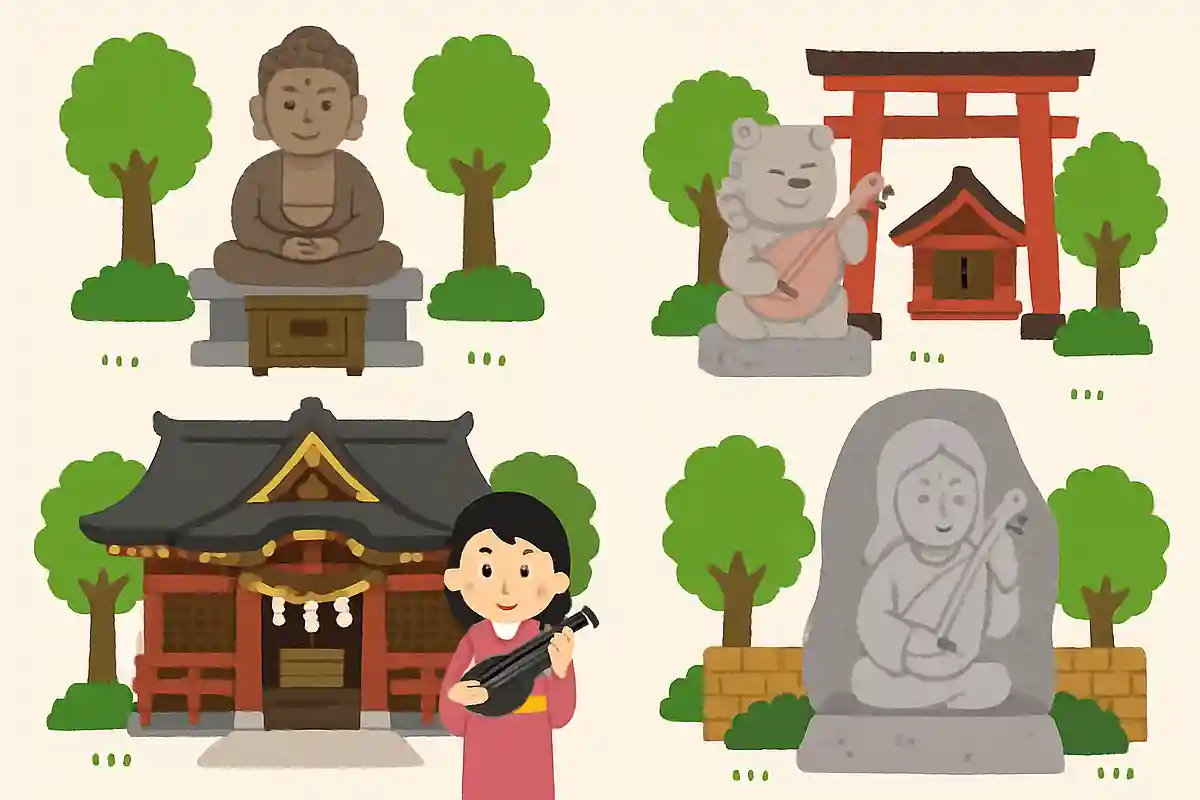
Tour the gods of music and entertainment! Recommended shrines, temples, and power spots

Japan is home to countless shrines and temples, each said to offer various blessings.
Among them are many places believed to bestow benefits related to music and the performing arts.
In particular, shrines and temples that enshrine deities such as Ame-no-Uzume-no-Mikoto—known from the legend of Ama-no-Iwato—Benzaiten, the goddess of music, and Gigeiten, who grants blessings for artistic pursuits, are especially popular for their supposed benefits in music and entertainment.
In this article, we’ll introduce not only famous shrines like Kurumazaki Shrine in Kyoto and Yoyogi Hachimangu in Tokyo, but also a wide range of shrines and temples across Japan connected to music and the performing arts.
We’ll also highlight music-related power spots such as musicians’ graves, monuments with song inscriptions, and memorial museums.
If any of these places catch your interest, be sure to pay them a visit.
shrine
Yoyogi Hachimangu Shrine

It’s become a hot topic among celebrities that visiting here will lead to a big break, and the Shusse Inari shrine on the grounds is also beloved as a popular power spot. Originally, Hachiman was enshrined here, and it is said that warriors would visit before battles to pray to the deity who protects the nation. From that tradition, the benefit of success and advancement likely emerged. Why not offer a prayer for a major breakthrough—whether in entertainment or music?

| Name | Yoyogi Hachimangu Shrine |
| Address | 5-1-1 Yoyogi, Shibuya-ku, Tokyo |
| Website | http://www.yoyogihachimangu.or.jp/ |
Geinō Asama Shrine

This is a small shrine located within the grounds of Hanazono Shrine, right in the heart of Tokyo. Since the Edo period, it has had deep ties to theater and dance, and even today it is cherished as a shrine that brings good fortune in the performing arts. Next to this small shrine stands a monument inscribed with lyrics by the singer Keiko Fuji.

| Name | Geinō Asama Shrine |
| Address | 5-17-3 Shinjuku, Shinjuku-ku, Tokyo |
| Website | http://hanazono-jinja.or.jp |
Enoshima Shrine (Enoshima Jinja)

Enoshima Shrine enshrines the three sister goddess Benzaiten, known as the Enoshima Great Deities. Like Benzaiten at other shrines, she is believed to grant blessings for improved artistic skills. Along with Miyajima and Ōmi, Enoshima’s Benzaiten is counted among the Three Great Benzaiten of Japan, and from the Edo period the pilgrimage to Enoshima was said to be very popular. Sightseeing around Enoshima after your visit is also recommended.

| Name | Enoshima Shrine (Enoshima Jinja) |
| Address | 2-3-8 Enoshima, Fujisawa-shi, Kanagawa |
| Website | http://enoshimajinja.or.jp/ |
Osaka Tenmangu Shrine

Osaka Tenmangu Shrine, where Sugawara no Michizane is enshrined and which is known for bringing good fortune in academics. Affectionately called Tenjin-san of Temma, this shrine is actually believed to bless the performing arts as well! Since it’s associated with passing exams, praying to pass screenings such as auditions may also bring you good luck.

| Name | Osaka Tenmangu Shrine |
| Address | 1-1-8, Tenjinbashi 2-chome, Kita-ku, Osaka-shi, Osaka-fu |
| SNS | |
| Website | https://osakatemmangu.or.jp/ |
Kuramazaki Shrine

Kuruma-ori Shrine, located near the popular sightseeing area of Arashiyama in Kyoto, is very famous as a shrine dedicated to the performing arts and is frequently featured in media such as TV and magazines. The tamagaki (fence) within the shrine is lined with the names of numerous entertainers and artists, so it’s enjoyable just to visit and look around. It’s a recommended shrine for those who wish to boost their luck in music and the performing arts, as well as for fans of those fields.

| Name | Kuramazaki Shrine |
| Address | 23 Asahi-cho, Saga, Ukyo-ku, Kyoto-shi, Kyoto |
| Website | http://www.kurumazakijinja.or.jp/ |
Itsukushima Shrine (Itsukushima Jinja)

Itsukushima Shrine on Miyajima in Hiroshima Prefecture is one of the most famous shrines in Japan. The great torii gate rising from the sea is truly majestic. The shrine enshrines the three Munakata goddesses—Tagorihime-no-Mikoto, Tagitsuhime-no-Mikoto, and Ichikishimahime-no-Mikoto. Among them, Ichikishimahime-no-Mikoto is said to be the most beautiful and especially skilled in the performing arts. It’s a highly recommended shrine for prayers to improve your artistic talents.

| Name | Itsukushima Shrine (Itsukushima Jinja) |
| Address | 1-1 Miyajima-cho, Hatsukaichi-shi, Hiroshima Prefecture |
| Website | http://www.itsukushimajinja.jp/index.html |
Kanehebi Suijin Shrine

Kanehebi-sui Shrine is a historic shrine with a slightly unusual reading, “Kanahebi-sui.” It is said to have begun when people who settled in this iron-producing area prayed for good harvests and enshrined a water deity. There is also an anecdote that when a swordsmith was forging blades, the croaking of frogs was so loud he couldn’t concentrate; releasing a snake silenced the frogs. From the ties between gold/metal (iron), snakes, and water, the shrine is said to have received its name. Within the precincts, Kanehebi Benzaiten—also revered as a patron of the performing arts—is enshrined, and the shrine has long attracted deep devotion. On the first Sunday of July, the statue of this deity is unveiled to the public, so those wishing to improve their artistic skills may wish to pay a visit.
| Name | Kanehebi Suijin Shrine |
| Address | 7 Suijin, Mishikiyoshi, Iwanuma-shi, Miyagi-ken |
| Website | https://kanahebi.cdx.jp/index.html |