

Sibelius’s famous piece. Popular classical music.

Jean Sibelius, the renowned composer born in Finland.
A composer and violinist, Sibelius wrote a vast body of works ranging from symphonies to piano pieces and choral music.
Many of his compositions express a deep love for his homeland, Finland.
His symphonic poem Finlandia is a representative example, and in addition he wrote over a hundred songs with piano accompaniment, stage music, and choral works inspired by the Finnish national epic.
Here, we’ve selected some of Sibelius’s masterpieces from among those works!
- Jean Sibelius Popular Songs Ranking [2026]
- Sibelius Popular Songs Ranking [2026]
- [Masterpiece Classics] A special showcase of gem-like masterpieces so beautiful they’ll move you to tears
- Brahms's masterpieces. Popular classical music.
- [Quartet] Masterpieces and Popular Pieces for String Quartet
- Oskar Merikanto Popular Song Rankings [2026]
- Mendelssohn’s Masterpieces | Popular Classical Music
- Rachmaninoff’s masterpieces. Recommended pieces by Rachmaninoff.
- [Intermediate Level] A curated selection of piano masterpieces featuring strikingly brilliant melodies!
- [Orchestra] Introducing famous and popular pieces
- Recommended for advanced players: Classical masterpieces to challenge at a piano recital
- Elgar’s masterpiece. Popular classical music.
- Mussorgsky’s masterpiece. Popular classical music.
Sibelius’s masterpieces. Popular classical music (21–30)
Symphony No. 7Muravinsukī / Reningurādo Firu

Symphony No.
7, Op.
105 was completed in 1924.
Work on the composition is thought to have begun around 1910, around the same time as the Sixth Symphony.
In March 1924, it was premiered at a Society of Friends of Music concert in Stockholm, conducted by Sibelius himself.
At its premiere, it was reportedly titled “Symphonic Fantasy.”
Karelia Suite, No. 2: BalladeNēme Yaruvui / Gothenburg Symphony Orchestra
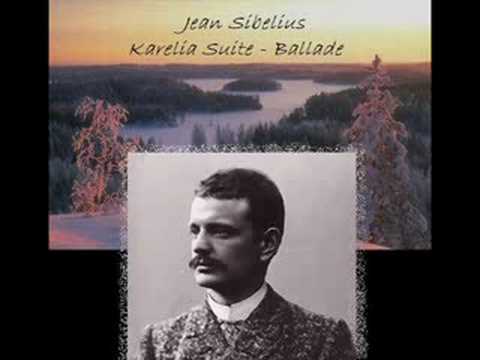
The second piece is music used in a scene where a bard sings, and in the original version it apparently included a baritone solo.
It begins quietly with a clarinet solo, and as more instruments gradually join, a beautiful melody unfolds that draws the listener into the piece.
fir treeSibelius

It is by a Finnish composer and is one piece from the Suite of Trees.
The piece is based on the spruce, a symbol of Finland.
You can feel the strength of the spruce, which lives robustly even in the snow.
It’s a very beautiful piece, and the flowing melody in the middle section is elegant and deeply moving.
Symphonic Poem “Finlandia”Sibelius
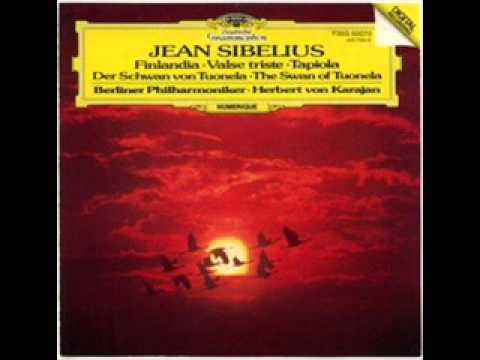
It is a symphonic poem composed in 1899 by Finnish composer Jean Sibelius.
It is perhaps one of the most famous pieces among his works.
At the time this piece was written, Finland was suffering under the oppression of Imperial Russia, and an independence movement was underway.
The imperial Russian government banned performances of the piece on the grounds that it stirred patriotic feelings toward Finland.
That shows just how effectively the piece expressed Finnish patriotism, doesn’t it?

KuolemaPekka Helasvuo/Finlandia Sinfonietta

“Kuolema” means “Death.” It was composed as incidental music for a play by Arvid Järnefelt, Sibelius’s brother-in-law.
Composed in 1903 and later revised in 1911, it is especially known for the standalone arrangement “Valse Triste.”
Night Ride and SunrisePāvo Yaruvu/Royal Stockholm Philharmonic Orchestra

The symphonic poem Night Ride and Sunrise is an orchestral work composed in 1908.
Its premiere took place in January 1909 in Saint Petersburg under the baton of Siloti.
It is a rare symphonic poem for Sibelius in that it does not draw on ethnic, literary, or mythological subjects.
“The Spruce” from “The Trees Suite”Sibelius

The original title is “Five Pieces for Piano,” but because each piece is named after a tree, it is affectionately known in Japan as the “Suite of Trees.” The “Spruce” is an evergreen, and since its leaves do not wither and remain lushly green, it is regarded as a symbol of “eternal life” and is also used as a Christmas tree.
However, rather than conveying a festive Christmas mood, this piece depicts the powerful image of the spruce standing firm, keeping its green leaves through the long, harsh Finnish winters of composer Sibelius’s homeland.
