

Recommended for women in their 60s! Easy-to-sing Japanese karaoke songs


Karaoke is popular across all ages, and of course many women in their 60s also have plenty of chances to go.
But when you actually get to the karaoke place, do you ever find yourself wondering which songs to sing? If you’re thinking, “I don’t really know recent songs, and to be honest I’m not that good at singing…,” I’ll share some recommended tracks for you! I’ve selected songs that seem easy to sing, focusing mainly on tracks from around the 1970s—the era when many people in their 60s spent their youth.
If you’re not confident about karaoke, songs with a slow tempo are recommended.
Some of the songs are more challenging, but they’re all well-known, so for the difficult ones, let’s sing together with everyone!
- [For People in Their 60s] Ranking of Easy-to-Sing Karaoke Songs [2026]
- Recommended for women in their 60s! Songs that get the crowd going at karaoke
- Karaoke songs that are easy to sing even for tone-deaf beginners, recommended for women in their 60s
- [Karaoke] A roundup of songs that are easy for women to sing!
- [For People in Their 60s] Karaoke Songs That Get the Crowd Going: Ranking [2026]
- [60s] Karaoke Popularity Rankings by Generation [2026]
- A must-see for low-voiced women! Popular songs that are easy to sing at karaoke
- Love songs that resonate with women in their 60s: gem-like romance tunes that revive memories of youth.
- [2026] Recommended karaoke songs for women in their 70s: from enka to Showa-era pop
- Karaoke songs that are easy to sing even if you’re not confident in your pitch (for women in their 50s)
- Even if you’re tone-deaf, it’s okay! Easy karaoke songs for women
- Easy-to-sing Japanese karaoke songs recommended for women in their 50s
- Best Karaoke Songs and Popular Band Rankings for Lively Fun in Your 60s [2026]
Recommended for women in their 60s! Easy-to-sing Japanese karaoke songs (61–70)
Love VacationZa Pīnattsu

A classic that weaves the sweet memories of summer sun and love with a light, jazzy rhythm and the duo’s beautiful harmonies.
Its lyrics poetically depict lovers talking about love by the seaside, while its fresh arrangement brilliantly blends different musical genres.
After its release in April 1963, The Peanuts performed the song at the 14th NHK Kōhaku Uta Gassen.
It was also used as the campaign song for Toray’s summer wear “Vacance Look,” helping popularize the word “vacance” in Japan.
The swingy four-beat rhythm is easy on the ears, making it a cheerful song to sing.
It’s a perfect pick for those who want to have fun and liven things up with friends.
Are you sane to marry them?SARD UNDERGROUND

This is the fourth digital single by the three-woman rock band SARD UNDERGROUND, released in July 2023.
It was selected as the opening theme for the TOKYO MX drama “Sono Kekkon, Shouki Desu ka?” (Are You Sane to Marry?).
As SARD UNDERGROUND originated as a ZARD tribute band, the song strongly reflects ZARD’s style.
The vocal melody is very straightforward and easy to remember, making it a tune many people can casually hum along to.
Throughout the song, singing lightly and without tension is the key to making it sound good, so please give it a try.

Life is full of ups and downs.Shimakura Chiyoko

This is a song released by Chiyoko Shimakura in 1987.
It became her biggest hit.
The lyrics evoke her own eventful life.
For people of a generation that has fully experienced both the joys and hardships of life, it’s a song that makes everyone nod in agreement, so I think it’s a piece everyone can sing together (or chime in with call-and-response).
My castle townKoyanagi Rumiko

Nowadays, it’s perfectly normal to confess your feelings over LINE, but in the 1950s and ’60s it was an era when even saying “I like you” wasn’t allowed, and most first loves ended faintly, wistfully, and sadly.
There are surely many women who can relate to the song “Watashi no Jokamachi.” Even now, in these changed times, it’s nice to sing it while recalling those bittersweet feelings.
The melody is easy to remember and easy to sing.

Keiko’s Dream Opens at NightFuji Keiko
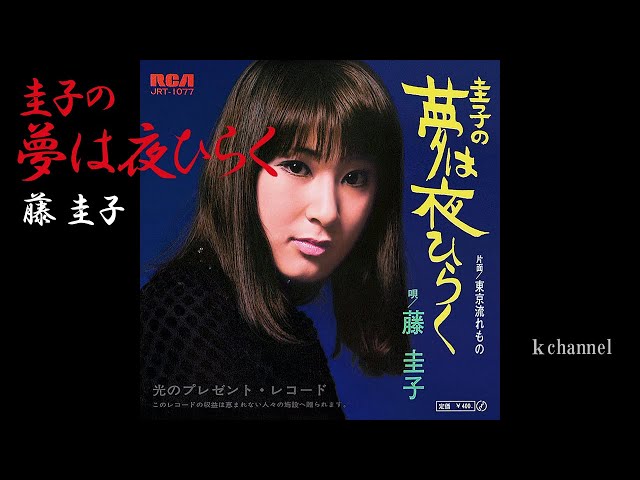
This song was incredibly shocking to me when I listened to it as a child.
Sadly, she has passed away, but she was none other than Utada Hikaru’s mother.
It’s a song that sings about the shadows of Japan’s postwar period of rapid economic growth, and I think there are quite a few women of the same generation who can relate to it.
It’s not a song that livens up a karaoke session, but it’s one I recommend for quietly singing while reflecting on those times.
JunTakahashi Mariko

Singer Mariko Takahashi, who thrives with her powerful vocals, is not to be missed—especially her breakup song “Jun.” Set on a pier in Yokohama, the song portrays the parting of the female protagonist and a man called Jun.
A key point is how vividly it conveys the woman’s inner feelings as she wishes not to break up.
Because of this, listeners with or without similar experiences can immerse themselves in its world.
The mellow sound that heightens the dramatic development is also a major draw.

Sugarcane fieldMoriyama Ryoko

Throughout the song, a very striking refrain is used, evoking sugarcane in a sugarcane field swaying gently back and forth.
The lyrics tell that many people who died in Okinawa during the war still rest beneath the sugarcane fields.
I think it’s relatively easy to sing as karaoke for a woman in her sixties, but since the song’s motif carries such sorrow, it might call for some discretion depending on the situation.