

Tear-jerking songs recommended for men in their 60s: classic and popular Japanese hits

A collection of tear-jerking Japanese songs recommended for men in their 60s.
We’ve gathered a wide range of moving tracks from the 1960s and 70s, from youth anthems to love songs.
It’s okay to shed a tear as you remember those nostalgic days.
It’s also okay to listen from a grown-up perspective that’s different from back then.
Let these songs bring you comfort.
- Popular Japanese songs among men in their 60s: recommended masterpieces and classic tracks
- Good songs recommended for people in their 60s: classic and popular Japanese tracks
- Tear-jerking songs recommended for men in their 50s: classic and popular Japanese hits
- A love song that makes a man in his sixties relive his youth. Timeless classics that rekindle the romances of those days.
- Moving Japanese songs recommended for men in their 60s
- Cheering songs recommended for people in their 60s: classic and popular Japanese hits
- [2026] Autumn Songs for People in Their 60s: Classic Tracks Perfect for the Deepening Fall
- Popularity Ranking of Songs by Generation: 60s [2026]
- Tear-jerking songs recommended for women in their 50s: classic and popular Japanese hits
- Tear-jerking masterpieces sung by male artists that I’d recommend to Gen Z
- The nostalgic atmosphere tugs at your heartstrings. Tear-jerker songs from the Showa era.
- Interesting Japanese songs recommended for men in their 60s
- [Tearjerker] Songs that make your heart tremble with tears & moving tracks with lyrics that touch the soul
Tear-jerking songs recommended for men in their 60s: classic and popular Japanese tracks (21–30)
Carrying Yousawada kenji

It was Kenji Sawada’s debut single released in November 1971, reaching a peak position of 23 on the Oricon chart.
In 1990, a remake version was used in a Honda commercial.
It has also been covered by ASKA.
Friendanzenchitai

A song released by Anzen Chitai in October 1986 that gained popularity on the TV show “Yoru no Hit Studio” was used in a Daio Paper commercial.
Featured on the album Anzen Chitai V, it drew strong response, reaching No.
7 on the Oricon chart and peaking at No.
2 on The Best Ten.
Koji Tamaki’s expressively rich vocals poignantly convey the delicate emotional shifts of a relationship transitioning from lovers to friends.
The beautiful melody, unfolding from a wistful piano intro into a grand orchestral arrangement, gently resonates with anyone feeling the loneliness of a changing bond with someone dear.
Let’s get married.yoshida takurou
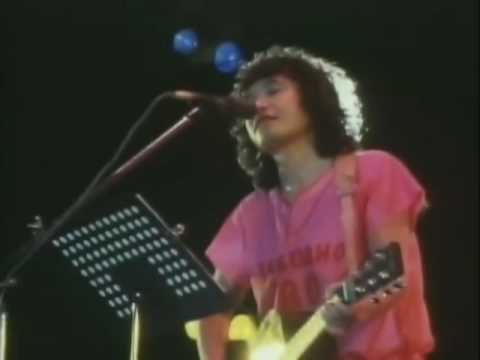
This is a single released by Takuro Yoshida (then credited as Yoshida Takuro) in January 1972, widely known as a classic wedding song.
It peaked at No.
4 on the Oricon chart.
It was later covered by various artists, including Pedro & Capricious and Rutsuko Honda.
I want to ride on a cloud.Mayuzumi Jun

This is a single released in June 1969 by Jun Mayuzumi, who is also active as an actress.
It reached No.
4 on the Oricon weekly chart.
Mayuzumi performed the song at that year’s Kōhaku Uta Gassen, and it was later covered by Yoko Nagayama.
Sometimes like a child without a motherKarumen Maki

This is the debut single released in February 1969 by Carmen Maki, who is half American and half Japanese.
It ranked ninth on the Oricon year-end chart that same year.
With this song, Carmen Maki made her first appearance on the Kōhaku Uta Gassen.
Rainy MidosujiŌyō Fifi

A song that dominated the singles charts in 1971.
The voice of Fei Fei Ouyang, a singer from Taiwan, brings color to the streets of Osaka.
Set along a rain-soaked Midosuji, the lyrics portray the pain of heartbreak and unwavering devotion, striking straight to the heart.
The melancholic melody crafted by The Ventures pairs perfectly with Ouyang’s powerful vocals.
It spent nine consecutive weeks at No.
1 on the Oricon charts and became a massive hit, selling about 1.36 million copies.
For many, it overlaps with memories of their youth, stirring both nostalgia and bittersweet emotion.
Listen to it on a quiet night, and distant memories are sure to resurface, soothing the soul.
I miss you so muchSono Mari
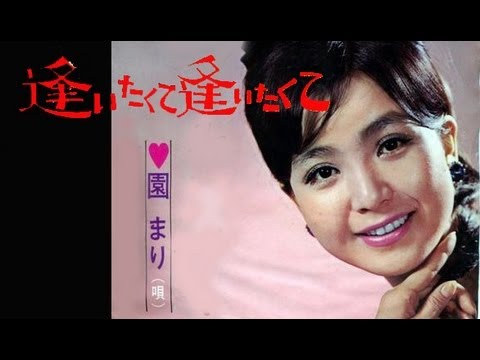
This is a song released by Mari Sono in January 1966.
The original tune is The Peanuts’ “Hand-Knitted Socks,” with new lyrics added.
A film based on the song was released the same year, starring Sono herself.
It was later covered by Akina Nakamori and Yo Hitoto.