


Moving Japanese songs recommended for men in their 60s

This is a playlist packed with moving Japanese songs—J-pop, kayōkyoku, and Japanese rock—that we recommend for gentlemen in their 60s, the so-called “around sixty” generation.
It’s full of masterpieces where you can savor dramatic melodies and lyrics that express poignant, heartfelt emotions.
Moving Japanese songs recommended for men in their 60s (1–10)
Sake, Tears, Men, and WomenKawashima Eigo
“Sake, Tears, Men and Women” is a single by Eigo Kawashima released on June 25, 1976.
It was originally included on the 1975 debut album “Jinrui” by Eigo Kawashima and Homo Sapiens.
The song stylishly conveys the poignant feelings of a man.
era; age; time; periodNakajima Miyuki

“Jidai” is Miyuki Nakajima’s second single, released in 1975.
It opens in sheer despair, yet gently tells you that as long as you keep living, good things will come.
It’s a song you want to hear when you’re standing on the brink of despair.
A masterpiece.
I can’t put it into wordsofukōsu

Kotoba ni Dekinai (Words I Cannot Say) is Off Course’s 23rd single, released on February 1, 1982.
It is included on their ninth album, Over, which was released on December 1, 1981.
The song is well known as the theme for a Meiji Yasuda Life Insurance commercial, which was very moving.
While listening to a distant train whistleArisu
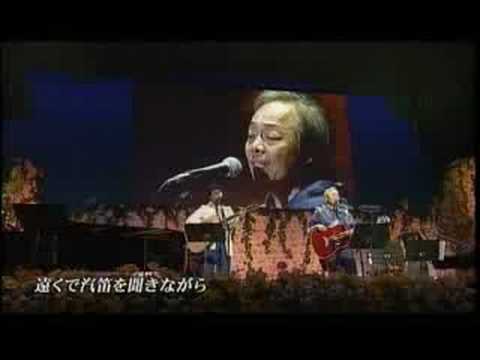
This is a single released by Alice in 1976, with lyrics by Shinji Tanimura and music by Takao Horiuchi.
At the 47th NHK Kohaku Uta Gassen in 1996, Takao Horiuchi performed it as a solo act, and at the 56th NHK Kohaku Uta Gassen in 2005, it was presented as part of a medley by Alice.
It is a classic that has been passed down as one of Alice’s signature songs.
Stella with Blue Eyes, Summer 1962…Yanagi Jōji & Rainīuddo

George Yanagi is one of Japan’s premier blues-rock singers.
His husky voice has a distinctive charm that leaves a lasting impression on listeners.
He broke through with “Crying in the Rain…” released in 1979.
“Blue-eyed Stella: Summer 1962…” is a piece set on the grounds of a U.S.
military base.
Its color imagery is vivid, and the song conveys sensations like the green of the lawn and the wind blowing through.
I wonder if it will be sunny tomorrow.Kuwata Keisuke

A masterpiece by Keisuke Kuwata that stirs listeners’ hearts with its grand melody and profound lyrics.
Released in May 2007 as his ninth single, it was also used as the theme song for Fuji TV’s Monday 9 p.m.
drama “Operation Love.” His first solo single in about five years, it debuted at No.
1 on the Oricon Weekly Chart with 168,000 copies sold in its first week.
It also won “Single of the Year” at the 22nd Japan Gold Disc Awards.
The lyrics, portraying life’s hardships and hope, emphasize the importance of facing forward even in the midst of adversity, making it an encouraging anthem that resonates with many.
In tough times, why not listen to this song and draw some courage from it?
As time goes bysawada kenji

It was released in 1975 as Kenji Sawada’s 14th single.
The song was used as an insert track in the TV drama “Akuma no Youna Aitsu,” starring Kenji Sawada, with lyrics written by Yū Aku.
After winning the Broadcast Music Award at the 6th Japan Kayō Awards, it went on to receive many other honors.
It has become one of Kenji Sawada’s signature songs.