

Uplifting songs recommended for people in their 60s: classic and popular Japanese hits

A special feature on lively Japanese songs recommended for people in their 60s.
These are all timeless classics that will have you humming along before you know it!
Why not play them while doing housework or during your free time to brighten your days?
These songs are sure to get everyone excited!
- Recommended winter songs for people in their 60s. Timeless masterpieces of winter songs.
- [For hobbies and building strength] Dance songs recommended for people in their 60s. Dance for fun and stay healthy!
- [Recommended for people in their 70s] Songs that get everyone excited. Songs you’ll want to sing at karaoke.
- Upbeat Japanese songs recommended for women in their 60s
- Popular Japanese songs among men in their 60s: recommended masterpieces and classic tracks
- Anime songs recommended for people in their 60s: from nostalgic classics to the latest hits
- Good songs recommended for people in their 60s: classic and popular Japanese tracks
- Good songs recommended for people in their 50s: classic and popular J-pop tracks.
- Recommended for women in their 60s! Songs that get the crowd going at karaoke
- Love songs that resonate with women in their 60s: gem-like romance tunes that revive memories of youth.
- [2026] Crowd-Pleasing Songs Recommended for People in Their 50s: A Collection of Nostalgic Classics
- Recommended Summer Songs for People in Their 60s: Classic and Popular J-Pop Hits [2026]
- Great songs recommended for people in their 30s. Classic and popular Japanese songs.
Upbeat songs recommended for people in their 60s: Classic and popular J-pop tracks (71–80)
The Drunkard Has ReturnedZa Fōku Kurusedāzu

It’s a famous comic song released by The Folk Crusaders in December 1967.
It reached No.
1 on the Oricon chart and sold over 2.8 million copies.
In 1968, a film based on the song was also released.
Atsu-to-odoroku TamegorōHana Hajime to Kureēji Kyattsu

Originally, it was a gag used by Hitoshi Hana on the variety show “Kyojin × Maetake Geba-Geba 90 Minutes!” Its popularity led to the creation of a comic song, which was released in December 1969.
A film starring Hitoshi Hana was also produced.
Gamera MarchDaiei Jidou Gasshoudan

This song was created as the theme for the fourth entry in the Gamera series, “Gamera vs.
Viras,” and it was used in later works as well.
Among songs related to Gamera, it’s probably the most well-known.
The first verse sings about Barugon, and the second verse is about Gyaos.
Black Cat TangoMinagawa Osamu
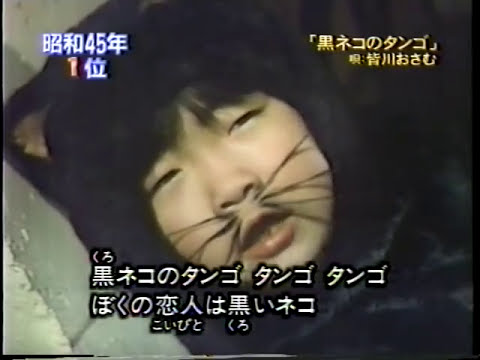
It was originally an Italian children’s song titled “Volevo un gatto nero,” and a Japanese cover by Osamu Minagawa was released in October 1969.
It became a massive hit, topping the Oricon weekly chart for 14 consecutive weeks.
Defeat HedorahMARI Keiko & Hanī Naitsu & Mūndoroppusu

This is the song included on the B-side of Keiko Mari with Honey Knights & Moondrops’ single “Kaese! Taiyo o,” released in July 1971.
It’s affectionately regarded as a “notoriously odd song,” with cheerful delivery of gruesome lyrics and an out-of-nowhere appearance by Godzilla.
What a nice bath.Za Dorifutāzu

This is a single by Duke Aces released in February 1966.
It sings about hot springs from around Japan, so you could call it a local-themed song.
It was later covered by The Drifters, with the hot springs featured in the lyrics changed.
The person I fell in love withMiyako Harumi

It is one of Harumi Miyako’s signature songs, released in September 1968.
It peaked at No.
24 on the Oricon chart.
With this song, Miyako appeared in the 19th and the 47th NHK Kōhaku Uta Gassen.
The song was later covered by Chiaki Takahashi.