

[2026 Edition] Songs Loved by People in Their 60s: Classic Hits from Their Youth


For people now in their 60s, their youth was around the 1970s, right?
The music you listened to in your teens and twenties still resonates in your heart today, wrapped in memories.
In this article, we’ve compiled songs that colored the youth of those in their 60s—classics from the era when many Showa pop and folk masterpieces were born.
We hope it helps you reminisce alongside your memories of those days, and also serves as a guide for choosing karaoke songs to enjoy with your peers.
Of course, it’s also recommended for younger generations interested in Showa-era music!
- Good songs recommended for people in their 60s: classic and popular Japanese tracks
- Popularity Ranking of Songs by Generation: 60s [2026]
- [Recommended for people in their 70s] Classic nostalgic hits: A collection of youth songs
- Recommended for women in their 60s! Easy-to-sing Japanese karaoke songs
- Coming-of-age songs for your 50s: heart-thumping × heartwarming classics and popular tracks [2026]
- Popular Japanese songs among men in their 60s: recommended masterpieces and classic tracks
- [60s] Karaoke Popularity Rankings by Generation [2026]
- Recommended for women in their 60s! Songs that get the crowd going at karaoke
- Love songs that resonate with women in their 60s: gem-like romance tunes that revive memories of youth.
- [For People in Their 60s] Ranking of Easy-to-Sing Karaoke Songs [2026]
- [Ages 60s] Popular Japanese Music / J-POP Rankings [By Generation]
- A love song that makes a man in his sixties relive his youth. Timeless classics that rekindle the romances of those days.
- Spring songs for people in their 60s: A collection of classic tracks about cherry blossoms and farewells
[2026 Edition] Songs Loved by People in Their 60s: Classic Anthems from Their Youth (51–60)
Suddenly, SinbadSazan Ōrusutāzu

The 2018 NHK Kōhaku Uta Gassen was truly a magnificent show that will certainly go down in the program’s history.
Fans will surely remember that it was the year Southern All Stars, celebrating their 40th anniversary, brought the house down with a special stage that transcended the Red and White teams.
The performance of “Katte ni Sindbad” after “Kibō no Wadachi” was overwhelming, and Yuming’s smile was especially memorable.
A song released in 1978 continuing to be sung across generations—there’s nothing ordinary about that.
Even among Southern’s catalog packed with hits, this is still the one for me!
Johnny’s LullabyArisu
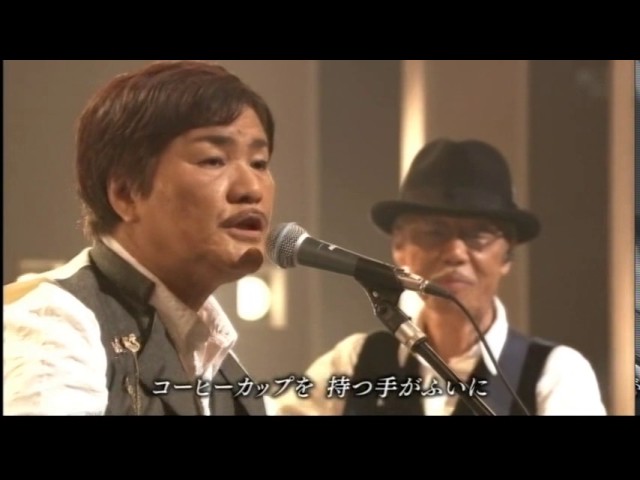
This is “Johnny’s Lullaby,” a popular song by Alice, a folk band that was active in the 1970s—the heyday of youth for people now in their 60s.
The refreshing melody of the acoustic guitar brings back the vivid freshness of those younger days.
The harmonies of the two frontmen are pleasing to the ear and evoke a sense of nostalgia.
Among Alice’s many classics, this one—lyrics included—perfectly fits memories of youth, so it’s a song I’d love to see you sing at karaoke when you get together with classmates from back then.

You are more beautiful than a rose.Fuse Akira

Akira Fuse is a male singer born in 1947 who debuted in 1965.
With a dandy aura and a free, expansive singing voice, he captivates listeners.
“Kimi wa Bara yori Utsukushii” (You Are More Beautiful Than a Rose) was a massive hit released in 1979.
It has also been used in modern commercials, so younger listeners may find it familiar.
In this song as well, Fuse’s open, resonant vocals shine through.
His stable voice even in the high range makes for superb listening.
The title is a romantic expression of love, yet the song’s upbeat feel makes it easy to enjoy casually.

Rainy BlueTokunaga Hideaki

The debut song by Hideaki Tokunaga, a poignant love story that begins in a late-night phone booth.
Its lyrics—quintessentially Showa—paint cinematic scenes of urban stillness and rain, perfectly intertwined with delicate, emotionally rich vocals to create a gem of a track.
Released in January 1986, it reached No.
90 on the Oricon charts.
A rearranged version released in November 1997 rose to No.
31, capturing the hearts of many.
By portraying heartbreak and loneliness as universal themes, it remains a beloved classic that resonates even today.
It’s the kind of bittersweet love song you’ll want to play on a rainy day—why not give it a listen?
[2026 Edition] Songs Loved by People in Their 60s: Classic Hits from Their Youth (61–70)
Sugarcane fieldMoriyama Ryoko

Sugarcane Field is a song composed by Naohiko Terashima, inspired by his visit to Okinawa.
It portrays the sorrow of a young girl who lost her father in the war.
Those in their 60s may remember the 1972 reversion of Okinawa to Japan.
With the heightened interest at the time, this song was often sung in the Utagoe movement and at singing cafes.
It’s a nostalgic masterpiece that revives sadness when you hear it, yet is a song that should continue to be passed down.
Why not take this opportunity to listen to it once more?

12th graderFunaki Kazuo

Kazuo Funaki’s classic song “High School Senior,” alongside Yukio Hashi and Teruhiko Saigō as part of the famed ‘Gosanke’ trio.
As his debut single, it instantly became a million seller, and he appeared on that year’s NHK Kōhaku Uta Gassen.
In 1963, the year it was released, a film inspired by the song also opened, with Funaki himself appearing in it.
The lyrics portray a high school senior on the verge of graduation, looking back on many memories while gazing straight toward the future.
Many people in their 60s today likely listened to it while bathing in similar sentiments during their own graduation season.

Keiko’s Dream Opens at NightFuji Keiko
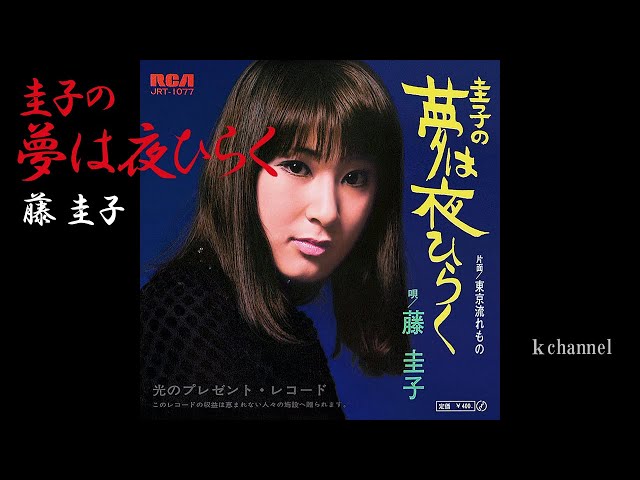
The masterpiece “Keiko’s Yume wa Yoru Hiraku,” with its powerful vocals and haunting atmosphere, draws you in.
It’s sung by Keiko Fuji, whose real name is Junko Utada—yes, the mother of Japan’s iconic songstress Hikaru Utada! With this song, she won the Japan Record Grand Prize, appeared in the 21st NHK Kōhaku Uta Gassen, and dominated the Oricon charts at No.
1 for ten consecutive weeks.
As expected from Hikaru Utada’s mother, right? Back then, many men were captivated by Keiko Fuji and listened to her, and many women surely tried to imitate her singing.
It’s a masterpiece that gives you goosebumps no matter when you hear it.