

[Childcare] Summer songs: Full of fun! Summer nursery rhymes & finger-play songs


When the rainy season ends, summer finally arrives! Here, we’ll introduce a variety of children’s songs to help you enjoy the season.
We’ve gathered songs that kids love, as well as hand-play songs often sung in nurseries and kindergartens.
Listening to these songs will make you look forward to the long-awaited summer even more.
Hand-play songs are also fun for little ones, so be sure to incorporate them into your childcare activities.
While the days will be getting hotter, some children’s songs can make you feel cooler just by listening.
Enjoy a fun-filled summer together with the children!
- Nursery rhymes I want to sing in July: fun summer songs
- Children’s Songs You Can Sing in August: Summer-Friendly Kids’ Songs and Fingerplay Rhymes
- [Sea Nursery Rhymes] Fun children's songs themed around the sea
- A collection of summer-like songs: tracks that go perfectly with summer, like the sea and the sky.
- [Tanabata Children's Songs] Fun hand-play songs and a nostalgic collection of traditional nursery rhymes and folk songs
- [Children’s Songs for June] Fun finger-play songs and traditional nursery rhymes perfect for the rainy season
- Summer song medley. Timeless and popular tracks that color the summer.
- Nursery rhymes and fingerplay songs to enjoy in May! Songs perfect for the fresh green season
- Children’s songs, folk songs, and nursery rhymes about insects
- Recommended summer songs for kids: Popular J-POP/Japanese hits [2026]
- Get pumped with kids’ favorite songs! A memorable collection of classics that will make you want to sing along
- [Sunflower Songs] A selection of classic and popular tracks that give you energy in the hot summer
- Nursery rhymes, folk songs, and children's songs about food
[Childcare] Summer songs. Full of fun! Summer nursery rhymes & hand-play songs (31–40)
Cute cooksakushi sakkyoku: fushō
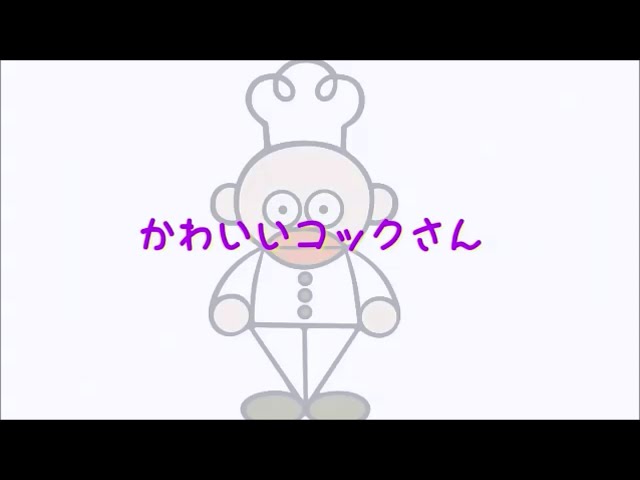
On days so hot that you don’t feel like going outside, how about trying a drawing song in a cool room? The classic drawing song “Kawaii Kokkusan” (“Cute Little Chef”) lets you end up with a picture of a cute chef by drawing along with the lyrics.
Lots of foods appear as comparisons in the lyrics, so it’s fun to snack while you draw, too! By the way, the date mentioned in the lyrics is said to be Chef’s Day.
Even after the rainy season when outdoor play is hard, there are days when the heat or typhoons make it tough to play outside.
On days like that, play along with this song!

Goldfish’s NapSakushi: Kashima Naruaki / Sakkyoku: Hirota Ryūtarō

Goldfish scooping is a must at fun summer festivals! There are probably many children who scoop goldfish at the festival and then raise them at home.
A children’s song with that very theme is “Kingyo no Hirune” (Goldfish Napping).
Its gentle melody brings a calm that could lull not only the goldfish but also the listener into a drowsy afternoon nap.
The lyrics describe a goldfish dozing off, and when someone says, “If you wake up, I’ll give you a tasty meal,” the goldfish opens its eyes.
If you want to wake up your pet goldfish at home, why not try imitating this song?
Rainy MoonSakushi: Noguchi Ujō / Sakkyoku: Nakayama Shinpei

With its beautifully nostalgic melody, just reading the lyrics conjures vivid scenes—“Amefuri Otsukisan” truly sings the heart of Japan.
It first appeared in the Taishō era in the children’s magazine Kodomo no Kuni, under the original title “Amefuri Otsuki.” Later, when it was recorded, it was combined with “Kumo no Kage,” a piece introduced in the same magazine as a sequel, and thus reborn as “Amefuri Otsukisan.” While the melody is easy to remember, the words used in the lyrics can be difficult for young children to understand, so it might be nice for mothers or fathers to sing it together with their children on a rainy summer night.

loquatsakushi: mado michio / sakkyoku: isobe shigeru

Written by the poet Michio Mado, this song has lyrics and a melody so gentle that it leaves you with a warm, cozy feeling.
The image of loquats on the tree appearing not as single fruits but grouped together—and describing that closeness as them snuggling because they’re kind—is just wonderful, isn’t it? I’d be so happy if children could grow up with that kind of loving, rich imagination.
It even makes me crave loquats.
Song of the cicadasakushi: satou yoshimi / sakkyoku: nakata yoshinao

When the sound of cicadas reaches your ears, you can’t help but feel that summer has arrived.
If their chorus is too loud it can seem noisy, but the chirping of cicadas is closely linked with summer in Japan.
The children’s song “Cicada Song,” which is popular among kids, is highly recommended—if you sing it together while catching cicadas on a hot summer day, it makes the game even more fun.
Coming up with your own original dance moves could be enjoyable too!
[Childcare] Summer Songs: Full of Fun! Summer Nursery Rhymes & Hand-Play Songs (41–50)
rainfallsakushi: kitahara hakushū / sakkyoku: nakayama shinpei

Even if the title “Amefuri” doesn’t ring a bell, once you hear the tune you can probably sing along right away, don’t you think? It’s the kind of song that could make even a rainy day—when you’re really feeling blue—seem fun.
The part that imitates the sound of rain is especially memorable, isn’t it? But in fact, it seems that Hakushū Kitahara, who wrote the lyrics, embedded a sad story in this song.
If you’re curious, listen closely to the lyrics all the way through verse five.
aye-ayeSakushi: Aida Hiromi / Sakkyoku: Uno Seiichirou

A children’s song called “Ai Ai” features an animal named the aye-aye, a cousin of monkeys.
Since aye-ayes live on the hot southern island of Madagascar, it’s the perfect song for the hot summer season! The lyrics introduce the aye-aye’s characteristics, so it might be fun to look it up in a picture book or encyclopedia while singing.
Even very young children who aren’t used to talking much yet can sing it easily, so try singing it while imitating monkey movements!