

Nursery rhymes and fingerplay songs to enjoy in May! Songs perfect for the fresh green season


In dazzlingly green May, many of you are surely looking for children’s songs and hand-play tunes to sing with kids at daycare or at home.
Songs that evoke spring really capture children’s hearts and add color to everyday activities.
In this article, we’ll introduce plenty of nursery rhymes and hand-play songs perfect for May.
From familiar, easy-to-sing melodies to ones that get kids moving, we’ve got a wide range—so try incorporating them into your daily childcare and parent-child time!
Nursery rhymes and hand-play songs to enjoy in May! Perfect songs for the fresh green season (1–10)
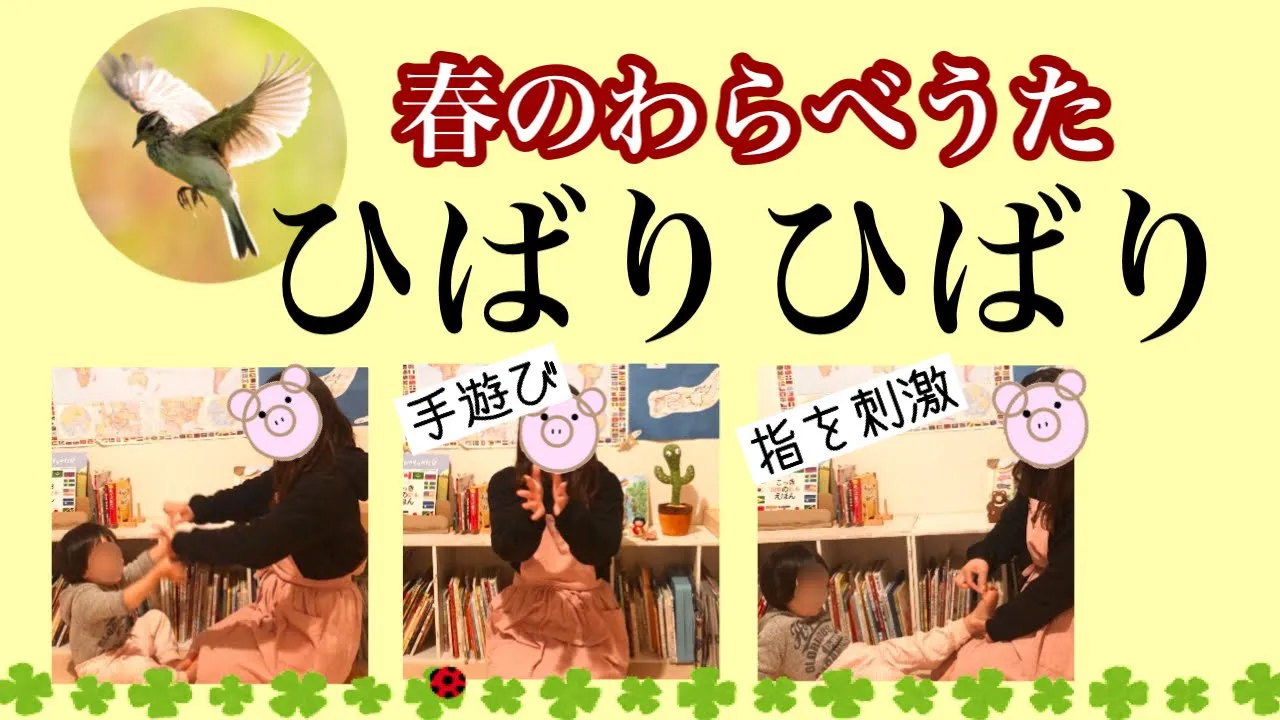
skylark skylarkwarabeuta asobi

In the pleasantly breezy month of May, here’s a nursery rhyme game with a springtime bird theme that we hope parents and children will enjoy at a relaxed pace.
It’s characterized by short, repeated phrases that call to the birds and depict traveling over mountains and through valleys.
You can rock your child on your lap, use your fingertips to represent hills and valleys—there’s no single right way to play! Though it’s a traditional song passed down in local communities since long ago, new audio recordings with fresh ways of singing were released as recently as March 2021, and it continues to be loved today in various forms, especially in early childhood settings.
Precisely because there’s no fixed answer, you can tailor it to your child’s age and the atmosphere of the moment—that’s the charm of this piece.
On a warm, sunny day, why not find your own original way to play together with your child?
A bamboo shoot has sprouted.warabeuta asobi
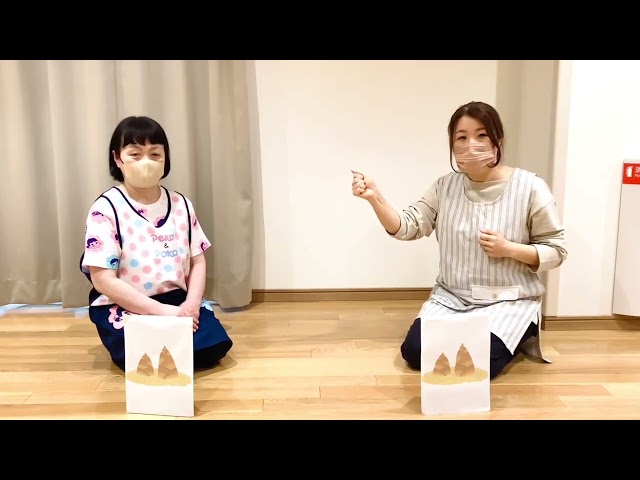
A children’s hand-play song that vividly expresses the growth of bamboo shoots, which are in season from spring to early summer.
Through hand motions, kids enjoy the story of a sprout emerging from the soil, a flower blooming with a pop, and finally being snipped with scissors.
Because the rock-paper-scissors hand shapes—fist, scissors, and open hand—are naturally built into the actions, it’s also perfect for helping children learn the rules of the game.
Though it’s a traditional folk song passed down through generations, its introduction on children’s programs like those on NHK has helped it become a familiar group activity in preschools and kindergartens.
It typically ends with everyone chanting “Essa, essa!” together and deciding the winner with rock-paper-scissors.
On a fresh May day under the blue sky, get moving energetically with your family and friends!
Caro’s eyeballwarabeuta

In dazzlingly green May, you can hear frogs calling from the rice paddies, can’t you? The perfect season to play this children’s song, whose rhythmic chants are such fun.
Its startling theme is cauterizing a frog’s eyeballs with moxa, but set to a lively beat it somehow turns into a delightfully playful song! Some say the sound of the words in the latter half may be connected to a song that was popular in the Meiji era.
It’s interesting to sing it while feeling a bit of history.
How to play is up to you—become a frog and jump, sit on an adult’s knee and bounce, and more.
Even on rainy days, moving your body indoors will lift your spirits! Imagine the frogs hopping, and raise your voices together as a parent and child to get excited.
Zebra SwirlSakushi: Endou Kouzou / Sakkyoku: Inui Hiroki

With the balmy weather in May, it’s the perfect season for a fun trip to the zoo! A great recommendation for times like these is a delightful hand-play song themed around zebra stripes.
Written by Kozo Endo and composed by Hiroki Inui, this piece is full of unique wordplay in which you whirl and peel off the zebra’s stripes and transform it into another animal.
The song began being featured around 1982 on NHK’s children’s program “Okaasan to Issho,” and it was also included on a CD released in March 2000, making it a long-loved favorite across generations.
It’s great fun to mimic the motions of taking off and putting on the stripes to the lively rhythm! Whether on the bus ride to the zoo or during time at home, singing it together as a parent and child and laughing yourselves silly could be just the thing!
Which child is a good child?warabeuta

When children get together to play, do you ever wonder how to decide who’s “it” or who goes next? That’s exactly when this traditional children’s rhyme comes in handy.
You point to each child in turn in time with the rhythm, and the one chosen at the end becomes the next role—or gets a big hug—so everyone can enjoy both the thrill and the comfort it brings! It was also included on the album “NHK Nihongo de Asobo: Warabe-uta,” released in February 2007, and became widely known after being featured in segments of an educational TV program.
In dazzlingly green May, try forming a circle at a park on your walk or indoors, and enjoy the pleasant rhythm together with friends or as a parent and child.
Song of a little birdSakushi: Yoda Jun’ichi / Sakkyoku: Akutagawa Yasushi

May is a season when you can encounter many birds, isn’t it? How about singing “Kotori no Uta” this May? The lyrics, which depict a little bird calling for its father and mother by singing its favorite song, are so adorable.
Listening to this song might make you want to sing just like the little bird.
Let’s sing along with the little bird in the lyrics! By the way, this children’s song also has choreography, so singing while dancing is recommended too!

School of MedakaSakushi: Chaki Shigeru / Sakkyoku: Nakata Yoshinao

The famous children’s song “Medaka no Gakkō” compares the sight of many medaka swimming in a river to children playing at school.
Medaka hatch from eggs around mid-May, and as their numbers grow, the image of many medaka swimming fits the month perfectly—this song is just right for May! The lyrics depict watching medaka play in the river.
It’s become rarer to see schools of medaka swimming in rivers, but since their numbers increase in May, it might be nice to hum this tune and go see if you can find some.