



Summer is full of fun things to look forward to—beach trips, summer festivals, and more.
It’s not just kids; many adults also can’t help but feel excited, wondering what to do when summer arrives.
Don’t you want to learn some trivia and fun facts to enjoy that exciting summer even more? In this article, we’ll introduce general-interest trivia and tidbits about summer.
We’ve gathered topics from a variety of areas, including summer events, seasonal flavors, and fun leisure spots.
Use it as a companion for your summer outings or as material for a summer vacation project—hope you find it helpful!
- [For Kids] Fun Summer Trivia Quiz & Facts
- Make your summer festival even more fun! Trivia quizzes and fun facts for kids
- Enjoy summer festivals even more! Trivia quiz & fun facts collection
- A collection of trivia and fun facts about August that will warm your heart
- Trivia you think you know but surprisingly don’t? August trivia and fun facts quiz!
- Trivia and fun facts about July, including tidbits about Tanabata.
- [For General Readers] List of Summer Kigo: Evocative Everyday Words of Summer
- Trivia quiz with useful tips to know: fun facts that come in handy at school or at home [for kids]
- Exciting! Trivia quizzes that you’ll want to tell others about. A collection of surprisingly little-known facts.
- English will become more fun! A collection of trivia and fun facts about the English language.
- Speaking of summer, fireworks! Kid-friendly trivia quizzes and fun facts about fireworks
- [Killing Time] A Collection of Fun Trivia Quizzes You'll Want to Share with Someone
- Useful right away in daily life! Surprising trivia and handy tips
Trivia & Fun Facts to Make Summer Even More Enjoyable (1–10)
You can’t hear the cicadas over the phone.

Did you know you can’t hear cicadas over the phone? That’s because phone calls are set to transmit sounds in the 300–3500 Hz range, which matches the human voice.
Cicada calls are said to be around 4000 Hz, so it makes sense you can’t hear them.
In other words, even if you’re talking on the phone in the middle of a chorus of cicadas, the other person only hears your voice, so there’s no problem at all.
It feels strange, though, since they sound so loud to you.

The marble inside a Ramune bottle is an “A-dama.”

When it comes to summer drinks, many people probably think of ramune.
A lot of us also have memories of drinking it at festival stalls.
Ramune’s most distinctive feature is the marble inside the bottle.
In the industry, this marble is called the ramune-dama, and it serves as the stopper.
There’s a theory that this ramune-dama used to be called an “A-dama.” The story goes that in the factories where they were made, perfectly spherical marbles suitable for use as stoppers were called “A-dama,” while those that didn’t meet standards were called “B-dama.”
Ayu, which are in season in summer, smell like watermelon.

It may sound hard to believe, but among ayu—sweetfish that are in season in summer—there are some that smell like watermelon.
The reason lies in what they eat.
Ayu grow in clean rivers with good water quality, feeding on algae that cling to stones and other surfaces.
That algae is said to give the fish a watermelon-like aroma.
Since the scent changes with the type of algae, why not check what they smell like if you get the chance? This is also why ayu are called “fragrant fish.”
The difference between sōmen and hiyamugi is their thickness.

Have you ever wondered what makes somen and hiyamugi different? They look alike—both white and thin—and in fact their ingredients are almost the same.
There’s just one way to tell them apart: the thickness of the noodles.
Somen has a diameter of less than 1.3 mm, while hiyamugi is 1.3 mm or more and less than 1.7 mm, according to standards.
By the way, once the diameter reaches 1.7 mm or more, it’s called udon.
It seems this kind of classification came about as noodle-making became more mechanized.
Wind chimes were originally used as talismans to ward off evil.

Wind chimes are one of the symbols of summer.
Hanging from the eaves, they look cool and refreshing, and their tinkling sound is so soothing, isn’t it? Did you know that wind chimes were originally used as talismans to ward off evil? There are various theories, but it’s said that their origin is the “fūtaku,” a bell made of bronze that came from China.
Like today, they were hung from the eaves, but when they were first introduced, they were hung from the eaves of temples as protection against evil.
It seems people believed that no misfortune would occur within the range where the sound could be heard.
The headache that occurs when you eat ice cream is called an “ice cream headache.”
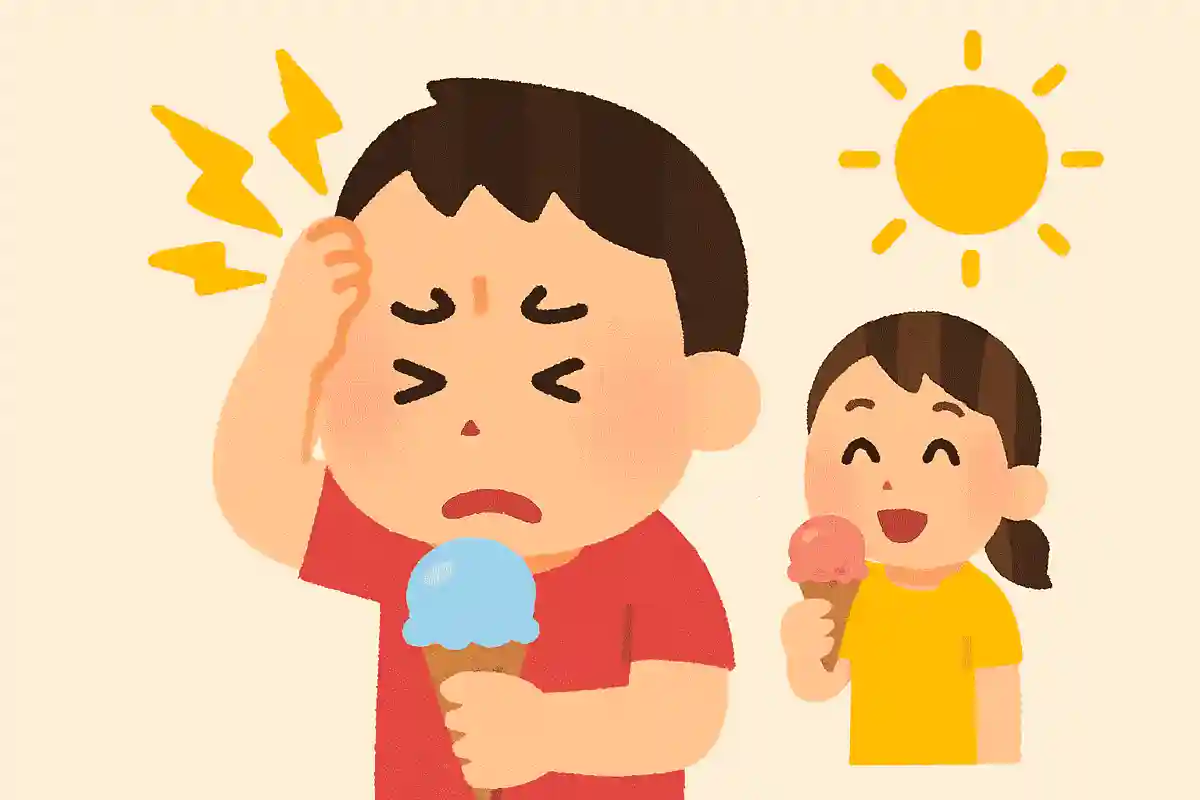
When you eat ice cream, you sometimes get a sharp, stabbing headache, right? In fact, headaches triggered by suddenly consuming something cold are called “ice cream headaches.” It’s thought to happen because cold food rapidly chills the throat and stimulates the trigeminal nerve, and as the body tries to maintain its temperature, the blood vessels dilate, causing the headache.
Some people don’t get it even when they eat ice cream, but if you find it happens to you every time, try eating more slowly.
On Tanabata, it is the magpies that build a bridge across the Milky Way for Orihime and Hikoboshi.

It’s a well-known Tanabata tale that Orihime and Hikoboshi, separated on opposite sides of the Milky Way, can meet once a year on July 7.
In that story, a bird called the magpie appears.
By spreading its wings, the magpie forms a bridge across the Milky Way, allowing Orihime and Hikoboshi to meet.
The magpie is a striking bird with black and white coloring and a body length of about 40 centimeters.
It might seem a bit small to bridge the Milky Way, but this is a legendary story.
Hearing that a charming bird helps bring the two lovers together warms the heart, doesn’t it?