


Trivia and fun facts about July, including tidbits about Tanabata.

Speaking of July, there’s so much to look forward to—Tanabata, Marine Day, and the start of summer vacation.
How much do you know about July? In this article, we’ll share general trivia and fun facts about July.
We’ve gathered topics from various angles, including, of course, things related to Tanabata, as well as July observances and seasonal items.
Use these in many situations—tell your children to deepen their knowledge of Tanabata, or bring them up as talking points during summer leisure!
Trivia and fun facts about July, including Tanabata trivia (1–10)
In the lunar calendar, July is Fumizuki.
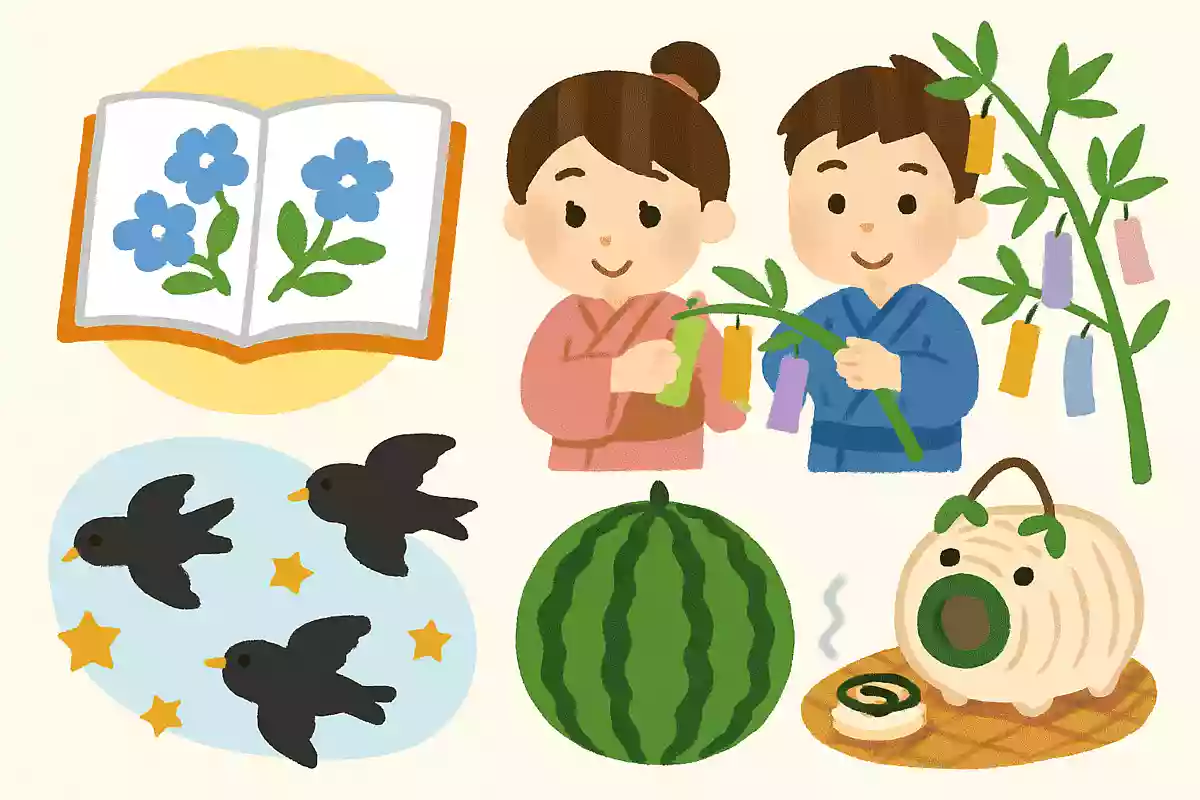
In the old lunar calendar, July was called Fumizuki.
There are various theories about the origin of this name, but a leading one holds that fumi means books or letters, and that it derives from the custom associated with Tanabata of writing wishes on tanzaku paper strips and engaging in calligraphy.
It is said that people in the past sought to convey their wishes to the gods and the stars by pouring their feelings into their writing, suggesting they placed great value on the power of characters and words.
The sound of the name Fumizuki evokes an intellectual, lyrical seasonal atmosphere and conveys the enduring appeal of language even today.

In the Edo period, Tanabata was a public holiday.
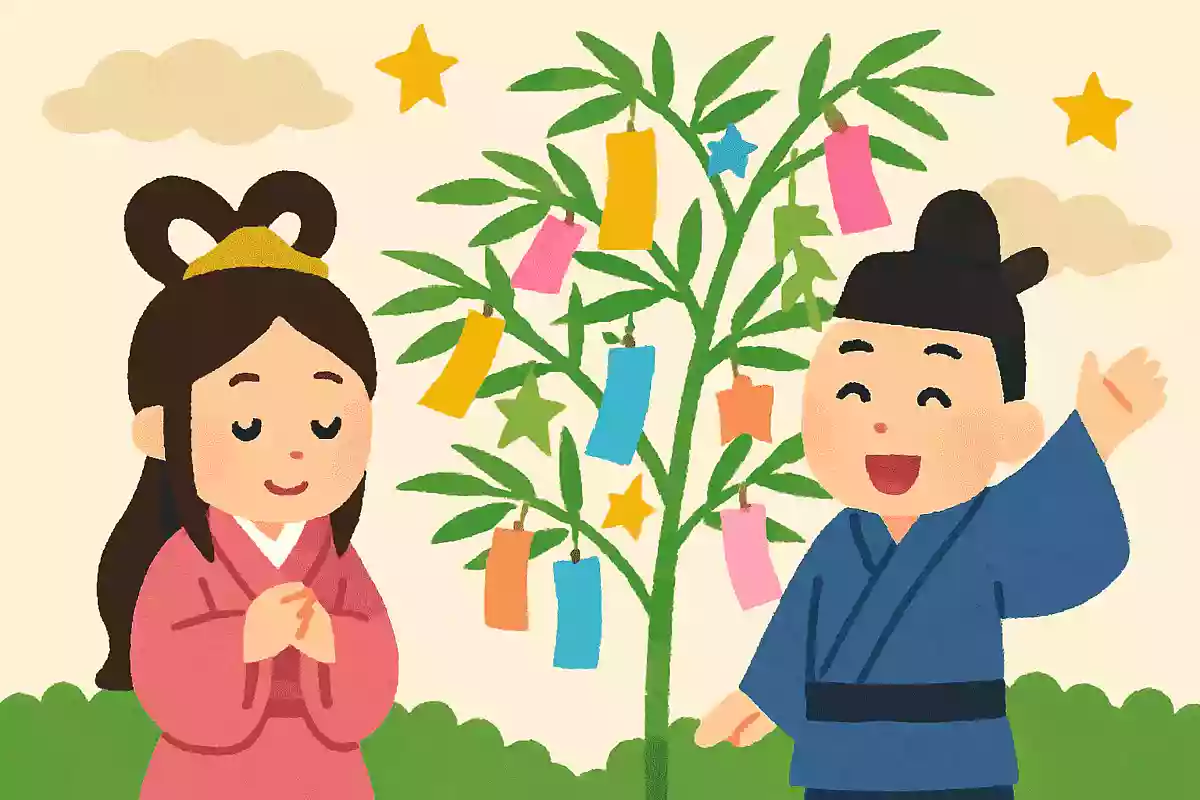
In the Edo period, Tanabata was a public holiday.
Unlike today, for people in the Edo period, holidays were said to be special occasions to step away from work and daily life.
Tanabata was also considered a special day when Orihime and Hikoboshi could meet once a year, and a day to pray for good health through the summer.
While today the emphasis is often on enjoying Tanabata by writing wishes on tanzaku paper, in the past it was a special day observed as a holiday and celebrated as a formal event.
Tanabata has been cherished both in the past and now, and we should continue to treasure it in the future.

July 25 is Shaved Ice Day.
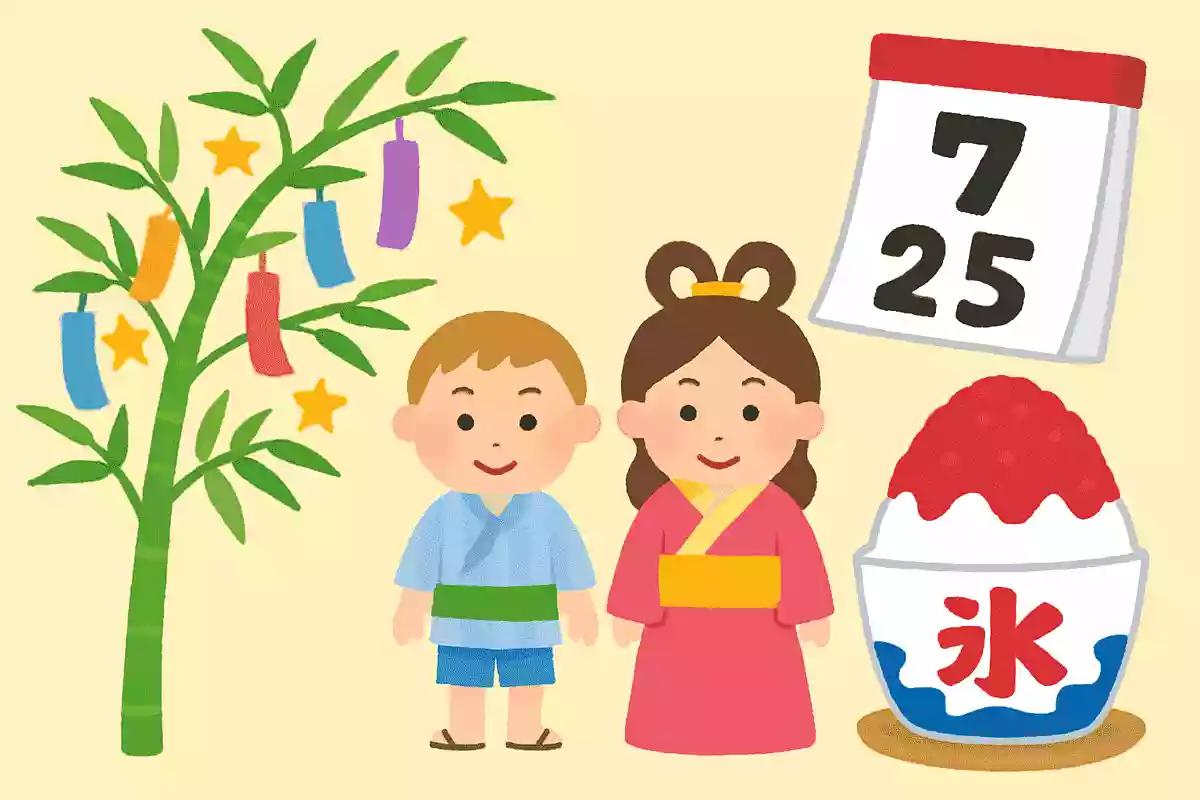
July 25 is considered Kakigori Day (Shaved Ice Day).
The date was chosen from a wordplay on its old name, natsugōri (summer ice): 7 (na), 2 (tsu), 5 (gōri).
Another origin is that on this day in 1933, Japan’s highest temperature of 40.8°C was recorded in Yamagata City.
As a symbol of cool refreshment indispensable in summer, kakigori has long been cherished.
Today, in addition to classic strawberry and melon, a variety of flavors such as matcha and mango have appeared, with both appearance and taste evolving.
Enjoying it on the anniversary makes the sense of the season even more vivid.
Knowing about this day connected to a hallmark of summer might make your cooling-off time feel a little more special.
Winter melon, which comes into season from July, includes the character for ‘winter’ in its name because it keeps well until winter.
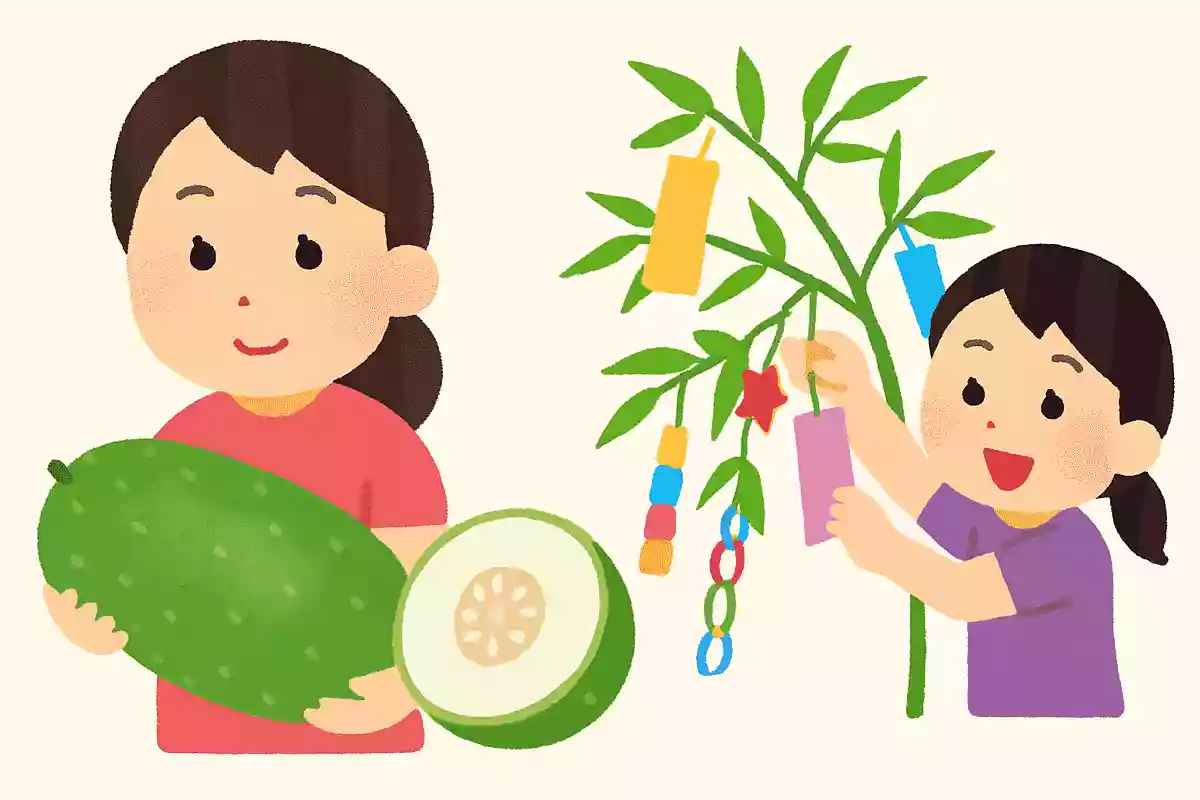
If you look at the kanji for “tōgan,” you’d naturally assume it’s a winter vegetable.
But tōgan (winter melon) is actually in season in July—in the summer.
So why does its name include the character for “winter”? The reason lies in how well it keeps.
Because winter melon has a thick rind, it stores very well; if you keep it properly in a cool place, it can last all the way into winter.
That’s why, despite being a summer vegetable, it’s called “winter melon.” Winter melon is rich in potassium and vitamin C, and is said to help prevent high blood pressure and relieve constipation.

The reason Tanabata wish strips come in five colors is based on the Chinese theory of yin-yang and the five elements.

It is said that the use of blue, red, yellow, white, and black for Tanabata wish strips comes from the Chinese theory of Yin-Yang and the Five Elements.
The Earth has yin and yang, representing two aspects.
Yin carries meanings like cold and dark, while yang suggests bright and warm.
By incorporating the Yin-Yang Five Elements theory, it is believed that Tanabata wishes are more likely to come true.
While I think the colorful Tanabata strips are lovely and evoke a sense of summer, learning that each color carries a wish for the kind of person one wants to become makes me want to choose the color based on the wish I’m making.
The Tanabata decoration called a streamer (fukinagashi) is an ornament that expresses a wish for improved sewing skills.

Among Tanabata decorations, the fukinagashi streamers stand out as especially vibrant.
They are made from paper or plastic as decorations that express the wish for improved sewing skills.
The streamers are closely connected to Orihime, who appears in the Tanabata story; Orihime is an excellent weaver, and it’s said that fukinagashi were created with the hope that people could become as skilled at needlework as she is.
They also carry the wish to become deft and nimble-fingered like Orihime when crafting.
When you make Tanabata ornaments, it’s recommended to remember the meaning behind the fukinagashi as you create them.
Marine Day was established because Emperor Meiji returned safely from a sea voyage.
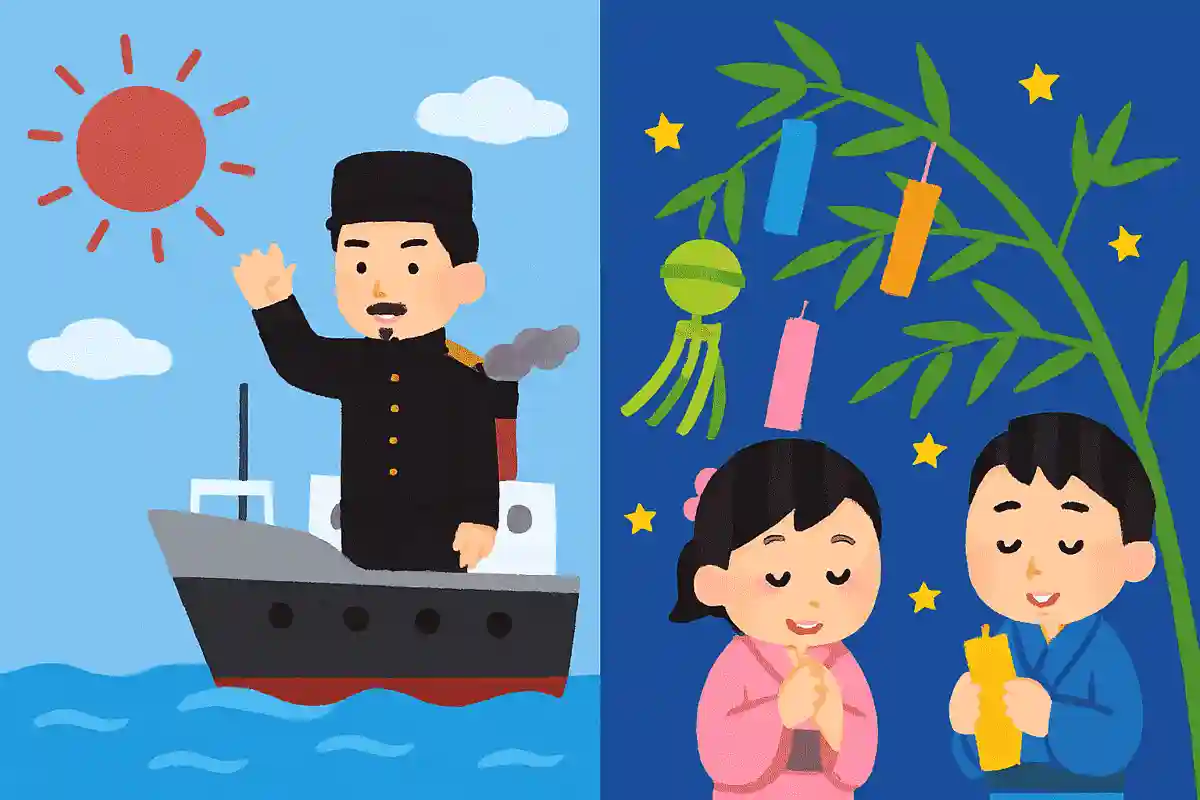
Marine Day, a public holiday in July, may be strongly associated with enjoying summer leisure, but it actually traces back to an event in the Meiji era.
In 1876, during Emperor Meiji’s imperial tour of the Tohoku region, he returned from Hakodate to Yokohama aboard the Meiji Maru, combining the journey with lighthouse inspections.
To celebrate the safe voyage, Marine Memorial Day was established, which later became the national holiday Marine Day.
It is not a day for swimming and travel per se, but one to give thanks for the blessings of the sea and to wish for the development of Japan as a maritime nation.
Knowing this background deepens the meaning of the holiday and provides an opportunity to feel respect for nature and history.
It is a uniquely Japanese holiday that we should cherish.