

[Tango] Famous Tango Songs: Recommended Popular Tracks


A tango whose passionate rhythm and wistful melodies stir the heart.
Born on the street corners of Argentina, this music is now loved all around the world.
Have you ever felt a strange nostalgia or a flutter in your heart just by hearing the poignant tone of the bandoneon? Perhaps you’ve heard that memorable phrase in a movie or commercial and found yourself wanting to dive deeper into the world of tango.
In this article, we’ll introduce a wide range of classic and famous tango pieces.
Whether you’re listening for the first time or already familiar with tango, you’re sure to discover something new.
We hope you’ll find a new favorite track!
- Cool! Introducing classic masterpieces of Argentine tango
- Flamenco masterpieces. Recommended popular songs.
- Recommended Latin Music | Introducing Stylish Masterpieces
- Astor Piazzolla Popular Song Rankings [2026]
- Chanson masterpieces. Recommended popular songs.
- [2026] A Guide to Bossa Nova: From Classic Standards to the Latest Hits!
- [Famous Songs of the World] A curated introduction to soul-stirring popular Latin mambo tracks
- The appeal of large ensembles! Recommended masterpieces and popular songs of big bands
- Also great as café music! Introducing famous tunes to savor the charm of musette
- Carefully selected Japanese songs with a Latin flavor! Recommended J-POP brimming with exotic vibes
- [Celtic Music] Masterpieces of Celtic music. Recommended Irish music
- Polka masterpieces. Recommended popular songs.
- [2026] Brazil’s National Music! A Collection of Iconic and Popular Samba Songs
[Tango] Famous Tango Songs: Recommended Popular Tracks (11–20)
Spain (Six Albumblatts) 2. Tango in D majorIsaac Albeniz

We present a masterpiece among piano miniatures by the genius who laid the foundations of the Spanish national school.
Marked by elegant, mellifluous melodies, it invites you to surrender to its unhurried rhythm, conjuring images of Spain—passionate yet tinged with melancholy.
This piece is the second number from the suite España, premiered in London in June 1890 by Isaac Albéniz, famed as a child prodigy.
Beyond the original piano version, it is widely loved in various forms, including arrangements for guitar and Malcolm Arnold’s orchestration.
Although originally part of a six-piece set, its accessibility has made it frequently performed on its own.
It’s a perfect selection for those wishing to spend a calm, sophisticated evening.
Gunshots and Diamondsitō keisuke

This piece layers a glossy bandoneon with taut, high-strung violins.
Composed by Keisuke Ito of the game music studio noisycroak, it was created as the theme song for the PSP title “Guns, Voice, and Diamonds,” released in June 2009.
Reflecting the game’s focus on “negotiation,” it’s a tango-style number that blends the tense, second-by-second psychological mind games with an adult, seductive allure.
As the musical face of a classic that earned Gold Hall of Fame honors in Weekly Famitsu’s Cross Review, it underpinned the entire play experience.
A must-listen for those who enjoy thrilling back-and-forths or seek urban, sophisticated music.
Winter in Buenos AiresÁstor Piazzolla

Here is “Winter in Buenos Aires” from Astor Piazzolla, the composer of “Libertango,” and another of his signature works “The Four Seasons of Buenos Aires.” Buenos Aires is the capital of Argentina, and as the title suggests, its weighty melody evokes the city’s winter.
Piazzolla’s Argentine tango, rich in free expression that broke with prior conventions, was not well received at first.
Gradually, however, his musicality was recognized, and today it is regarded as a masterpiece of Argentine tango.

Dango Three BrothersUchi no Masumi

First broadcast in January 1999 on NHK Educational TV’s “Okaasan to Issho,” this song took the nation by storm.
It is known for having been planned and written by Masahiko Sato, with music and video by Masumi Uchino.
The unique lyrics about three skewer-dango brothers, fused with a full-fledged tango-style melody, make it a must-hear.
It became a major topic immediately after airing, and the single released in March 1999 quickly sold around three million copies.
Although it originated from a children’s program, it topped the Oricon charts and became a blockbuster etched in Japanese music history.
The wistful vocals by Kentaro Hayami and Ayumi Shigemori make it a perfect song for parents and children to sing along to.
Tango of the Red Ogre and the Blue OgreFukuda Wakako

Broadcast on NHK’s “Minna no Uta,” this classic children’s song has been beloved for many years.
Composed by Kazue Fukuda, who supported the music of numerous programs such as “Okaasan to Issho,” the piece first aired in December 1977.
A single version sung by Isao Bito was released in January 1978 and gained popularity, ranking 48th on the annual Oricon “TV Anime & Children’s Songs” chart at the time.
Set to a tango rhythm, its uniquely charming world depicts red and blue ogres cheerfully dancing under the moonlight.
Many listeners can’t help but smile at these endearing demons.
It’s a perfect song not only for the Setsubun season, but also whenever parents and children want to sing and dance together.
Blue TangoLeroy Anderson

This is a work by Leroy Anderson, celebrated as a master of American light music, who composed The Typewriter—treating a typewriter as a percussion instrument—and Sleigh Ride, a piece often heard in commercials and store BGM during the Christmas season.
He had an unusual background, studying classical music while earning a PhD in linguistics, and that career path led him to be influenced by a wide range of musical genres.
Among these, he also composed pieces related to tango, which have continued to be performed as standard repertoire for pops orchestras.
Blue Tango has become a representative tango piece performed by orchestras.
[Tango] Tango Masterpieces: Recommended Popular Songs (21–30)
Pearl Diver’s Tango (Perlenfischer Tango)Georges Bizet
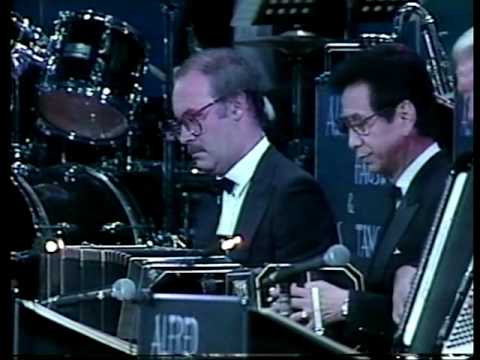
The original song is the aria “Je crois entendre encore” (Nadir’s Romance) from the opera Les Pêcheurs de Perles (The Pearl Fishers) by the French classical composer Bizet.
It was arranged for a tango orchestra by Alfred Hause, a Continental tango musician from Westphalia, Germany.
While the aria’s beautiful melody is still performed today, the full opera is not often staged, and it may be that Alfred Hause’s tango arrangement is actually more widely known.
Please listen and compare it with the original.