

[Tango] Famous Tango Songs: Recommended Popular Tracks


A tango whose passionate rhythm and wistful melodies stir the heart.
Born on the street corners of Argentina, this music is now loved all around the world.
Have you ever felt a strange nostalgia or a flutter in your heart just by hearing the poignant tone of the bandoneon? Perhaps you’ve heard that memorable phrase in a movie or commercial and found yourself wanting to dive deeper into the world of tango.
In this article, we’ll introduce a wide range of classic and famous tango pieces.
Whether you’re listening for the first time or already familiar with tango, you’re sure to discover something new.
We hope you’ll find a new favorite track!
- Cool! Introducing classic masterpieces of Argentine tango
- Flamenco masterpieces. Recommended popular songs.
- Recommended Latin Music | Introducing Stylish Masterpieces
- Astor Piazzolla Popular Song Rankings [2026]
- Chanson masterpieces. Recommended popular songs.
- [2026] A Guide to Bossa Nova: From Classic Standards to the Latest Hits!
- [Famous Songs of the World] A curated introduction to soul-stirring popular Latin mambo tracks
- The appeal of large ensembles! Recommended masterpieces and popular songs of big bands
- Also great as café music! Introducing famous tunes to savor the charm of musette
- Carefully selected Japanese songs with a Latin flavor! Recommended J-POP brimming with exotic vibes
- [Celtic Music] Masterpieces of Celtic music. Recommended Irish music
- Polka masterpieces. Recommended popular songs.
- [2026] Brazil’s National Music! A Collection of Iconic and Popular Samba Songs
[Tango] Famous Tango Songs: Recommended Popular Tracks (31–40)
La CumparsitaGerardo Matos Rodríguez
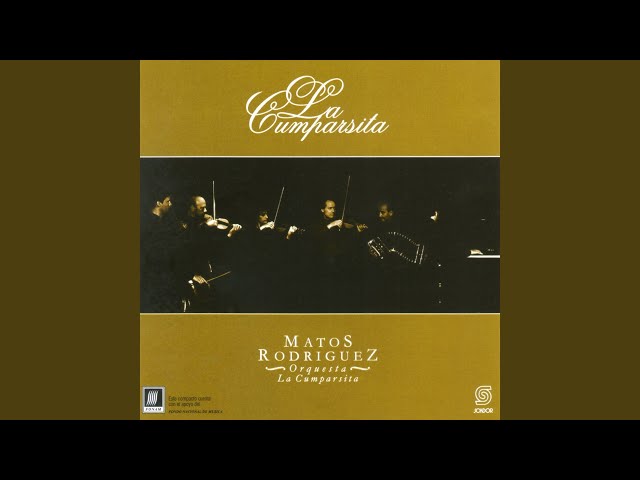
It’s a famous Argentine tango, but Continental orchestras also perform it frequently.
When you think of tango, this is the song that comes to mind.
Among Japanese tango singers, Yoichi Sugawara has an extensive tango repertoire and delivers emotionally rich performances in both the original language and in Japanese.
CaminitoALFRED HAUSE

Alfred Hause, who enjoys great popularity as a leading figure in Continental Tango.
Hause studied as a violinist at the Weimar Conservatory, and in his compositions he sometimes employs instruments active in classical orchestras, such as the oboe and English horn, which is why his style is also called symphonic tango.
This piece, Caminito, is also characterized by a symphonic performance.
The elegance of the strings and the inclusion of the harp add a wonderful sense of richness!

Azure Sky (Blauer Himmel)Barnabas von Geczy

This is Mantovani’s “Blue Sky (Blue Skies),” which has an easy-listening lightness distinct from the Hawse Orchestra.
The Getz Orchestra’s performance is also well known.
The mood changes dramatically between the opening melody and the latter half, evoking a vivid image of clouds parting to reveal a clear blue sky.
Nostalgic (Nostálgico)Julian Plaza

If you’ve listened to all the pieces introduced so far, you might already have a sense of Julián Plaza’s style.
This piece, “Nostálgico,” also features the characteristically free progressions typical of Plaza.
In the middle of the piece, the mood shifts dramatically—just when it becomes intense, it transforms in the latter half into a brilliant and elegant melody.
It’s a fascinating work.
When the Milonga Sobs (Cuando Llora La Milonga)Juan de Dios Filiberto

Composed in 1927 by Juan de Dios Filiberto with lyrics by Luis Mario, “Cuando Llora La Milonga” features quite a deep theme: an elderly woman regretting the sins she has committed.
With its provocative lyrics, it’s an exceptionally compelling listen.
[Tango] Famous tango masterpieces. Recommended popular songs (41–50)
FeliciaEnrique Saborido

Among the many compositions by Enrique Saborido, “Felicia” is his most famous.
It has a classic, easy-to-dance, upbeat tempo.
For those who love that quintessentially Argentine tango sound—passionate and irresistibly danceable—this track is spot on.
PayadoraJulian Plaza

Pajadora, which is characteristically marked by the freely expressive, wistful style typical of Argentine bandoneon player Julián Plaza, features the weighty melodies emblematic of Argentine tango appearing from time to time, yet maintains an overall bright tone.
Among Plaza’s works, it has an especially catchy groove, earning strong support in Spanish-speaking regions.
The latter half of the piece was used in figure skater Mao Asada’s exhibition program during the 2008–2009 season, so many figure skating fans are likely familiar with it.