

So tricky you’ll be fooled! A collection of trick riddles that both adults and kids can enjoy.


Trick riddles can be a little frustrating when you can’t answer them, yet they still make you chuckle.
Even when you’re thinking seriously, sometimes you see the answer and feel let down, like, “That’s all it was?” Questions like “What’s something that waits for you from the morning?”, “What’s the smallest number in a deck of cards?”, or “Why were there no injuries in the elevator accident?” and so on.
In this article, we’ll introduce fun trick riddles you’ll want to share with someone right away.
Why not think them over with family and friends and spread some smiles?
- [Trick Quiz] Quiz Questions That Excite Everyone from Kids to Adults
- Hard to get right on the first try! A quiz you’re guaranteed to get tripped up by.
- A collection of challenging quizzes for adults [Difficult]
- Interesting riddles: a collection of simple and fun questions
- [Challenging and Fun!] Quizzes & Riddles for Adults
- [Funny] Mean! 10-times Quiz/Question Collection
- Genius if you can solve it? Super-difficult Quiz Collection
- Do you get tripped up too? A fun roundup of 10-time quiz questions
- [Battle of Wits] Stimulate your intellectual curiosity! Quiz questions that get adults excited
- [Brain Training] Difficult Riddles That Even Adults Struggle With
- [Simple Riddles] A curated selection of fun questions that will excite everyone from kids to adults!
- [Advanced Level] Difficult Riddles for Elementary School Students
- A quiz that seems easy but is actually hard: trick questions that make you think flexibly
Trick Questions with Calculations and Numbers (1–10)
There are 10 people on the bus. If 5 get off, how many passengers are left?

See the answer
4 people
You might be tempted to say the answer is five since ten people were on board and five got off, but the passengers aren’t the only ones on a bus. That’s right—you have to include the driver in the count. In other words, there were ten including the driver, so the answer is four.
There is one onion, two tomatoes, and one bitter melon in the bowl. How many vegetables are in the bowl?

See the answer
3 pieces
Many people might think, “Isn’t it four?” If you just add them normally, it would be four. However, this is a riddle with a trick. If you change the word “さらに” (furthermore) to “皿に” (on a plate), the bitter melon ends up being on a plate, so the total number of vegetables in the bowl is three.
There are 10 daikon radishes in the field. If you pull out 4, how many are left?

See the answer
4 items
If you think about it normally, you’d assume you’re being asked how many daikon radishes are left and feel like answering six, but the answer is four. If you look closely at the question, it says “How many are left?” In Japanese, that can be read as “How many marks (tracks) are there?” meaning the question was actually asking about the number of spots where the radishes were pulled out—so there are four marks.

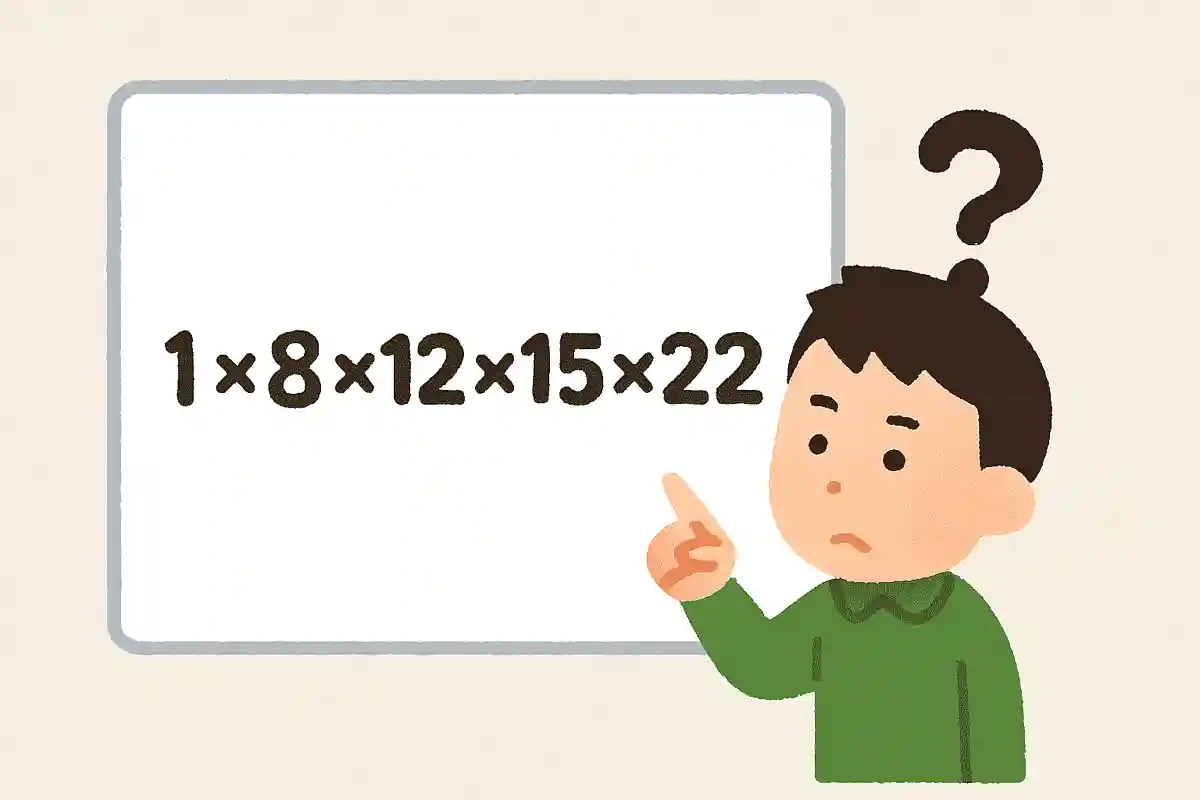
The answer is simple. What is the result of 1×3×8×12×15×22?
See the answer
Easy
The key point is the part in the problem statement that says “The answer is simple.” This puzzle isn’t about calculation; it’s a riddle where you read the answer literally as “simple.” Therefore, without doing any calculations, the answer is “simple.” It’s a fun riddle that’s perfect for brain teasers and communication.

When you pass three people ahead of you in a race and become 2nd place, what was your original position?

See the answer
5th place
If the person in 5th place passes one person, they become 4th; if they pass two people, they become 3rd; and if they pass three people, they become 2nd. It’s a problem you can understand by thinking calmly, but I imagine many people couldn’t come up with the answer right away.
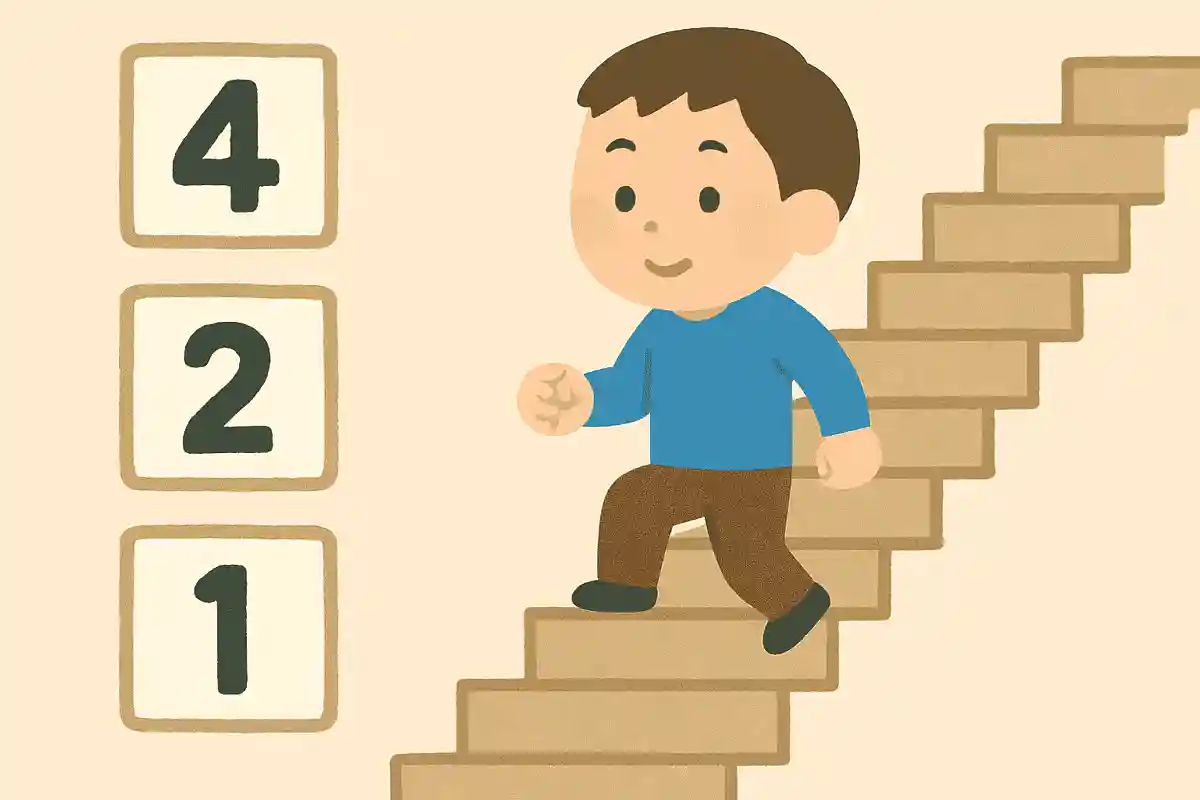
If you go up from the 1st floor to the 4th floor, how many times more stairs do you have to climb compared to going up from the 1st floor to the 2nd floor?
See the answer
three times
Seeing only the numbers 2nd floor and 4th floor, you might intuitively answer that it’s twice, but the correct answer is three times. From the 1st to the 2nd floor, you need to go up the stairs once, and from the 1st to the 4th floor, you have to go up three times. It was a problem where, if you think calmly, you can arrive at the correct answer.
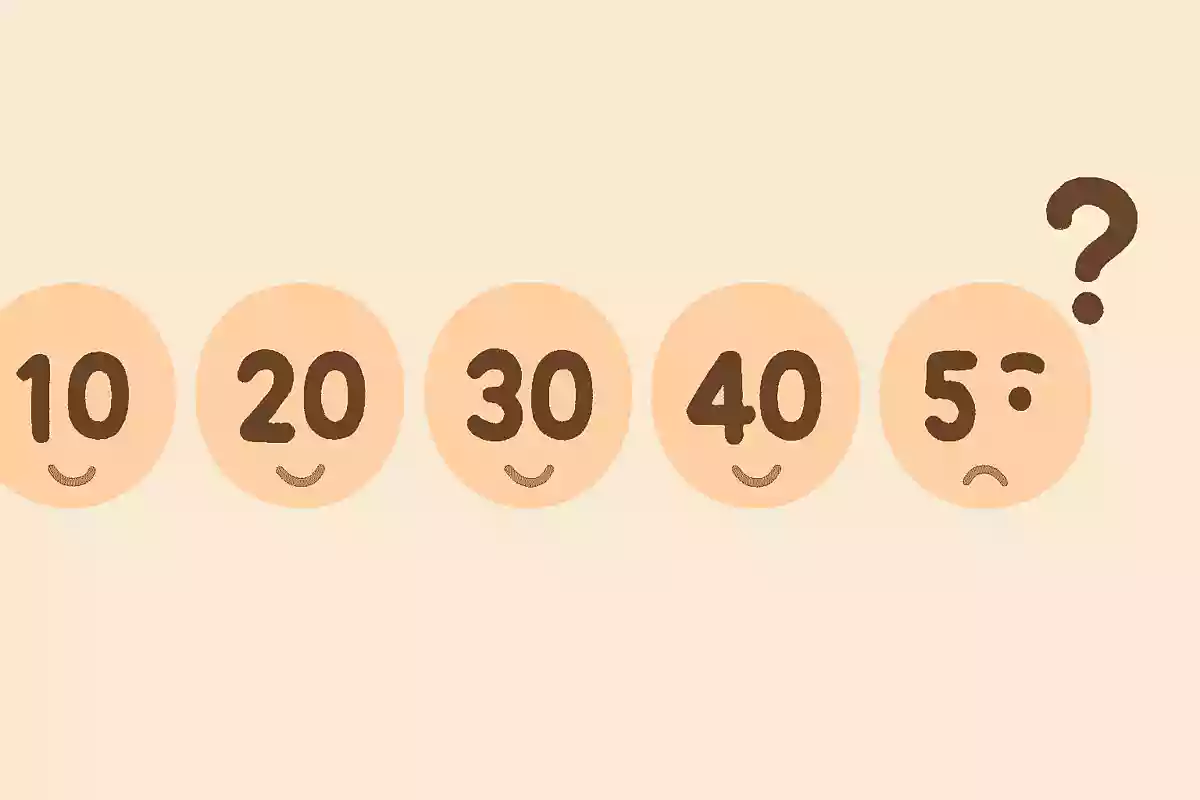
In 10, 20, 30, 40, 50, what is the number after 50?
See the answer
51
At first glance, you might think, “It’s increasing by 10, so the next is 60,” but the key to this problem lies in the phrasing: “the number after 50.” There isn’t actually a deep rule—it's simply asking for the number that comes after 50, so the correct answer is straightforwardly 51. It’s a trick question designed to lead you into an assumption, testing your composure and your ability to read the problem carefully.
