

Fun to Know! A Collection of Space Trivia [Rec]

A sky full of twinkling stars… Space really is romantic, isn’t it?
When you think, “It stretches on forever, there are countless planets, and I’m living in that vast universe,” doesn’t it oddly make you feel excited?
What kind of world lies beyond this sky, I wonder?
In this article, I’ve put together intriguing mysteries and fun trivia about space!
It’s great for killing time, and also recommended as quiz material for school activity periods!
Enjoy yourself while picking up some knowledge about the cosmos!
- A collection of trivia and fun facts about space, brimming with dreams and romance
- Collection of trivia and fun facts about stars shining in the night sky
- Space trivia quiz: Multiple-choice questions about the planets of the solar system and astronauts
- A compilation of unsettling trivia and fun facts about Earth
- [Space] Did you know? Saturn Trivia Quiz
- [Interesting] Compilation of Trivia Quiz Questions
- Trivia quiz with useful tips to know: fun facts that come in handy at school or at home [for kids]
- Make weather forecasts more fun! Trivia and fun facts about the weather
- A quiz of fun trivia: bite-sized knowledge that leads to new insights.
- Think you know it, but maybe you don’t? Fun trivia quiz about the Sun!
- [Easy] Quizzes That Elementary School Students Can Solve! A Collection to Nurture Wisdom
- Useful right away in daily life! Surprising trivia and handy tips
- Fireworks Trivia & Fun Facts Summary
Fun to Know! Space Trivia Collection [Rec] (11–20)
Auroras change color depending on altitude.

While auroras are often associated with cold countries and are a major attraction with their beautiful, curtain-like lights shimmering in the night sky, did you know that their appearance changes with altitude? The higher the altitude, the lower the atmospheric density, which affects the particles from the sun and results in different colors.
Knowing which colors appear at which locations may help you plan a journey to find your ideal aurora hues.

The Earth is not a perfect sphere.
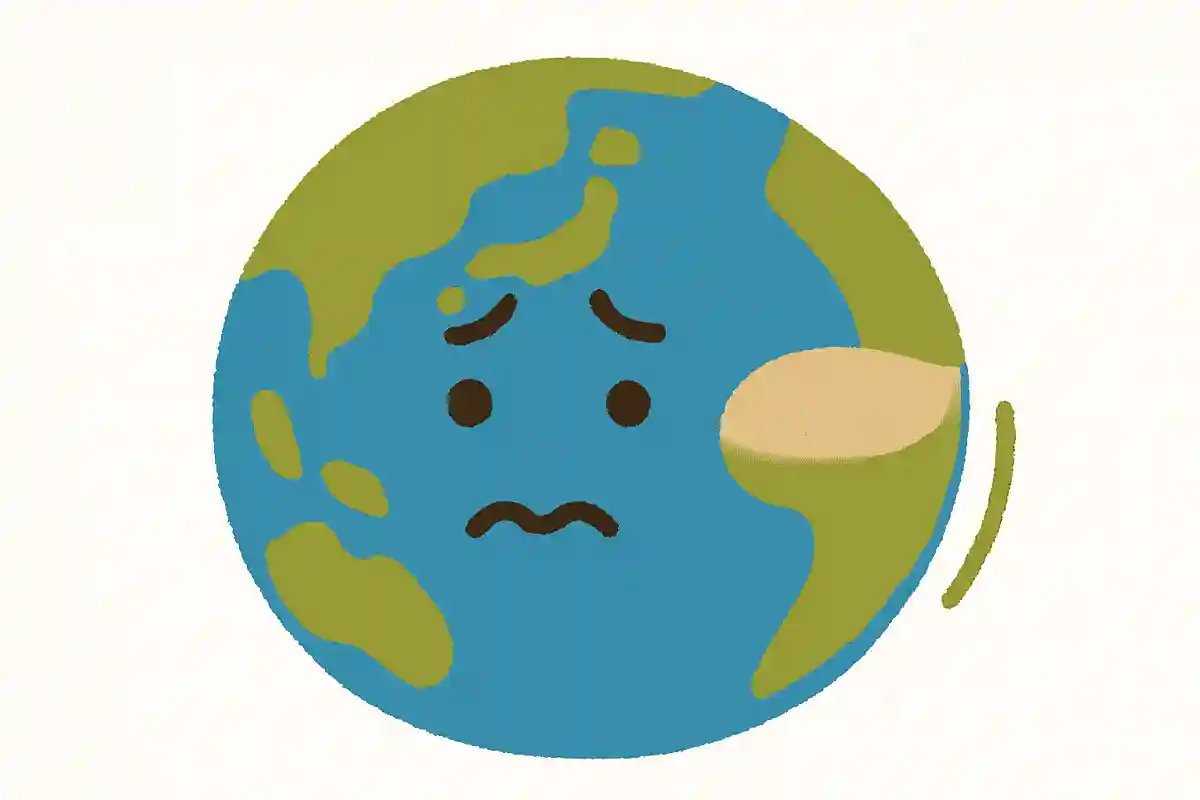
When we think of Earth’s shape, we often picture a beautiful circle—the way it’s drawn in illustrations—so most people have that impression.
However, while Earth is round, it isn’t a perfect sphere.
Strictly speaking, it’s an “oblate spheroid,” bulging at the equator and flattened at the North and South Poles.
The reason is Earth’s rotation: the centrifugal force causes the equatorial region to bulge.
It’s a fact that helps us grasp how fast the Earth spins and what kinds of forces that rotation produces.
In conclusion
The article was titled “Trivia,” but I think it actually offered a solid learning experience, didn’t it? No matter how much you dig, it’s never enough when it comes to space.
If this sparked your interest, I encourage you to do some research on your own! I also recommend looking for related books at your local library.