

For upper elementary school students! A lively and educational true-or-false quiz

We’ve put together a collection of a little unexpected true-or-false quizzes that will make upper elementary school kids blurt out, “Huh, really?” You’ll find plenty of questions about science, social studies, living things, and nature.
They’re all connected to what you learn at school, so you can check your knowledge while having fun.
You can take turns quizzing friends, host a quiz contest with your family—there are lots of ways to enjoy it.
That satisfying moment when you get it right, and the exciting moment when you get it wrong and discover something new—both are thrilling, aren’t they? Keep an open mind and give it a try!
- Recommended for upper elementary school students! True-or-false quizzes that make you think
- [For Lower Elementary Students] Play Right Away! Learn with Fun True-or-False Quizzes
- [Common Sense & Trivia] True-or-False Quiz with Knowledge for Elementary School Students
- Get the Crowd Going at the Kids’ Club! A Collection of True-or-False Quizzes Everyone Can Enjoy
- Recommended for upper grades! A fun, educational quiz for elementary school students
- True-or-false quiz for adults: a full roundup from common-sense questions to surprising trivia!
- Riddles for Upper Elementary Kids: A Fun Collection That Adults Can Enjoy Too
- Fun quizzes for elementary school kids: a collection of questions everyone can enjoy together
- Become a trivia master with a multiple-choice quiz for elementary schoolers! A fun problem collection that captivates both kids and adults
- A multiple-choice quiz with three options for upper elementary students. Fun questions that build thinking skills.
- Recommended for elementary school students! Trivia quiz you'll want to share once you know it
- A multiple-choice quiz with three options for upper elementary students. Questions you can enjoy between classes or at home.
- Fun Quiz Collection Guaranteed to Stump and Delight Elementary School Kids
For upper elementary students! Fun and educational true-or-false quiz (11–20)
Bees collect flower nectar for their fellow hive members: true or false?
- ○
- ×
See the answer
○
Bees collect nectar not only for themselves but also for their colony. By bringing the nectar back to the hive, it becomes food for their nestmates and larvae. In addition, as they fly from flower to flower gathering nectar and pollen, they help pollinate plants.

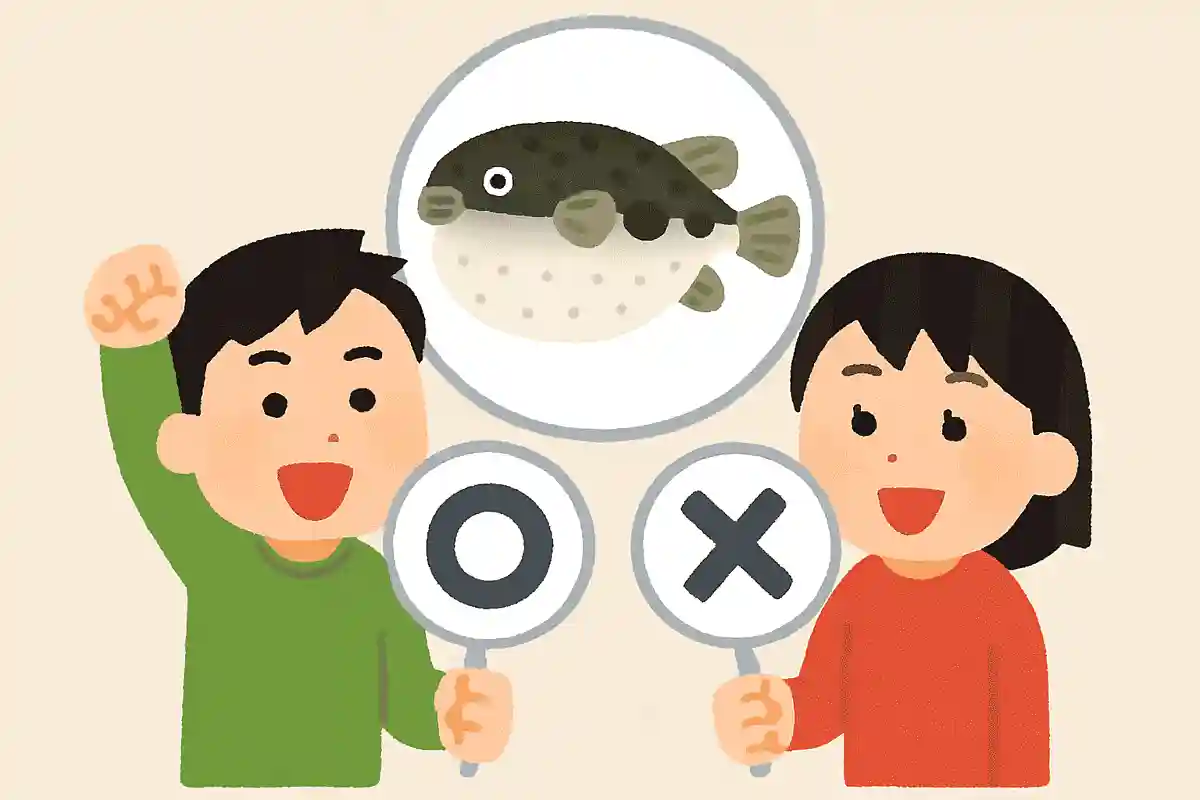
True or false: Some species of pufferfish are poisonous?
- ○
- ×
See the answer
○
Some species of pufferfish contain a potent toxin called tetrodotoxin. It is especially concentrated in the liver and ovaries, and consuming it can be life-threatening. Therefore, when pufferfish is prepared for eating, it is handled carefully by chefs with specialized licenses.
True or false: The Shinkansen was the first train invented in Japan.
- ○
- ×
See the answer
○
The first train invented in Japan was not the Shinkansen. The Shinkansen is a high-speed railway that began operating in 1964, but Japan’s first electric train was the “electric railway” of the Meiji era, which began running in Kyoto in 1895.
Dolphins are mammals—true or false?
- ○
- ×
See the answer
○
Dolphins may look like fish, but they are actually mammals, just like humans. They breathe air with their lungs, give birth to live young instead of laying eggs, and mothers raise their babies with milk.
Does gold dissolve in water: true or false?
- ○
- ×
See the answer
×
Gold is chemically stable, so it does not dissolve in water. It’s used for things like jewelry and coins. Jewelry made of gold won’t rust even if you wear it in the bath.
In conclusion
Through true-or-false quizzes designed for upper elementary students, we learned a variety of things—from science and social studies to the wonders of living creatures. Because the format is simple, it’s easy to enjoy: you can take turns making questions with friends or have fun with your family. Using the knowledge you gain from the quizzes as a springboard to dig deeper could be interesting, too. Be sure to make use of it in your daily life!